Security systems, such as fire alarms, emergency lighting, and motion sensors, are an important part of almost any building. They provide us with an early warning in case of fire, alert us when the power is out, or if there are intruders in any part of the building, giving us precious minutes to take appropriate action.
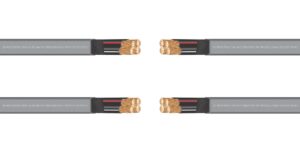
A security system’s ability to function depends on its alarm cable, which is usually a copper or aluminum wire used to transfer signals from one part of the building to another. In some cases, up to half a kilometer may be used [so make sure it’s quality!]. However, these wires are prone to electromagnetic interference from sources such as power lines and radio transmitters that can prevent alarms from sounding or being mistakenly tripped.
One usual solution is to make the cable non-ferrous, which means it will not conduct electricity. This can be achieved by sheathing it in aluminum foil. The metal coating prevents outside interference from disrupting the signals along the cable; its ability to reflect radio waves also makes it an effective tool for electromagnetic beam deflection.
It is therefore very important that the security alarm cables are shielded to protect them from external sources of interference, which would otherwise render them useless. Fire alarms and other security system cables must be installed with this in mind, keeping them away from power lines and electrical equipment as much as possible.
While aluminum foil is a good conductor of electricity and prevents electromagnetic interference, there are still cases where it does not provide enough protection and other methods must be employed. For example, the cable could be insulated with plastic or wrapped in a metallic sheath that can block electromagnetic fields.
High-quality wrapping also protects the security alarm cable from abrasion and fire damage. Knowing the kind of shielding you need helps you choose the right wire for the job.
A strong shield can be achieved by using aluminum or copper-clad steel wire. Copper-coated steel is often used in the construction of security systems; because it has high tensile strength, it can withstand high levels of stress and shearing. Its conductivity also makes it work well with low voltage systems like fire alarms.
Furthermore, the shield’s wires must be stranded, so they are durable enough to protect the cable. Otherwise, it may break when bent or under stress, which would again render the security system useless.
As for copper foil wire, this is also a good conductor of electricity and can prevent electromagnetic interference. However, it will not provide protection from fire damage and abrasion.
As with other security alarm cables, the foil wiring must be shielded to protect it from external sources of electromagnetic interference. For example, by covering it with PVC or metal shielding. Shielded aluminum wire, on the other hand, protects from fire damage and is easy to install because it has a thin cross-section.
When installing a wired system, it is important to know the layout and the operative environment before choosing your security alarm cable shielding. With the use of the right wire, you give your system the protection it needs to function properly even in rough conditions like fire and sudden temperature changes.
Of course, you also need to know where to find high-quality security alarm cables that meet the highest industry standards to make sure they are properly shielded and provide adequate reliability. Visit EWCS Wire to find incredibly reliable and durable wires for any application or contact them today at 800.262.1598 if you need to place large orders.