
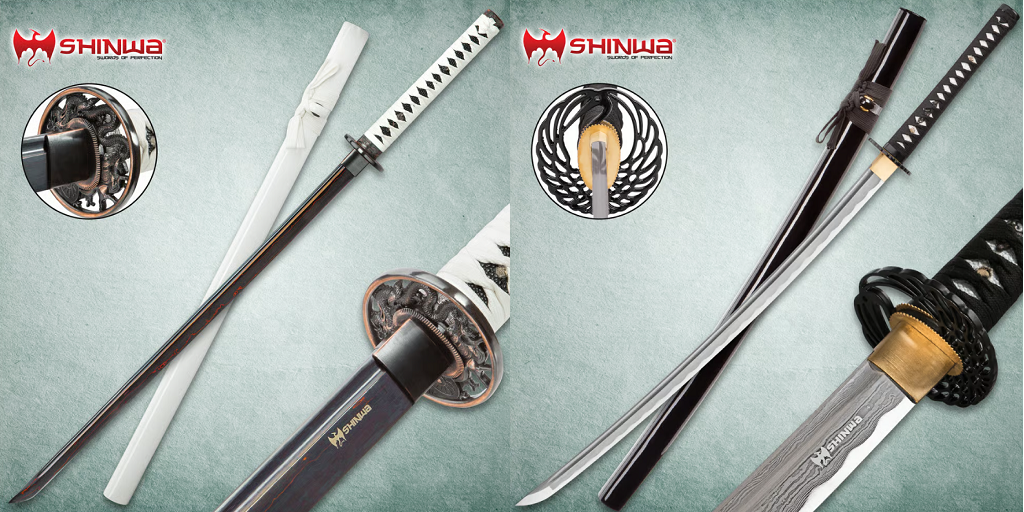
A katana is one of the most iconic swords in history, deeply rooted in Japanese culture and revered for its craftsmanship and cutting ability. However, with the abundance of mass-produced replicas on the market, it can be challenging to distinguish a high-quality, realistic katana from a cheap imitation.
Several factors determine a katana’s authenticity and functionality, including the blade material, weight, balance, and craftsmanship.
Check the Blade
The most important element of a realistic katana is the blade. Authentic katanas are traditionally made from high-carbon steel refined through a specialized smelting process.
Modern high-quality katanas are often forged from high-carbon steel such as 1095, 1060, or 1045 steel, which provides the necessary balance between durability and sharpness. A well-made katana also undergoes a differential hardening process, where the edge is hardened while the spine remains flexible.
This is achieved through clay tempering, which creates a visible hamon, or temper line. A genuine hamon appears slightly irregular and natural, while a fake one is often etched or artificially applied.
Weight and Balance
Weight and balance are crucial in identifying a realistic katana. A properly forged katana typically weighs between 2.4 to 3.2 pounds (1.1 to 1.5 kg), ensuring it is neither too light nor too heavy for effective handling.
A katana that feels too light is likely a decorative replica made from stainless steel, which is not suitable for actual use. Conversely, an overly heavy katana may have been poorly constructed or made from low-quality materials, making it cumbersome and impractical for combat or martial arts training.
The katana’s balance is also a defining characteristic. A well-made katana has a point of balance approximately 5 to 7 inches from the tsuba (guard). This allows for a smooth, controlled swing and efficient cutting power. If the blade feels disproportionately weighted toward the tip or handle, it is likely an inferior reproduction lacking proper craftsmanship.
Making an Authentic Katana
The construction of the katana extends beyond the blade itself. The handle should be wrapped with tight, well-executed ito (cord wrapping) to ensure a secure grip.
Cheap replicas often use synthetic materials or loosely wrapped cords, which can come undone with use. The tang is another crucial aspect of a real katana. A full tang construction, where the blade extends into the handle, is essential for durability and balance.
Some replicas use a rat-tail tang, where a thin, welded piece of metal is inserted into the handle, making the sword structurally weak and prone to breaking.
Additionally, the katana’s fittings, including the guard and pommel, should be made of sturdy materials such as iron, brass, or copper. Poor-quality katanas often have zinc or aluminum fittings, which lack durability and authenticity.
Test Your Blade
Testing a katana’s functionality can further determine its quality. A proper katana should exhibit flexibility and resilience when lightly bent. A cutting test can be performed on a target such as tatami mats or bamboo to evaluate its sharpness and cutting power.
A high-quality katana will make clean, effortless cuts, while a poorly made blade will struggle or chip upon impact. A genuine, functional katana will make a clean cut through these materials, making it ideal to collectors, martial artists, and enthusiasts.
If you’re on the hunt for a genuine, realistic katana, we recommend True Swords. They specialize in a variety of authentic blades, ranging from historical to fantastical.
