
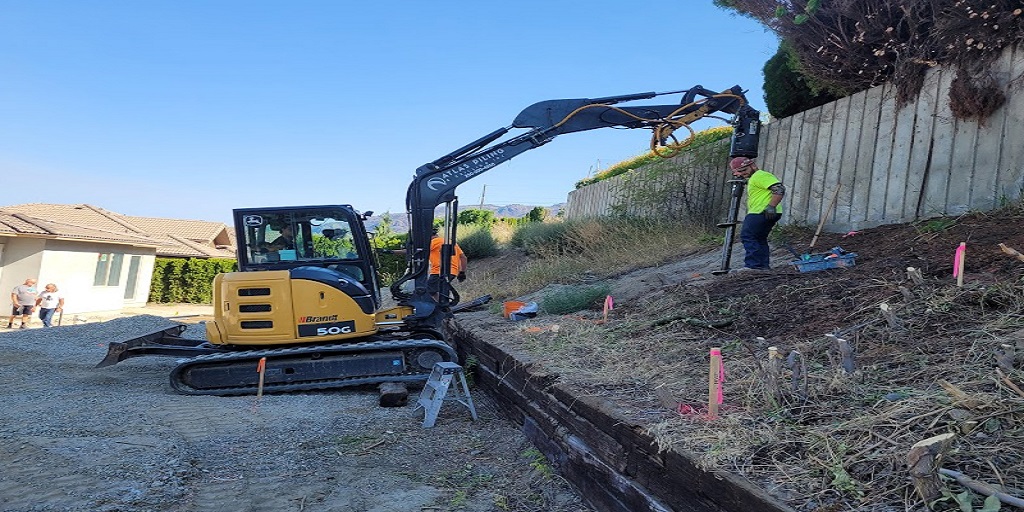
Building in coastal areas presents a unique set of challenges, particularly in regions like British Columbia where the combination of salt air, wet soil, and fluctuating weather conditions can severely affect the stability and longevity of traditional foundations. To address these concerns, helical pile foundations have emerged as an ideal solution. These innovative foundations offer numerous benefits, especially for projects near the coast where environmental factors can impact construction.
Salt Air: A Constant Challenge for Coastal Builds
Salt air is one of the most significant challenges for coastal builds. In coastal areas, the air is often laden with salt from the ocean, which can accelerate corrosion of traditional construction materials, especially steel and concrete. Over time, the salt exposure can weaken the foundation, leading to structural issues and costly repairs.
Helical pile foundations, however, are made from galvanized steel, which is designed to resist corrosion. The helical plates and shafts are coated to prevent damage from the harsh coastal environment. This corrosion resistance is crucial in maintaining the long-term durability of the foundation. By using helical piles, builders can ensure that the structure remains anchored securely, regardless of the salt exposure in the air.
Additionally, because helical piles are installed deep into the ground, well below the surface where saltwater can penetrate, they are less likely to be affected by the corrosive effects of saltwater compared to shallow foundations. This makes them a particularly reliable option for coastal construction projects.
Soil Stability: Overcoming Challenges in Coastal Terrain
Coastal soil conditions can be unstable, particularly in areas where there are variations in moisture levels due to tidal shifts and seasonal changes. Wet, unstable soils can cause traditional foundations to shift, crack, or settle, leading to structural instability. Coastal builds often deal with clay, sand, or silty soils, which can make traditional foundations challenging to install and maintain.
Helical pile foundations are ideal for overcoming these challenges because they can be installed deep into stable soil or bedrock, bypassing the weaker, less stable layers of soil. Whether it’s loose, sandy soils or wet, clay-based terrain, helical piles are able to anchor into deeper, more stable layers of the earth.
In addition to their adaptability to different soil types, helical piles also provide a high level of resistance to soil movement, such as shifting or erosion caused by waves and tides. The piles are engineered to resist lateral forces and provide long-lasting support, ensuring that the foundation remains intact even during extreme weather events.
Speed and Efficiency for Coastal Builds
Coastal construction projects often need to be completed within a specific timeframe due to environmental regulations, seasonal weather patterns, and the need to minimize disruption to the local ecosystem. Traditional foundation methods, such as pouring concrete or building slabs, can be time-consuming and require long curing periods. In contrast, helical pile foundations can be installed much faster, without the need for curing time.
The reduced installation time also helps minimize disruptions to the surrounding environment, which is often a key consideration for coastal builds. As a result, helical pile foundations are a cost-effective and efficient solution for ensuring stability while meeting tight project timelines.
For coastal builds in challenging environments like British Columbia, where salt air and unstable soil conditions are prevalent, helical pile foundations offer an ideal solution. Their corrosion-resistant design, ability to adapt to different soil conditions, and quick installation process make them an efficient, durable, and cost-effective choice for construction projects near the coast.
