
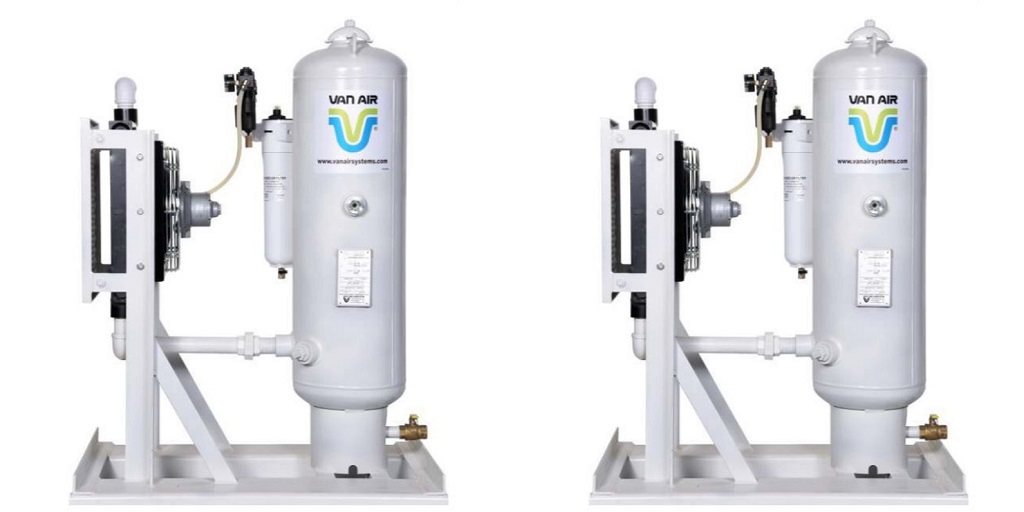
Not all compressed air systems need to be massive to be effective—especially in university laboratory settings where floor space is limited and precision matters. Whether it’s a teaching lab or a research-grade facility, a mini compressed air dryer offers a compact solution for delivering clean, dry air to sensitive instruments.
In many academic departments, access to clean dry air (CDA) is a shared necessity across diverse applications. From automotive exhaust testing in mechanical engineering labs to infrared detection in physics or environmental studies, having stable and moisture-free air at a consistent flow rate is crucial. That’s where mini compressed air dryers stand out.
Supporting Sensitive Lab Instruments with Consistent CDA Output
Most university labs operate a range of analytical and detection tools that demand steady, contaminant-free air to function correctly. Gas chromatographs, electrolytic cell hygrometers, and laser-based measurement systems can all suffer performance dips when exposed to humid or oil-laced air. Fluctuating dewpoints and inconsistent pressure can lead to signal drift, noise, or even long-term damage.
Mini compressed air dryers, particularly those offering -100°F pressure dewpoints, help maintain ideal conditions for instrumentation. These small packages can supply 10 liters per minute of clean air at pressures up to 100 psig, giving lab managers the control they need—without the bulk of a central compressed air system.
Simplifying Compressed Air Systems for University Departments
Unlike large-scale dryer systems that demand extensive installation, maintenance, and space, mini compressed air dryers come in integrated packages. Most units combine an oil-free compressor, twin tower regenerative dryer, filter, and regulator—all built into a single frame.
This simplicity is especially valuable in multi-disciplinary departments where compressed air must be moved or shared between workstations. With the ability to run quietly on standard 115V power and operate reliably with oil-less piston pump technology, these dryers become easy plug-in assets, not ongoing infrastructure headaches.
The twin tower heatless design also ensures continuous operation with minimal intervention—an ideal feature for labs that rotate between teaching, research, and student-led experiments.
Understanding the Role of -100°F Dewpoint in Student Lab Accuracy
Even in teaching labs, where undergraduate students handle basic experiments, compressed air quality can significantly impact learning outcomes. Experiments involving control analyzers or electrochemical sensors require stable air with low moisture content to produce repeatable results. If moisture levels fluctuate during student use, instructors may face calibration drift, failed runs, or skewed data.
A mini compressed air dryer ensures that even entry-level procedures are performed under lab-grade conditions. The consistent dewpoint control and built-in regulation minimize the variables students have to troubleshoot—keeping focus where it should be: on the science.
Key Specs That Make Mini Compressed Air Dryers Ideal for Academic Settings
So what should lab managers or facility planners look for when choosing a mini compressed air dryer?
- Low Flow, High Purity: Most lab setups don’t need industrial-scale air delivery. A 10 LPM unit provides more than enough volume for one or two high-precision tools running in parallel.
- Oil-Free Output: The piston pump compressor design ensures the air stays oil-free, protecting moisture-sensitive devices without requiring additional filtration.
- Solid-State Monitoring: Some models include advanced control boards that replace outdated mechanical timers and relays, monitoring humidity and pressure digitally for better reliability.
- Small Footprint: Designed for benchtop or cart-mounted use, these packages don’t compete with lab space reserved for instruments and students.
For university labs balancing budget, performance, and space limitations, these mini systems offer a well-rounded solution.
Whether your department handles daily emissions testing, high-resolution spectroscopy, or routine student demonstrations, mini compressed air dryers provide the kind of stable, low-maintenance CDA that lab teams can rely on. They’re small enough to fit anywhere—and smart enough to meet the demands of today’s academic environments.
To learn more about clean dry air solutions designed for university laboratories, visit Air Vacuum & Process, Inc.
