
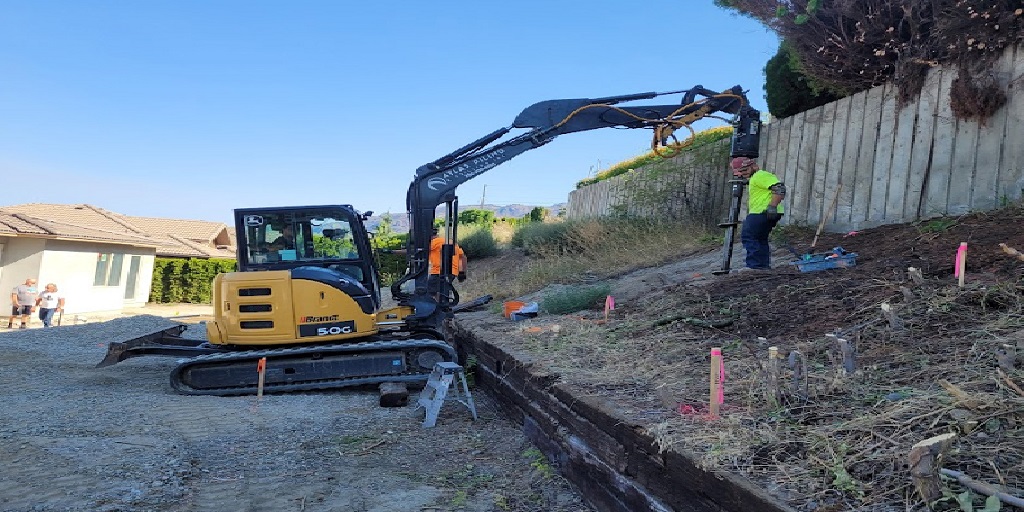
When it comes to building on challenging soil or dealing with tricky site conditions, many property owners turn to helical piles. But how do you know if they’ll actually work for your specific property? It’s a fair question—and one that experienced helical pile companies are used to hearing.
Helical piles are a powerful tool for supporting foundations in a wide range of site conditions—but they’re not one-size-fits-all. The best way to determine whether they’ll work for your property is to consult with trusted professionals who know how to assess soil, load, access, and permitting concerns in detail.
1. Soil Conditions Matter—But Not in the Way You Think
One of the biggest misconceptions is that helical piles only work in soft soils. While they do perform very well in clay, silt, and other loose materials, they’re actually versatile enough for many other types of ground. The key is understanding your site’s subsurface conditions.
A reputable geotechnical report will reveal important information such as soil density, water tables, and the depth to competent bearing strata. This data helps helical pile companies decide what shaft size, helix configuration, and depth are appropriate for your property.
If your site has variable soil layers or poor surface stability, helical piles may still be a solid solution—but only after proper testing and analysis.
2. Accessibility Can Impact Feasibility
Not every property is easy to access with heavy machinery. If your job site has limited space, tight corners, or low-clearance areas, that can rule out traditional foundation systems—but not necessarily helical piles.
Most helical pile companies offer compact, portable installation equipment that can fit through doorways, maneuver in backyards, or work within interior spaces. This makes helical piles particularly well-suited for residential retrofits, laneway homes, and inner-city builds.
However, it’s worth checking early if your specific access restrictions will affect the type of installation equipment needed—or the cost of the job.
3. Load Requirements Should Be Reviewed Early
Not all projects place the same demands on a foundation. A backyard deck, for example, won’t require the same capacity as a multi-storey addition or commercial structure.
Before any piling work begins, helical pile companies will evaluate the expected vertical, lateral, and uplift loads of your structure. This ensures your system is designed to support your project for decades to come.
Overspecifying adds cost, while underspecifying puts your structure at risk. That’s why it’s important to work with professionals who take the time to properly assess your load requirements from the start.
4. Existing Structures Can Complicate—but Not Eliminate—Options
If you’re adding to or reinforcing an existing building, don’t assume you’re stuck with the original foundation system. Helical piles are often used to underpin failing foundations or support new loads that the old system wasn’t designed for.
Still, working around existing footings, utility lines, or tight indoor spaces requires careful planning. Helical pile companies with retrofit experience will be able to evaluate your site’s constraints and develop a custom approach that avoids damage to your current structure.
By taking the time to ask the right questions up front, you’ll save yourself stress, delays, and costly missteps down the line. Not every site is perfect—but with expert help, you may find that helical piles are a perfect fit.
