
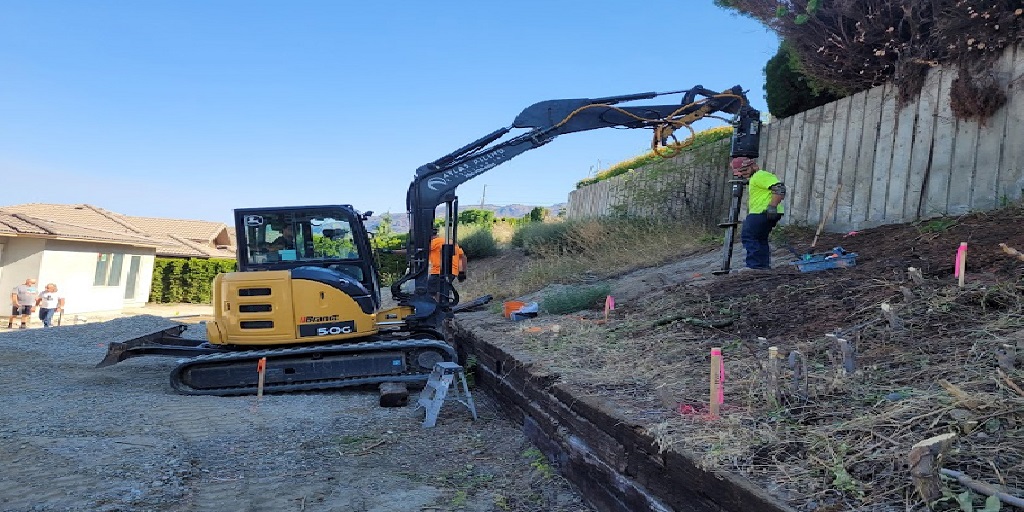
When planning any construction project, one of the most overlooked but frequently asked questions is, “How noisy will it be?” This becomes especially important when a project is in a residential area, near schools, businesses, or other noise-sensitive locations. If your build involves a helical pile foundation, you might be wondering what kind of noise levels to expect—and whether it will disrupt your surroundings.
Let’s break down what really happens during installation, how loud it gets, and what factors play a role in the overall noise experience.
Comparing Noise Levels: Helical Piles vs. Traditional Methods
First, it’s important to understand how the noise from a helical pile foundation installation stacks up against other foundation systems. Traditional driven piles use large impact hammers or vibratory drivers that create intense pounding or rattling sounds. These methods can be extremely disruptive—not just audibly, but also in terms of ground vibration.
By contrast, helical pile foundations are installed using a hydraulic drive head that rotates the piles into the ground, like a giant screw. There’s no hammering involved, which means the installation is inherently quieter. Most of the noise comes from the engine of the installation equipment and the torque motor, which produces a steady mechanical hum instead of sharp, jarring impacts.
For context, noise levels during helical pile installation typically fall between 70 to 90 decibels (dB) at close range, depending on the size of the equipment. That’s comparable to the sound of a city street during traffic or a lawn mower running—noticeable, but manageable.
Factors That Affect Noise Levels On-Site
Even though helical pile installation is quieter overall, the actual noise level you’ll experience depends on several variables:
1. Equipment Size and Type
Larger torque motors and excavators can be louder due to higher horsepower and larger engines. Smaller residential projects often use compact equipment, which naturally generates less noise.
2. Soil Conditions
In harder soils, the torque required to advance the pile increases, which can make the drive unit work harder and slightly louder. In softer soils, the process is quicker and quieter.
3. Jobsite Setting
Urban areas with high-rise buildings can reflect and amplify sound, while open rural settings may allow noise to dissipate more easily. Tree cover, walls, or fencing can also dampen perceived noise.
4. Distance from the Source
Sound levels drop significantly with distance. For example, while the noise might register at 85 dB near the equipment, it could drop to 60 dB or less just 50 feet away—roughly the sound level of a normal conversation.
Practical Ways to Minimize Disruption
Although the helical pile foundation method is already quieter than most alternatives, there are still ways to further minimize the disruption:
- Schedule wisely. Plan installations during regular work hours to reduce disturbance to neighbors.
- Use modern equipment. Newer machines often have better sound insulation and lower emissions
- Noise barriers. In especially sensitive areas, temporary barriers or acoustic blankets can help reduce sound transmission.
While no construction process is entirely silent, the installation of a helical pile foundation offers one of the quietest deep foundation solutions available. With thoughtful planning and the right equipment, noise can be kept to a minimum—protecting your timeline, your team, and your relationship with the community.
If keeping things quiet is a top priority for your project, a helical pile foundation is a smart place to start.
