
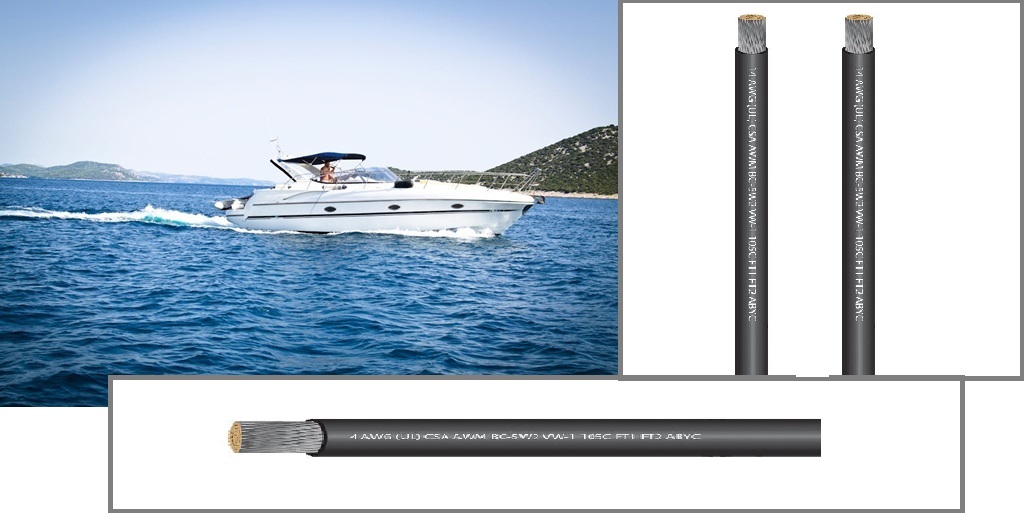
Marine environments will make short work of electrical systems. Your boat’s marine battery cables and terminals are no exception here.
With that said, here are some basic things you can do to protect your marine battery cable and terminals, whether all you have is an aluminum rowboat with a trolling motor and a deep cycle marine battery, or a yacht with an outboard.
These high level notes will help protect your boat’s exposed cables, battery and terminals.
Make Sure Connections Are Tight
Loose connections can result in a sudden loss of electrical power and potentially other, worse issues.
Boats vibrate a lot, not just as a result of the engine but of the constant motion of the water. As a result, terminals can become loosened over time.
Check them periodically before you head out on the water and tighten them as needed.
Insulate Terminals and Exposed Connections with Dielectric Grease
This is one of the best suggestions on this list. Anywhere you have exposed marine battery cable and terminals, you’ll be at a higher risk of developing corrosion there, even on freshwater.
Completely eliminating exposed cables and terminals is not realistic. You can do what you can, but there will still be some exposure.
What you can do is, once you establish a connection, apply marine-grade dielectric grease to the exposed wire and over the top of the terminal.
Dielectric grease will help insulate the terminals and cable where they are exposed, helping to shield it against moisture exposure that will cause corrosion.
Just make sure that connections are tight before applying, because if dielectric grease gets between connections it will interrupt them.
Shrink-Sealing Exposed Wire
If you’re ever establishing connections or splicing electrical wire into a circuit to repair a section that has been damaged, before even considering applying dielectric grease to protect it, you should make sure to seal the section of wire with some shrink seal.
These are a dime a dozen at hardware stores, perhaps even cheaper than that, and they can be applied in a matter of seconds. You don’t even need any special electrical training to do so.
Just slide the shrink wrap over the wire before you twist, crimp or wrap them together, then use a lighter or a small torch to heat it so that it seals over the wire. A good one, properly installed, can provide a decent level of protection against corrosion on the water.
Protecting Cables Against Abrasion
Lastly, marine electrical wire needs to be protected against abrasion. Abrasion to electrical wire is a problem for two reasons, both of which have to do with exposure.
Once exposed, the wires are at a much higher risk of causing fires, and once exposed, they are also much more likely to corrode.
Make sure that insulation is in good shape and that wires are not wearing against each other or against surfaces through which they pass, such as partitions in the hull or through interior walls. These areas should be cushioned with conduit or other bracing to help secure the wire so that it doesn’t move, and also to protect it against abrasion.
For High Quality Marine Battery Wire
The suggestions in this article can help shield your marine battery cables and terminals against corrosion which will extend their service lifespan, all things considered. On the chance you landed here looking for high quality marine battery cable, visit EWCS Wire (link at bottom).
EWCS Wire carries a wide range of specialty electrical wire and cable, including marine grade battery wire. Visit their website for more information and bookmark their page if you are looking for a new wholesale electrical wire supplier.
For more information about Belden Fire Alarm Cable Please visit: Electrical Wire & Cable Specialists.

