
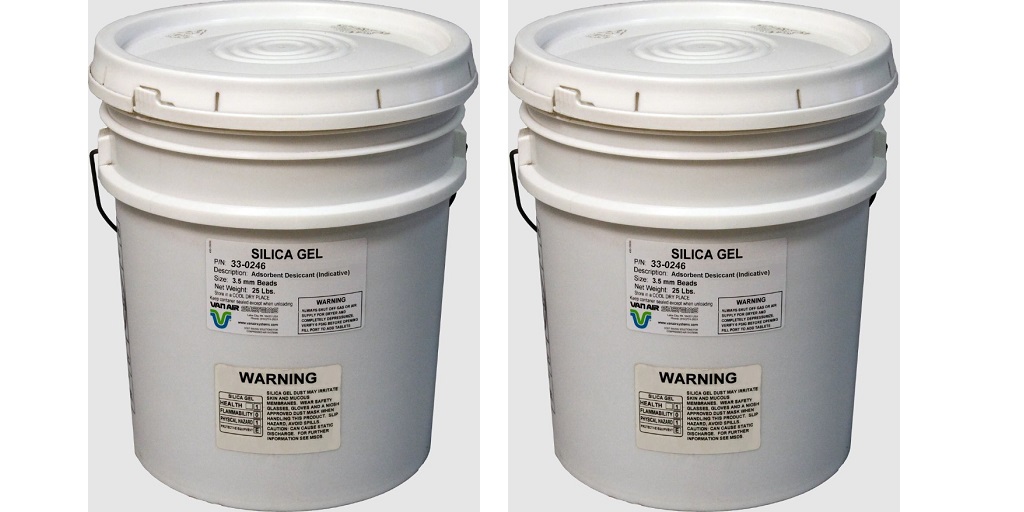
Industrial adsorption systems rarely rely on a single drying material. In most air and gas processing equipment, several desiccants work together in layers to manage moisture and protect sensitive downstream processes. Within these systems, silica beads play a specific, often underestimated role in supporting long-term stability in adsorption towers.
Engineers must balance efficiency, durability, and cost when selecting materials for compressed air and gas purification. Placed strategically in layered towers, silica beads stabilize humidity before stronger desiccants complete purification.
Understanding how these materials interact inside an adsorption bed can help plant engineers and maintenance teams make better decisions when evaluating industrial drying solutions.
Where Silica Beads Fit in Layered Towers
Industrial adsorption towers use multiple layers of drying media, each chosen for its interaction with water vapor, contaminants, and temperature. Desiccant beads often form the first adsorption stage.
Silica gel structures contain a highly porous network that promotes strong moisture absorption at moderate humidity levels. This makes them particularly useful for pre-drying applications. When air or gas enters the tower, silica beads absorb a large portion of the incoming moisture load before it reaches the bed’s deeper layers.
This staged approach protects more sensitive desiccants such as molecular sieve materials, which perform best when moisture loads are already reduced. Molecular sieve is excellent for achieving extremely low dew point levels, but it performs more efficiently when upstream desiccants remove bulk humidity.
Activated alumina is an intermediate layer that stabilizes moisture transfer between silica beads and molecular sieve, enhancing adsorption tower reliability across a wide range of humidity.
Pre-Drying and Protecting Downstream Desiccants
Desiccant beads in the upper tower layer primarily protect the system. Untreated air entering an adsorption system has widely fluctuating moisture levels due to ambient humidity, temperature changes, or process variations.
Silica beads act as a buffer zone. They absorb most of the incoming water vapor and stabilize airflow before it reaches deeper layers of the bed. This improves overall humidity control and prevents sudden moisture surges from overwhelming downstream desiccants.
Without this buffer, materials such as molecular sieves saturate more quickly. This shortens adsorption cycles, lowers drying efficiency, and increases regeneration needs. For industrial dryer operators, this means higher energy use and maintenance costs.
For this reason, many engineers view silica as a protective layer rather than the primary drying agent.
Applications of Silica Beads in Industrial Air Drying Systems
Layered desiccant towers precisely control gas purity or humidity. In compressed air systems, air dryer desiccant towers reduce moisture before air reaches pneumatic tools, instrumentation, or processing equipment.
Gas processing plants use layered desiccants for purification. Removing moisture prevents corrosion, protects catalysts, and ensures consistent product quality. Desiccant beds must maintain stable performance under continuous airflow.
Silica beads also support vacuum systems where even small amounts of moisture can affect pump efficiency or contaminate downstream equipment. Within these systems, properly selected desiccant beads maintain stable adsorption performance under fluctuating process loads.
Handling, Regeneration, and Performance Stability
Like other adsorption materials, silica beads must be handled correctly to maintain long-term performance. Improper loading, mechanical damage, or contamination can reduce adsorption capacity and disrupt airflow inside the tower.
Industrial drying systems often regenerate desiccants by controlled heating. Silica beads are ideal for this; their porous nature allows efficient moisture release during heating. Operated within recommended temperatures, they maintain reliable adsorption over many cycles.
Maintenance teams often monitor outlet dew point readings to determine whether regeneration cycles remain effective. Rising moisture levels can signal desiccant degradation, bed channeling, or contamination within the tower.
Silica Beads in Desiccant Towers
When drying systems begin experiencing inconsistent humidity levels, the root cause is often related to adsorption bed performance. Operators may observe unstable dew point readings, reduced cycle times, or excessive moisture passing through the tower.
In many cases, the issue traces back to improper desiccant layering or degraded silica beads in the pre-drying stage. If the first layer cannot absorb incoming moisture effectively, downstream materials face a heavier load than the system was designed for.
Routine inspection of layered desiccant beds prevents issues. Proper material selection and bed configuration ensure consistent adsorption tower performance across varying conditions.
Air Vacuum & Process Inc offers technical support and equipment solutions for facilities evaluating or maintaining adsorption drying equipment for compressed air and gas purification. They assist engineers in selecting materials such as silica beads for reliable industrial drying.
