
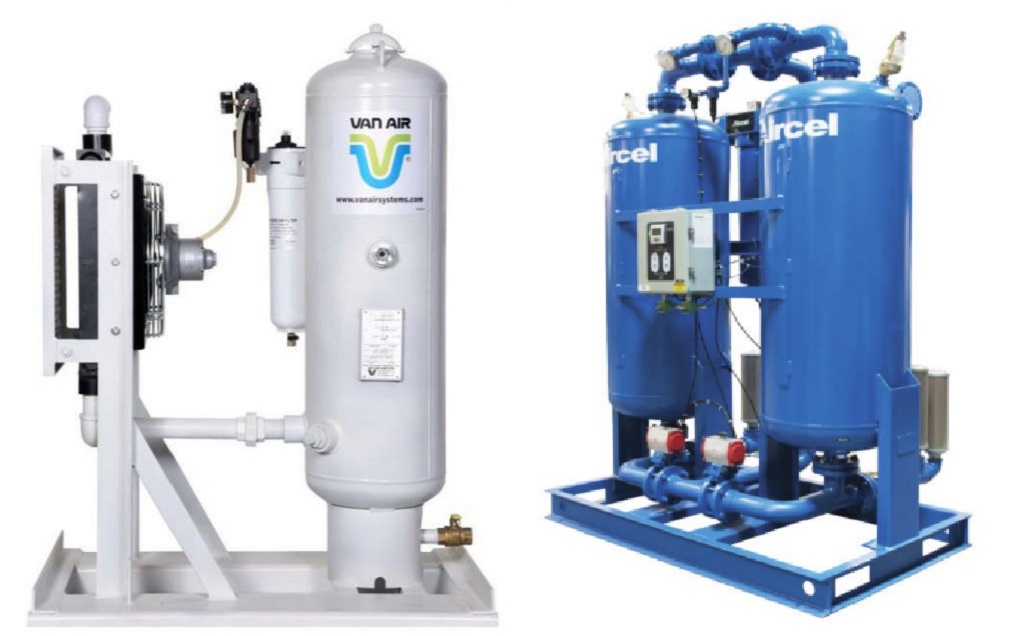
Pharmaceutical labs can invest heavily in instruments, reagents, and protocols, and still produce inconsistent results because of something as basic as wet compressed air. A compressed air dryer handles the moisture that builds up the moment ambient air is pressurized, and in a pharma setting, that moisture affects more critical processes than most facilities plan for.
When Spray Drying Has a Compressed Air Dryer Problem
Spray drying sounds fairly controlled on paper. You’re atomizing a liquid feed into droplets and letting them solidify before they touch the chamber wall. That process falls apart when the air carrying those droplets still holds humidity. Droplets that should solidify cleanly instead reabsorb moisture mid-flight. They clump. The batch gets rejected or doesn’t perform as the formula says it should.
Getting a compressed air dryer spec’d for actual spray-drying temperatures and volumes matters more than the compressor specs that some facilities focus on. The dew point has to be low enough that humidity is no longer a factor, which almost always means a desiccant air dryer rather than a refrigerated air dryer. Refrigerated units work well for general facility air, but they can’t reach the -40°F dew point range required by these applications.
Hygroscopic powder handling is a related problem. These materials pick up moisture from transfer lines, from storage vessels, from any air that isn’t dry. A compressed-air dryer on the handling system prevents powders from compacting or chemically degrading before they even reach the next stage.
Your Gas Panel Is Calibrated for Dry Gas. What Happens When the Carrier Isn’t?
Gas mixing panels are built around known gas concentrations. Feed them carrier gas with even trace amounts of water vapor, and the composition shifts. Labs running GCs or mass spectrometers off those panels start seeing baseline drift that doesn’t trace back to the instrument. They recalibrate. It drifts again.
A compressed air dryer upstream of the gas supply stops that at the source. Industrial air dryer units configured for this kind of work run at dew points that keep vapor contribution negligible through the entire panel. Air compressor dryer selection ties into this too, since a compressor that carries oil aerosols compounds the contamination problem when drying downstream is inadequate.
Vacuum lines powered by compressed air-driven ejectors get overlooked in this conversation. Ejectors corrode quickly when condensed water repeatedly passes through them. Pitting starts, efficiency degrades, and eventually the vacuum line needs repair well before it should. Keeping the compressed air system dry upstream protects the ejector and extends the time the vacuum line maintains its performance specs. Facilities that treat a compressed air dryer as part of the vacuum system design, rather than a finishing detail, generally get better uptime.
Lab Dew Points Vary. So Should Your Compressed Air Dryer.
Pharmaceutical facilities typically operate processes with varying dew point requirements, and a single central dryer rarely meets all of them. A refrigerated air dryer at 35 to 50°F dew point handles pneumatic controls, valve actuators, and general-purpose lines. Spray drying chambers, gas mixing panels, and vacuum ejector supplies need a desiccant air dryer pushing to -40°F or lower.
Some facilities run point-of-use membrane dryers directly before instruments that need ultra-dry air, even when the main line is already treated. Pairing a central industrial air dryer with point-of-use secondary drying for sensitive equipment provides greater control without over-engineering the entire compressed air system.
Moisture removal planning that accounts for each application individually is more practical than picking one system and hoping it covers the full range. A compressed air dryer matched to the actual dew point demand at each process point protects equipment, preserves calibration, and catches quality issues before they compound into something harder to trace. Pharmaceutical facilities sorting through those requirements can find application-specific support at Air & Vacuum Process, where the right compressed air dryer gets matched to each stage of your process.
For More Information About Regenerative Desiccant Air Dryer and Automatic Drain Valve Please Visit: Air & Vacuum Process Inc.
