Rain is a natural part of the construction process—sometimes anticipated, often frustrating. For many traditional foundation systems, wet weather means delays, complications, and spiraling costs. But with a helical piles foundation, site conditions don’t have to bring work to a grinding halt.
While concrete foundations require dry, stable soil conditions and careful curing windows, helical systems offer a weather-resistant alternative that performs even when the rain starts falling. This is one of the key reasons developers and builders are turning to these systems for time-sensitive or weather-exposed projects.
Weatherproofing Your Timeline
When construction sites get soaked, the usual suspects—mud, pooling water, and unstable soil—create major obstacles for conventional excavation and formwork. The ground becomes difficult to work with, machinery gets bogged down, and schedules slide out of control.
Helical piles, on the other hand, can be installed in most weather conditions, including rain. That’s because the system relies on torque-driven installation rather than concrete pouring or ground compaction. No curing. No setting time. No need for a string of sunny days before continuing the build.
In practical terms, that means fewer rain delays, less downtime, and the ability to stay on schedule—especially valuable for projects working under tight deadlines or during unpredictable seasons.
Site Access Without Site Destruction
One major benefit of using a helical piles foundation during wet weather is reduced disruption to the job site itself. Traditional excavation becomes messy and sometimes dangerous in rainy conditions. Large machinery can churn up the soil, cause rutting, and make future grading more difficult.
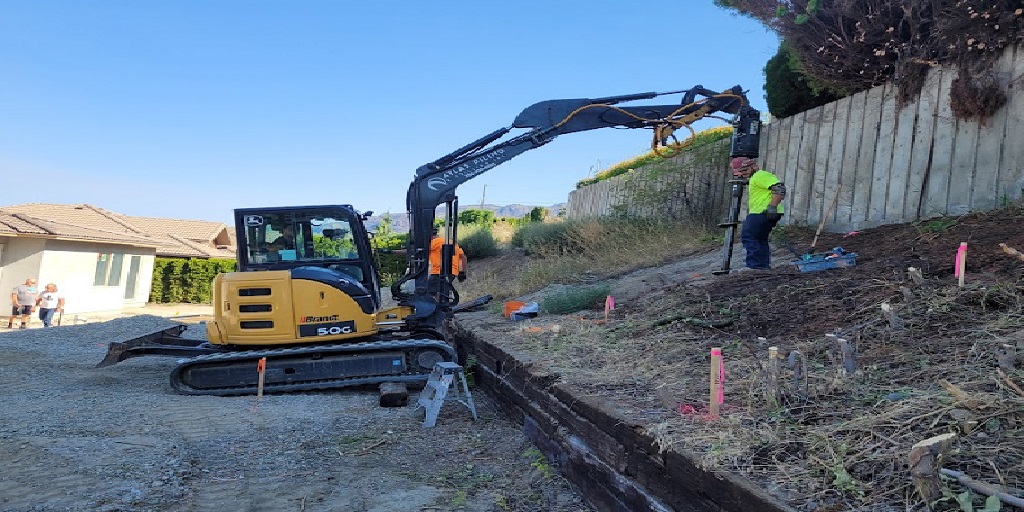
Helical pile installations typically require smaller equipment that can navigate tighter or softer areas with much less site damage. This is particularly important in sensitive environments, near existing structures, or where landscaping preservation is a priority. Even after rainfall, installation can continue with minimal environmental footprint.
Better Load Control, Even in Wet Soils
Rain doesn’t just affect the surface—it alters the soil’s bearing capacity, which can significantly complicate footing design and load calculations for traditional foundations. Saturated soils may shift, settle, or fail altogether if they’re relied on to support weight the wrong way.
With a helical piles foundation, installation torque is used to determine load-bearing capacity in real time. This means the foundation is not only installed but also verified as it goes in—even in soggy conditions. Engineers and builders don’t need to gamble on soil behavior; they get immediate feedback that confirms stability.
This level of control is especially helpful for projects in areas with clay-heavy soils or poor drainage, where rainfall can wreak havoc on buildability.
Keep Crews Moving, Rain or Shine
One often overlooked impact of weather delays is the human factor. When jobs are paused due to bad weather, crews may be left idle, rescheduled, or diverted to other projects. This throws off workflow and affects labor efficiency.
Because helical pile installations are less weather-dependent, crews can continue working safely and productively—even on rainy days. That keeps the project momentum going, reduces stop-start inefficiencies, and supports better workforce planning.
Let’s face it: construction rarely happens in ideal conditions. Whether it’s unexpected rain, melting snow, or fluctuating site moisture, foundations have to be built in the real world. The ability to install a helical piles foundation regardless of the weather isn’t just a nice-to-have—it’s a real competitive advantage.