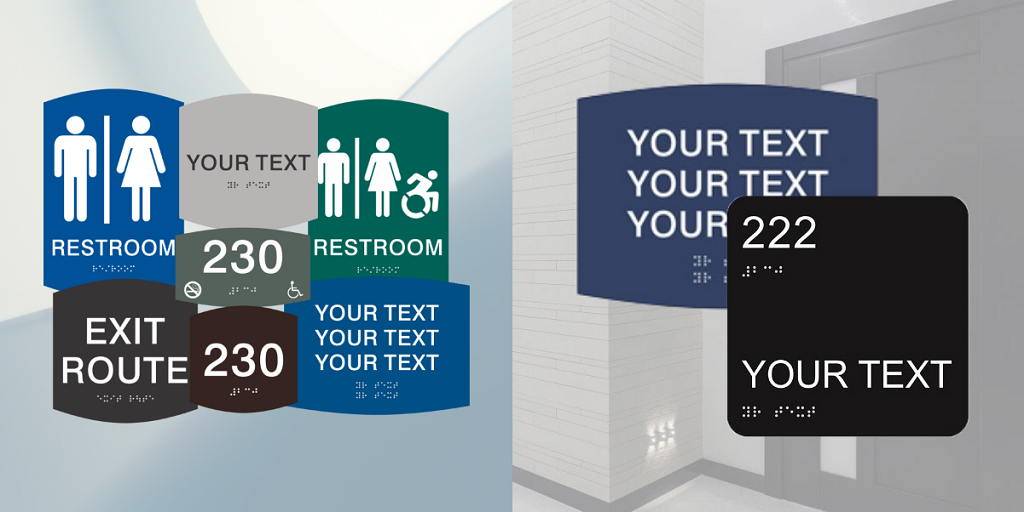
Braille signage plays a critical role in making public spaces usable, safe, and welcoming for everyone. For people who are blind or have low vision, these signs are not a convenience; they are a necessity.
Without clear tactile information, everyday tasks like finding a restroom, locating an exit, or navigating a hallway can become stressful or even dangerous. That’s why Braille signs are a cornerstone of accessibility and an essential part of modern building design.
Safety in Public Spaces
In public places, safety is one of the strongest reasons braille signs matter. During emergencies, people need to move quickly and confidently. Clearly marked exits, stairways, and elevators allow individuals with visual impairments to orient themselves without relying on others.
When signage is consistent and predictable, it supports independence and reduces the risk of injury. Tactile lettering in Braille provides information through touch, which remains reliable even in low lighting or smoky conditions.
Accessibility laws reflect how important this is. In the United States, the Americans with Disabilities Act (ADA) established clear expectations for accessible signage in public, commercial, and government buildings.
These rules are not optional, and facilities that fail to meet them can face substantial financial penalties, along with legal challenges and reputational damage. Beyond compliance, accessible Braille signage shows that an organization takes inclusion seriously rather than treating it as an afterthought.
Giving Dignity and Autonomy
Braille signs also contribute to dignity and autonomy to people with impaired vision. When people can navigate a space on their own, they are not forced to ask for help or feel dependent on staff or strangers.
This independence improves quality of life and encourages fuller participation in work, education, healthcare, and community activities. An accessible environment sends a clear message that everyone belongs there.
Effective Design in Signs
Creating effective signage involves much more than adding raised dots to a wall. One of the most valuable factors is strict adherence to accessibility standards. Braille must be formatted correctly, tactile characters must be the right size and spacing, and placement on the wall must follow precise guidelines.
Even a well-made sign can fail its purpose if it is mounted too high, too low, or in the wrong location relative to the doorway.
Material quality is another key consideration. Braille signs are meant to be touched repeatedly, often for years. Sign makers value durable substrates that resist wear, fading, and damage. The surface must be smooth enough for comfortable reading while still allowing tactile elements to stand out clearly.
High-quality materials ensure the sign remains legible and compliant over time, reducing the need for frequent replacement.
Color contrast is also important, as many users of Braille signage still have partial vision. Strong contrast between text and background makes signs easier to see for people with low vision. Skilled sign makers pay close attention to color selection, ensuring readability without glare or visual clutter.
Consistency across a facility is another factor professionals value. When all permanent rooms, exits, and shared spaces use the same sign system, users learn what to expect. This consistency improves wayfinding and reduces confusion.
Sign manufacturers understand how to design sign systems that work as a whole, not just as individual pieces.Advanced printing and fabrication methods allow Braille and tactile elements to be produced with exact measurements. This precision supports compliance and improves overall quality.
Braille Signs Make Everyone Safe
Braille signs are about more than meeting legal requirements. They create safer spaces, support independence, and remove barriers that many people face every day. For sign makers, the value lies in combining technical expertise, thoughtful design, and a commitment to accessibility.
When done right, braille signage helps turn public places into environments where everyone can move confidently and safely.
For More Information About Braille Labels and Braille Tactile Signs Please Visit: Braille Sign Pros LLC.