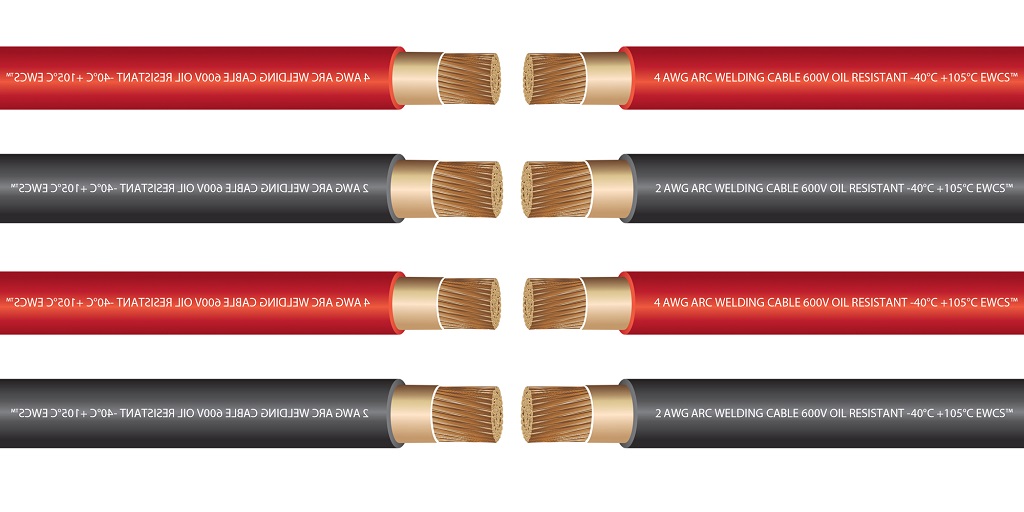
The material from which the conductors within an electrical wire or cable are made will impact its performance, as some materials are far better suited as an electrical conductor than others.
Some materials are conductors (such as those that will be covered here), others are semiconductors (that conduct when conditions are favorable) and others are insulators, which do not conduct electricity readily regardless of conditions.
Let’s take a look at some of the more common materials used as conductors in electrical wire and cable.
Copper
Copper is probably the most common electrical conductor in the industry, and is widely used in commercial, residential and industrial wiring.
Copper has a lot of mechanical and electrical properties that make it suitable for use in electrical wire and cable. For one it is an excellent conductor; it is also relatively inexpensive and it is ductile, flexible and strong, all traits needed in electrical wire manufacturing.
Sometimes, copper conductors are nickel-plated, or in the case of marine battery wire, tinned, so as to insulate the cable from the environment, helping to forestall corrosion. As for drawbacks, copper is very heavy and it also is susceptible to corrosion.
Aluminum
After copper, aluminum is another extremely popular material from which electrical wire and cable are made. Aluminum, like copper, is a good conductor. It is not technically as conductive, but it has a higher conductivity to weight ratio, making it competitive. This means a lower quantity of aluminum could be used to complete the same installation as with copper.
Aluminum wire is also considerably more affordable than copper, and it is lighter, too making it easier to install and transport. Because of its light weight, aluminum is often preferable in aerial installations. Aluminum also exhibits better resistance to corrosion than comparable copper conductors.
Another one of the big drawbacks associated with aluminum wire is that it is not as strong as copper, so aluminum cables tend to fatigue or break more easily than copper wire and cable.
Steel
Steel is sometimes used as an electrical conductor. It does not conduct electricity as well as either copper or aluminum wire, but because it is so strong it is used in applications in which the electric wire or cable must exhibit exceptional strength and other mechanical properties. The one big drawback of steel is that it has a high resistivity, so it heats up dangerously when overloaded. For this reason steel is less common than the other two materials already mentioned.
Gold
Gold is sometimes used as an electrical conductor in electronics, chiefly because it is an excellent conductor. It is preferable to copper in sensitive electronic components because gold is chemically noble and therefore immune to corrosion. However, as might be expected, the extremely high cost of gold as an electrical conductor makes it cost-prohibitive to use.
Other Alloys
There are other alloys that are used as conductors in electrical wire and cable, that are made from mixing other metals together. Usually, these alloys are used because of their high-strength paired with serviceable conductivity.
Electrical Wire and Cable: Where to Learn More
Want to learn more about common materials used in the production of electrical wire and cable? Take a look at the blog over at EWCS Wire. There is a great deal of helpful information in there.
But, if you’re just here because you’re looking for the industry’s highest quality electrical wire, cable and more, take a look through their catalog. They carry a variety of exceptionally high-quality electrical wire, including specialty wire and cable like marine cable, welding cable, solar panel cable, armored cable, and much more.