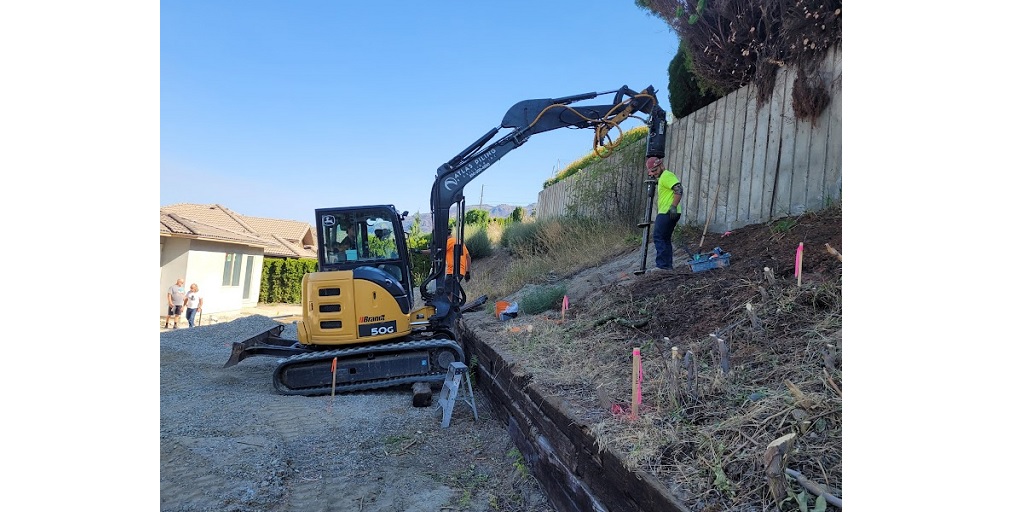
When constructing stable foundations, especially in regions that experience significant seasonal temperature changes, frost heave is a critical consideration. Frost heave occurs when moisture in the soil freezes, causing the ground to expand and shift. For this reason, many builders and engineers recommend that traditional foundations extend below the frost line. But what about helical piles? Do these innovative foundation systems need to go below the frost line as well?
Understanding Helical Piles
Helical piles are a type of deep foundation system made of steel shafts with helical plates welded onto them. These plates allow the piles to be screwed into the ground to reach stable soil layers. Helical piles are versatile, cost-effective, and often faster to install than traditional foundation methods. Their design ensures that loads are evenly distributed, making them ideal for various applications, including residential, commercial, and industrial projects.
The Role of the Frost Line
The frost line indicates the depth at which the soil freezes during the coldest parts of the year. In colder climates, frost heave can create upward pressure on shallow foundations, potentially leading to structural instability or damage. To mitigate the impact of freeze-thaw cycles, it is generally recommended that foundation elements be placed below the frost line.
Do Helical Piles Need to Extend Below the Frost Line?
The answer depends on the specific project and soil conditions, but in many cases, helical piles do not need to extend below the frost line. Here’s why:
- Load transfer. Helical piles are designed to transfer loads to stable soil layers or bedrock far beneath the surface. The load-bearing capacity is determined by the soil’s properties and the pile’s depth, not necessarily its position relative to the frost line. Since the pile’s shaft and helices are deeply embedded, they remain unaffected by surface-level soil movements caused by frost.
- Resistance to frost heave. Unlike shallow foundations, which are directly influenced by frost heave, helical piles are installed deep enough to bypass the active frost zone. The steel shaft’s slim profile and the friction-reducing design of the helices also minimize the risk of frost-induced displacement.
- Project-specific considerations. For some projects, extending below the frost line might still be advisable to ensure maximum stability, especially in cases where lateral forces or extreme soil conditions are a concern. However, for most residential and light commercial applications, helical piles can perform effectively without reaching below the frost line.
Advantages of Helical Piles in Frost-Prone Areas
Helical piles offer several advantages for construction projects in frost-prone areas, making them a reliable choice for foundation support:
- Quick installation. Helical piles can be installed in various weather conditions, including freezing temperatures, without significant delays.
- Reduced excavation. Unlike traditional footings that require extensive digging to reach below the frost line, helical piles are screwed into place with minimal soil disruption.
- Durability. The corrosion-resistant steel used in helical piles ensures long-term performance, even in challenging environments.
- Adaptability. Helical piles can be installed at different angles and depths, allowing for customized solutions tailored to specific site conditions.
Working with Professionals
To ensure a successful installation, it’s essential to work with experienced professionals who understand local soil conditions and frost-related challenges. Searching for “Helical Pile Installers Near Me” is a great way to find qualified experts familiar with your region’s unique requirements. These specialists can assess your project’s needs and recommend the optimal depth and configuration for your helical piles.
While frost heave can pose significant challenges for traditional foundations, helical piles offer a modern solution that often eliminates the need to extend below the frost line. Their innovative design and deep installation methods provide reliable support in frost-prone areas, making them an excellent choice for various construction projects.