
Hemianopia isn’t something most people notice from the outside. Someone can walk, talk, and move through a hallway like anyone else, but half of their visual world is gone. They can still see clearly on the side that works, but everything beyond that edge disappears. And unless you’ve watched a person with hemianopia try to navigate a building, it’s hard to understand how much guessing they’re forced to do.
Think about stepping into an unfamiliar floor of a hotel, an office tower, or even a school building. You look around, find the signs, and adjust. A person with hemianopia doesn’t get that luxury. Half the space isn’t even reaching their eyes. They walk forward, hoping they’ve angled themselves toward the right door. They turn their heads more often than most people do. They check and re-check corners. Not because they’re unsure, but because their visual world simply stops halfway across their field.
This is where details matter. And stairwell signs are one of those details that make an outsized difference.
Why Predictable Placement Matters So Much
People with hemianopia don’t need brighter signs or louder cues. They need predictability. When they reach a stairwell, their goal is simple: find the door, find the information, and confirm where they’re going. But when a sign shifts sides from one floor to another, or gets mounted slightly higher or lower without consistency, they’re forced to hunt through the half they can’t see.
That’s the stressful part. The hunting. The guessing.
Correct stairwell signs eliminate that. A person can approach from their stronger side and know that the sign will always meet them there. Not drifting to the left one floor, then to the right on another. Not mounted too high where it slips out of their remaining field. Not hidden behind a door that swings open.
Just reliable placement, the same every time.
Why Tactile Elements Make Navigation Easier
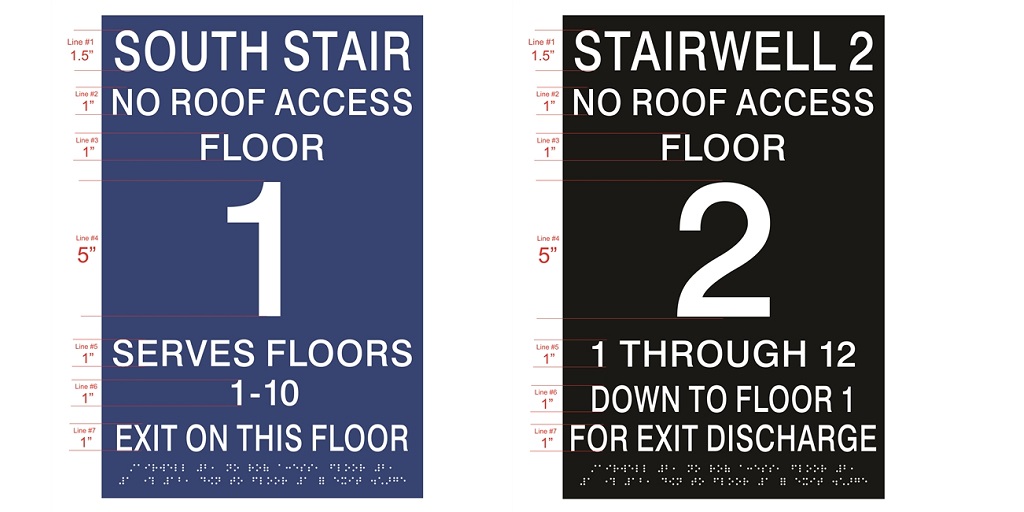
Large tactile letters help people with hemianopia avoid constant scanning. They don’t have to lean in awkwardly or tilt their head to fight for visibility. They can use touch to verify what the door is, which direction the stairs go, and what floor they’re on.
Braille at chest level gives them a backup plan. If the lighting is dim or the environment is busy, they can confirm the information through their hand, not their eyes. It saves energy. And when half of someone’s field of vision is missing, every bit of saved energy matters more than most people think.
Consistency Prevents the Wrong Kind of Guessing
When stairwell signs are placed correctly at the same height, same side,and same distance from the frame, people with hemianopia don’t have to guess where to look. Guessing wrong isn’t just inconvenient. It forces them to turn fully toward the side they can’t see, increasing the risk of bumping into someone, stepping into the wrong room, or completely missing the stairwell entrance.
One predictable sign placement removes that entire set of problems.
Small Choices Create Safer Buildings
Hemianopia doesn’t stop someone from living independently. They just need buildings that don’t work against them. Good lighting helps. Clear hallways help. But properly mounted stairwell signs make movement smoother and safer in ways most people never think about.
For facility owners trying to support low-vision guests or employees, this is one of the easiest improvements to implement and one of the most meaningful.
And if anyone wants a full line of ADA-compliant signages, Braille Sign Pros offers options designed to help every person navigate with more confidence and a lot less guesswork.