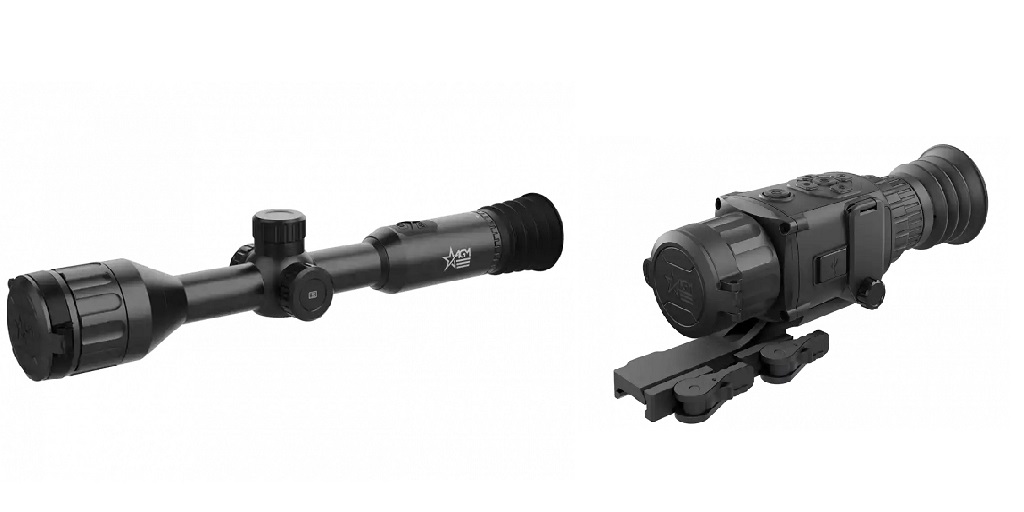
Thermal scopes are expensive, and in many cases you’ll end up paying more for the optic than you paid for the rifle.
With that said, there are a lot of details and specifications you could pore over in your first choice of a scope – but here are some of the more important ones you should consider so you don’t get lost in the weeds.
Thermal Sensor Resolution
Resolution is effectively the number of pixels that constitute the display of the device. Just like on a computer or phone screen, a higher number of pixels will yield a higher resolution and therefore a clearer, sharper image, and better overall image quality. Pixel pitch is another aspect of resolution that impacts how sharp the image is, but unlike the resolution rating itself, you want a lower pixel pitch. Remember this: high resolution and low pixel pitch is the combo you want.
NETD Rating
NETD, or “noise equivalent temperature difference” rating is a metric that measures a thermal scope’s ability to detect differences in temperature. It is measured in millikelvins or “mK,” and the more sensitive it is, the lower the number will be. Therefore, you want a scope with a lower NETD rating. For your first thermal scope, a NETD rating between 15 and 25mK is probably appropriate.
Frame Rate
Frame rate, also known as refresh rate, is how quickly the image on the display refreshes. If you don’t get a scope with a good frame rate, the display will lag when you’re moving, or when you’re tracking a moving target. Higher is better, but 50Hz and above you should be good.
Detection Range
Detection range is how far away the thermal scope can detect and display a thermal signature. Modern thermal rifle scopes often have detection ranges in excess of a mile, but unless you’re taking shots at great distances, this isn’t absolutely necessary.
Battery Life
You’ll want a thermal scope that has a battery life at least 8 hours, and there are models that offer this and more. Ultimately, it depends on how long your night hunts typically last, but you don’t want to get one that will die on you in the middle of the night. Also, bring along a spare charged battery or set of batteries to relieve the main ones should they die.
IP Rating
You will want a thermal scope with an IP rating of at least IP67, which is effectively fully waterproof. A driving rain can be hard on electronics but there’s no way around this; thermal scopes are intended to be used outdoors and need to be able to withstand the pressures of the environment.
Mounting Options
Some thermal scopes are compatible with standard rifle scope rings and many more are compatible with or have Picatinny rail quick Disconnect mounts, making them easy to mount as an optic. Others offer greater flexibility in terms of mounting options, too; get what works for your purposes.
Shop Thermal Scopes at Dark Night Outdoors
There are many excellent thermal scopes (and other thermal imaging optics) out there that offer a good balance of value and functionality and which would serve well as a first scope. To learn more and investigate the top brands, check out Dark Night Outdoors to get started.