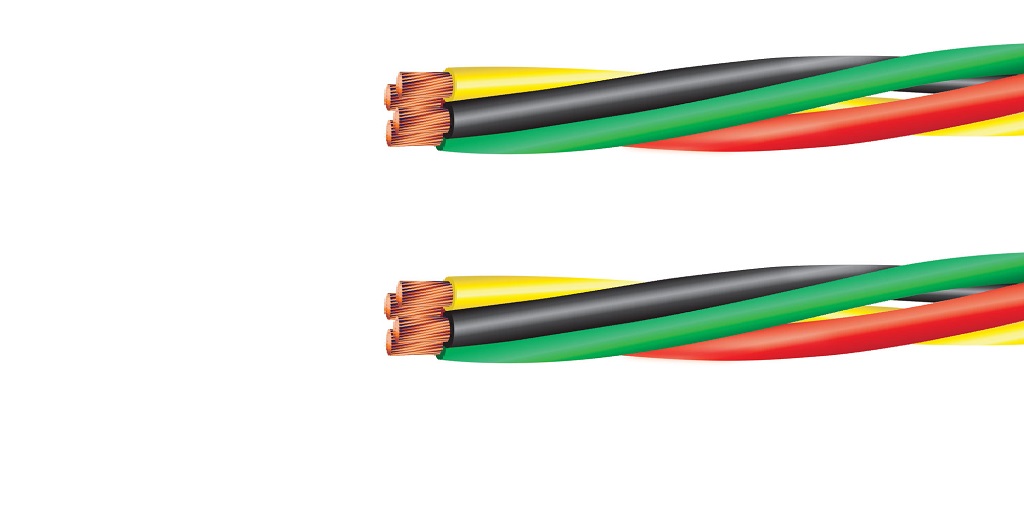
Ever heard the term AWG, as in “6 AWG wire” and not know what it really means?
Here’s your crash course.
What Is 6 AWG Wire?
Let’s start with an example. One of the most common gauges of wire is 6 AWG wire. This stands for “American Wire Gauge” a standardized system used throughout North America.
In American Wire Gauge, the larger the gauge, the smaller the diameter of the wire, and the smaller the gauge, the larger the diameter of the wire.
Consequently, larger gauge wires are light, thin, and flexible, and smaller gauge wires are heavier, thicker, and stiffer.
The one noted, 6 AWG wire, has a diameter of .162” and a cross-sectional area of 13.3mm. This gauge, that is, 6, is popularly used in a wide variety of wiring applications.
Why Is It So Common?
The main reason 6 AWG wire is so common is because it is highly versatile. The gauge of a wire directly impacts its usability (as will be explained below) but this gauge is good for a whole lot of things.
In many residential and commercial applications, 6 AWG wire can be used for power distribution for many different electrical applications, such as lighting, communications, monitoring, and more.
What Does a Larger or Smaller Wire Gauge Indicate?
As stated the larger the wire gauge, the thinner the wire actually is, and vice versa.
The most straightforward implication here is that a thinner wire is lighter and more flexible than a thicker wire. This is important to engineers and electricians because the weight and stiffness of an electrical wire or cable impact how easy it is to work with.
It also carries implications with respect to electrical infrastructure and its limitations. For instance, cable tray is becoming a popular alternative to conduits – but trays can only bear so much weight, and copper wire and cable can be quite heavy.
But aside from this, one of the main determinants of electrical amperage and voltage capacity is the wire’s gauge.
A smaller gauge, that is, a thicker wire, can carry more current and more voltage than a smaller wire or cable. Trying to force too much current through a thin cable (or putting under a high voltage load even with a low current) can be disastrously dangerous.
This is because using a wire that’s too thin for the application will cause it to overheat. Also, placing a wire under a voltage load that exceeds its rated limits increases the chances of sparking, arcing, and overheating, all of which increase the risks of electrical fires and electrocution.
So wire gauge, in this case, American Wire Gauge, is one of the most important determinants to be familiar with when selecting an electrical wire or cable. The size of the wire directly impacts its ability to be used in a given situation – or not.
Where to Get 6 AWG Wire (and Other Electrical Wire and Cable)
Looking for high-quality general purpose 6 AWG wire for power distribution applications? Visit EWCS Wire only via the previous link.
In addition to high-quality building wire for commercial and residential applications, they also sell a wide range of specialized electrical wire and cable for industrial applications, including but not limited to marine battery wire, welding cable, submersible pump cable, bare copper wire for grounding, tray cable, aluminum triplex and quadruplex cable, DLO cable, and much more. They even carry a variety of solar panel cable, too.
For more information visit their website or get in touch with them directly at Sales@EWCSWire.com or at 800-262-1598.