
Ask someone to name a material from which electrical wires are made and almost 100% of the time they will say copper. Just like its use in plumbing, copper is ubiquitous in the world of electrical engineering.
There is good reason for this. It is highly malleable and ductile, has reasonably high tensile strength, and is an excellent electrical conductor. But the truth is also that the cost of copper has soared over the past four years.
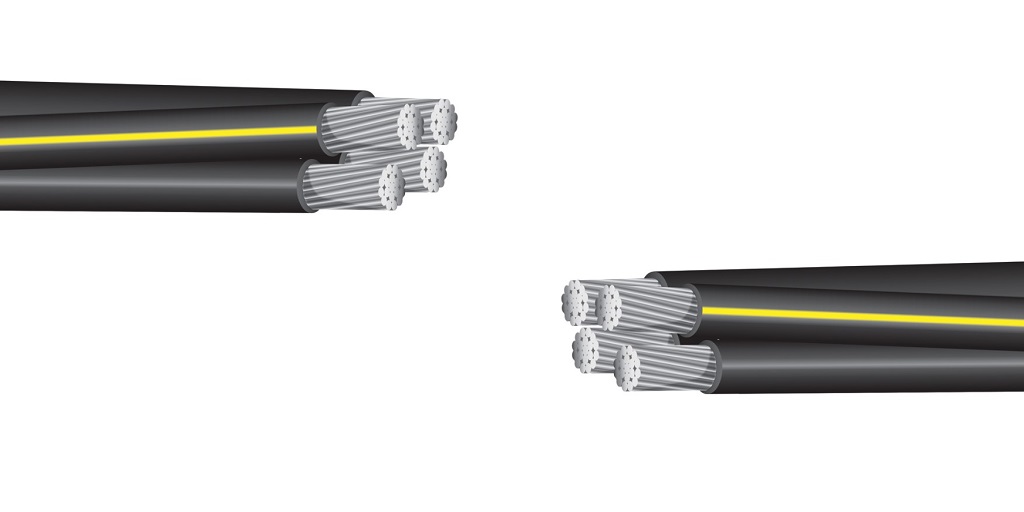
And so, for these and other reasons, aluminum quadruplex wire has become a popular alternative to copper for power service entry, especially for residences around the country. Let’s unpack four reasons that quadruplex wire made of aluminum can take the edge over copper.
The Big One: Cost
Far and away, the main advantage of aluminum wire over copper, and not just for power service entry, is that aluminum is considerably more cost-effective than copper.
Copper has become so expensive that using it for power service entry would become tenuous and have a significant spillover effect on the price of construction that would significantly raise the price of construction.
But there is another element of copper that also impacts its cost, which actually has nothing to do with its dollar value.
Weight
The heavier freight is, the more expensive it is to shop. Gold and steel are both expensive to ship, though gold is considerably more expensive inherently than steel. The same dynamic exists between copper and aluminum.
Copper isn’t just heavier than aluminum, it is several times heavier, and that has an effect on logistical costs. This further raises the price of copper since it can be economically shipped around the country, especially in bulk. Enough wire is already made from copper; shipping more power service entry cables would make the whole situation only that much more expensive.
And, in addition to the effect the weight of copper has on cost, it also makes it harder to work with physically. Lighter cables are easier to work with manually, to raise, and to draw through conduit or to lay it in cable tray.
Ease of Installation
Because aluminum is so lightweight, it is physically much easier to work with it, which makes it more amenable as a material for power service entry cable in the form of quadruplex wire. It is also very soft and ductile, just like copper, so it shares this in common with that metal.
Corrosion Resistance
It’s not that aluminum is corrosion resistant, necessarily, it’s that aluminum responds to corrosion differently from the manner in which copper does.
When you expose copper to corrosive influences like saltwater, it will start to oxidize and that oxidation will travel. Eventually the circuit will fail or you will have an overheating risk, even a risk of fire. At that point the wire will need to be replaced and copper is expensive enough as it is.
Aluminum also oxidizes, but once a thin layer of aluminum oxide forms on the surface of the aluminum, it usually slows or even stops the process. This in effect makes aluminum less prone to the problems of corrosion than copper is.
Need a New Supplier of Aluminum Quadruplex Wire?
Hopefully you found this comparison between aluminum and copper wire to be helpful. If you’re looking for a new supplier of aluminum quadruplex wire, visit EWCS Wire. You can also shop their online collection on their website or get in touch with them directly if you have questions about product specifications or pricing.
