
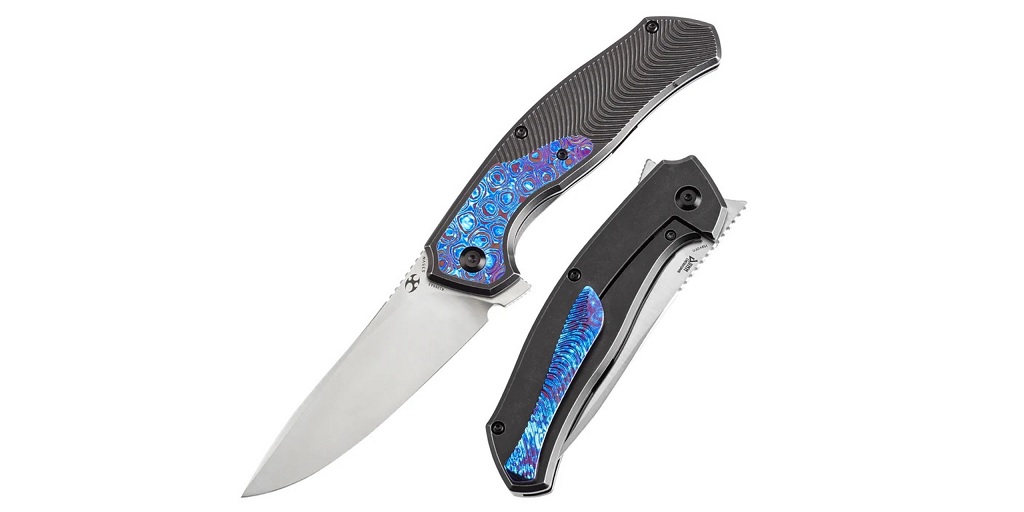
So you’re in the market for a new folding utility knife? Don’t just buy any old thing even if it isn’t one of your top tools.
If you’re replacing one for any reason, here are 4 of the most important things to consider before getting a new one.
Type of Lock
There are folding utility knives that don’t fold. That’s fine if you don’t need a locking knife. In some instances, it might be more of a hindrance than a benefit, especially in some areas.
However, having a folding utility knife with a lock can be safer and often can be put to much harder use.
There are lots of different types of locks that folding knives often have. Among the most common are frame locks and liner locks. These are easy to use with one hand.
There are also lock backs, which are among the strongest, but they do require two hands to close.
Recently, button locks have become more popular. These are stronger than liner locks and frame locks. Like them, they can also be used with one hand, but they are safer too.
Get what works for you.
Blade Profile
Chances are if you’re looking for a folding utility knife, you might just end up with one that accepts those standard razor blades. That’s fine if that’s what you need.
However, if you’re shopping for a more conventional knife, blade profile is one of the most important things to look at.
Blade profile will influence how the knife can be used. For most general applications, spear points and drop points are practical.
For a strong tip, you might also consider a tanto point or a sheepsfoot point, as these are good for hard use, too.
If you’re making a lot of draw cuts, a hawkbill blade might be the best option – but remember, these are difficult to sharpen.
Size
The truth is, in most instances, less knife will be more – especially for general utility, and if you’re looking for a folding model in the first place.
The whole point of a folding utility knife is convenience. No one buys a folding knife because they expect it to be tougher than a fixed blade.
And so, keep in mind the diminishing returns that accompany size increases with a folding knife. A blade between 3 and 4 inches is probably all you’ll need for most of the work that you’ll do – if not smaller.
Steel Chemistry
You don’t need to be a metallurgist here, but the truth is the more you know about steel alloys, the smarter a shopper you’ll be.
For instance, if you need a corrosion resistant knife, there are two elements you’ll want to look for: chromium and nickel. Both are typically added in varying concentrations to improve steel’s rust-resistance.
Chromium keeps rust at bay, but too much will make the steel too soft to hold an edge, so be aware of that.
If you’re the type that uses your knives hard and doesn’t provide them with a lot of TLC, being aware of chemistry can help you select a corrosion-resistant alloy that won’t need a lot of love to keep it from rusting.
Here for a New Folding Utility Knife? Visit White Mountain Knives
If you want to see what some of your options are for a new utility knife, visit White Mountain Knives. They carry a wide range of folding knives (as well as utility knives and work knives) from the top brands, they offer competitive prices and they also offer free shipping in the U.S. too.
