
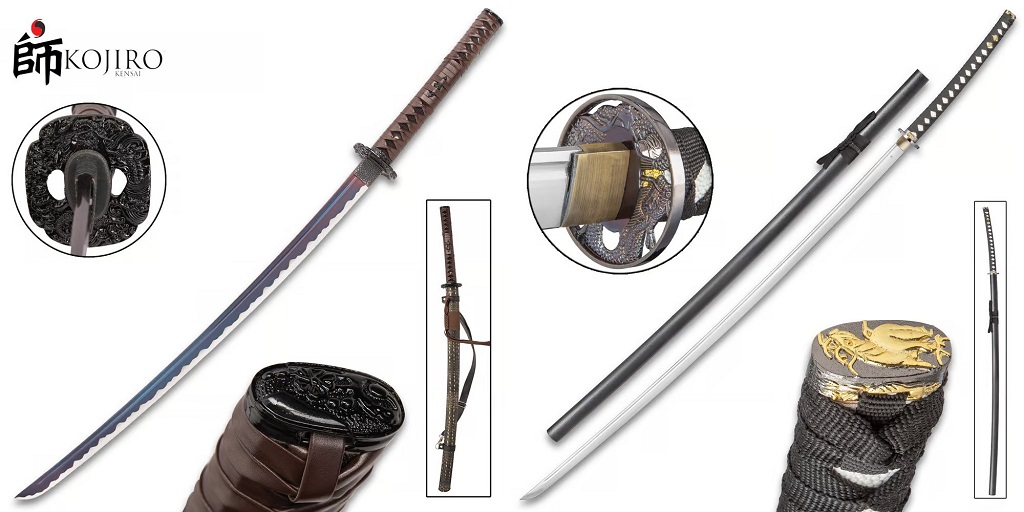
So you’re the proud owner of a new Japanese sword such as a katana or odachi – congratulations!
If your new sword is battle ready – which means it is made from an appropriate steel, is tempered, and has a traditional, full tang (nakago) like a historical Japanese sword, it can be used for training, and this includes cutting practice.
With that said, here are 4 things that make excellent targets for cutting practice with a Japanese sword (or any sword) followed by a few that are decidedly not good ideas
Tatami Mats
Traditionally, tatami mats, which are made of rushes, have been rolled up and used for cutting practice. They offer just the right balance of weight and mass to present a good target, and they require reasonably good form to cut properly, without tearing or messing up the roll of the mat.
They can understandably be a little hard to find, and may not necessarily be cheap, so if you need a practice alternative, consider getting some of those cheap straw beach mats, roll a few of those up, and give it a go.
Water Bottles
Water bottles can also make excellent cutting practice targets. They’re perfect because the plastic used in most water bottles resists a blade, but the water adds mass.
The long and short of it is that you need a very fine edge and good form to slice through a water bottle evenly. If you don’t have those two things, you’ll cut part of the way through or just knock the bottle out of the way.
But if you’re looking for the best of the best – get a milk jug. They are made with a relatively soft plastic polymer called HDPE, which slices like butter. Fill them with water and slice them up – it’s a joy to do so.
Fruit
Fruits can also make excellent targets, and you can start with larger fruits like pumpkins, squashes and watermelons, stepping down to smaller fruits like apples and tomatoes as you become more proficient.
Just one word of caution, here. If you do use fruit for cutting practice with a traditional Japanese sword, make sure you clean the blade off immediately after using it. The acids in most fruit juices will make short work of any finish on the surface of the blade and can force a patina that you might not want, if not worse, rust the blade.
Pool Noodles
Lastly, if you need a cheap and accessible cutting target that definitely won’t break the bank, won’t make a mess, and won’t damage the blade, consider getting a bunch of pool noodles.
They’re also good targets for experienced swordsmen because they’re very light and low density, which can actually make them pretty hard to cut through if they’re freestanding.
What Shouldn’t You Use?
Now let’s cover a few things you shouldn’t cut with your sword: avoid wood, stone, hard plastics, and anything that’s more or less harder than a big fruit. Also, never drive the blade of your sword into the ground. This will dull it quickly, may damage it, and can expose it to salts or other substances that will scratch or corrode the blade.
Here for a New Japanese Sword?
If you’re here for a traditional Japanese sword that’s a work of art and reflective of Japanese culture, take a look at what’s available over at True Swords. They carry a variety of battle-ready swords, and among them are katana, odachi swords, wakizashi, and tanto, among others. Take a closer look at their website and get in touch with them if you have any questions.
For more information about Otf Knife and Rengoku Sword Please visit: True Swords.
