Two common chamberings for AR-style rifles are 5.56 NATO and a less-common, more modern offshoot, .300 BLK, also referred to as .300 Blackout.
Side by side, it is apparent that the .300 BLK shoots a larger, heavier bullet, but if you’re thinking about building with a side charging upper for an AR build and are tossed up between these two options, here are a few things to unpack.
5.56 Is Cheaper
For one, 5.56 is considerably cheaper than .300 BLK. The 5.56 is like 60 years old and the .300 BLK is barely ten, not to mention that there are tons of rifle models chambered in 5.56 and very few for .300.
5.56 Is More Available
Because of its age and ubiquity, the 5.56x45mm NATO cartridge is available pretty much anywhere ammunition is sold. It might be hard for you, by contrast, to find a shop that sells .300 BLK, though you can likely buy it online.
5.56 Is Better for Long-Range Shooting
If long-range shooting is your game, do not build a .300 BLK rifle, side-charging or otherwise. Beyond 100 yards, the .300 BLK drops like a rock and sheds ballistic energy pretty badly, too.
By contrast, the 5.56 is not just a good long-range cartridge, at least for target shooting, but it is one of the best of all time.
.300 BLK Produces Better Stopping Power
If your sport is hunting (at close ranges) or personal defense, the .300 BLK has the 5.56 beaten, pretty handily. It produces much more stopping power making it more effective at threat neutralization, or for dispatching hogs, coyotes, or other intermediate game, for that matter.
.300 BLK Performs Better from Shorter Barrels
The .300 BLK performs not only well, but very well from short barrels, even in the pistol range, like 7.5”. The entire propellant charge can deflagrate entirely in a very short barrel, meaning you get the full ballistic potential of the cartridge even in SBRs and ARPs.
.300 BLK Is Suppressor Friendly
Not only does the .300 BLK perform well in short barrels, but it also runs very well suppressed, and there are subsonic loads that are perfect for this.
You Can Use Some of the Same Parts with both 5.56 and .300 BLK Rifles
A .300 BLK build can use a lot of the same parts as a 5.56 build, so you may be able to recycle some parts. Obviously you’ll need a barrel swap, and you might need heavier buffer weights (or to adjust the gas system) but still, some parts are interchangeable.
.300 BLK Is Harder to Find and More Expensive, But You Can Load Your Own with Old 5.56 Brass
While it’s hard to come by .300 BLK ammo, if you do get (or build, or convert) a .300 BLK rifle, you can neck out 5.56 casings that are in good shape and reload them at .300 BLK. Just inspect the cases first and make sure you follow a reloading guide to be safe.
Here for a Side-Charging Upper for an AR Build?
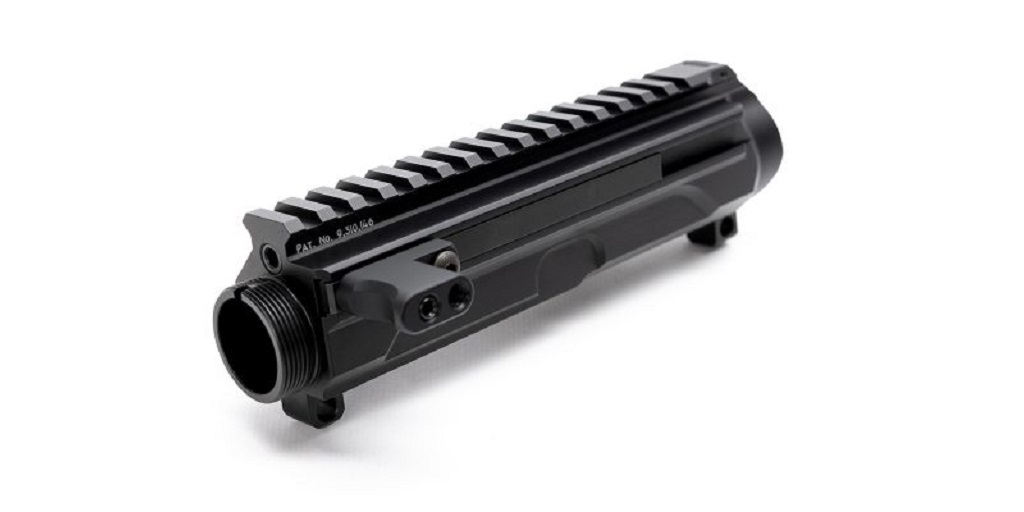
If you’re interested in a side charging upper for an AR chambered in .300 BLK or for parts compatible with one, visit Gibbz Arms first. They’re the authority in side-charging AR technology and partner with other industry greats like Mos-Tek to produce the tightest tolerances and best performance in the shooting sports.