
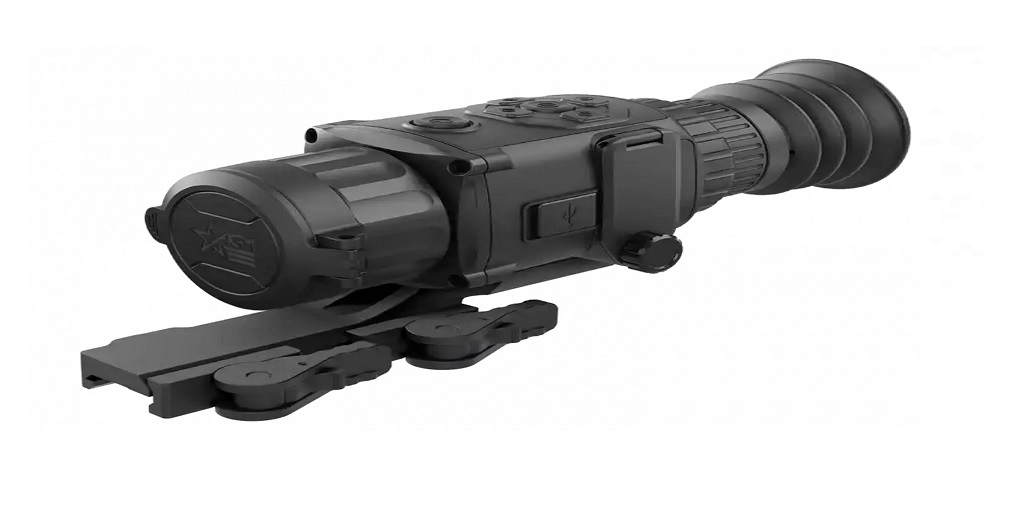
Most “best of” guides will take the approach of recommending specific models given a price range or usage considerations. This short post will take a slightly different approach based on features that drive value.
With that said, here are 5 features that the best thermal scopes should offer and which drive value.
A High Resolution and Small Pixel Pitch
The higher the resolution of the thermal sensor, the clearer the picture will be, holding all other variables constant. The lowest acceptable sensor resolution you should look for is 384×288, which is fairly common on thermal scopes, and they go up from there.
Pixel pitch refers to distance between the center of two adjacent pixels; therefore, a small number indicates a small distance, and therefore more pixels per unit area. The lower the pixel pitch, the better. Opt for a thermal scope with a pixel pitch of 12μm, but if you can find one with a smaller pitch, that’s even better.
A Low NETD Rating
NETD, or noise equivalent temperature difference, is a sensor’s ability to detect temperature differentials within a sight picture. The lower the number, the more sensitive the sensor is to temperature differentials, therefore this is one area in which a lower number is better.
The lower the NETD rating, the better you will be able to see the difference between hot and cold areas, resulting in a clearer sight picture. This and resolution are the two main determinants of clarity on the scope’s display.
A High Frame Rate
Frame rate, also known as refresh rate, refers to how quickly the image on the scope’s display refreshes itself. The higher the frame rate, the clearer the picture will be, and the less lag there will be. This is most critical when you are moving or when you are tracking a moving target, as a moving target will look hazy, fuzzy, or laggy through a scope with a low refresh rate.
Anything about 50Hz is suitable for practical use, and some brands such as InfiRay Outdoor, have pioneered thermal scopes with refresh rates as high as 90Hz.
A Long-Lasting Battery
In addition to a main internal battery some thermal scopes can also accept an auxiliary, removable, rechargeable battery. What you want in a good thermal scope is a long battery life, as a nocturnal hunt can go several hours, even longer in some cases.
A Good IPXX Rating
One more thing the best thermal scope for the money is sure to have is a good IPXX rating against moisture and particulate ingress. This is necessary because you will be using these thermal scopes in the field where conditions may not agree; high humidity and precipitation can badly damage, even incapacitate electronics unless they are safeguarded by appropriate IP ratings.
What Are Some of the Best Thermal Scope Brands?
If you’re in the market for a new thermal scope, consider one from AGM, InfiRay, iRayUSA, PULSAR, Nocpix or RIX. You can explore these and others at Dark Night Outdoors, which represents the best brands on the market. Just make sure you get one that offers the performance outlined here.
