
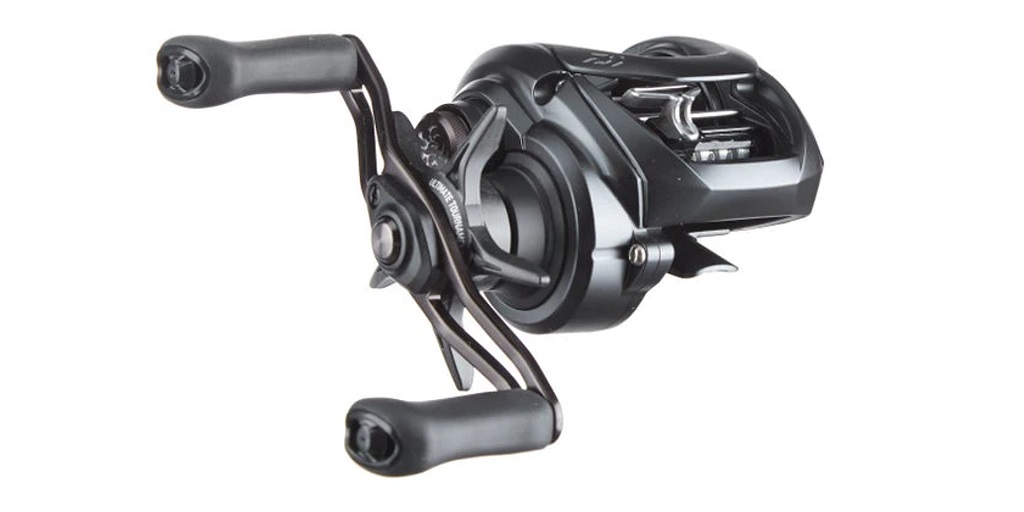
There are lots of things you should never do with your Daiwa fishing reels, but some of them are too specific to convert into universal caveats.
With that said, we ruminated quite a bit and came up with 5 things you should pretty much never do with your Daiwa reels – whether they are conventional or spinning reels.
Actually, this list of warnings doesn’t just apply to Daiwa. Don’t do these 5 things to any fishing reels.
Forget to Clean Them After Every Use
Sure, you can slack off in freshwater, at a price. But try that in saltwater and the next time you go to turn the crank, don’t be surprised (or even think about filling out a warranty form) if the crank handle is seized.
There’s a reason you’re supposed to clean (and oil) your Daiwa fishing reels, and it’s because these things are packed to the gills (gears?) with moving parts. Saltwater (and to a lesser degree, sweetwater) is a noxious corrosive agent.
It will rust and corrode steel and even (eventually) brass, locking your reel in place. After every trip, give them a light rinse, wipe them down, and oil all accessible moving parts.
Hit Them with a Jet of Water
You are supposed to rinse off your Daiwa fishing reels after every outing. You are not supposed to blast them with a jet of water.
Doing so will drive saltwater, sand, and other debris and corrosive elements deeper into the reel’s workings – and that is expressly what you are trying to avoid.
Rather, get a damp rag and wipe off the exterior, or better yet, mist them (lightly!) with a hose before wiping dry and oiling all the moving parts.
Leave the Drag Tightened
After you get off the water, one of the first things you should do is loosen your drag knob almost all the way. This applies whether you fish with spinning tackle or casters.
Most drag systems utilize a series of friction plates or felt washers. By tightening the drag, you make it harder for the spool to spin against the force applied by them.
However, by leaving the drag tightened, in some cases you can compress these plates, diminishing the power of the max drag you can apply.
The fix is simple – just loosen the drag knob when you get done for the day.
Leave Them Outside
It’s bad enough for the reel if you leave it outside, but our main concern here is the line.
The thing is, fishing line is not designed expressly to be UV-resistant. So whether you fish with fluoro, mono, or braid, leaving it out baking in the sun is quite literally asking for photodegradation.
Which means your line will get brittle and the breaking strength will decrease. The solution? Store your rods and reels inside, or at least out of the sun.
Forget to Oil the Line Roller or Level Wind
There are lots of moving parts on any type of fishing reel, but two that you need to keep well-lubricated are the line roller (on a spinner) and the level wind (on a caster, if present).
The line roller helps prevent line twist and the level wind, which consists of a brass worm gear and a guide, helps lay the line evenly on the spool to keep it from stacking up all on one side.
Either way, make sure you adequately clean and oil these two parts after every trip on the water.
Time for a New Daiwa Fishing Reel?
If you don’t heed these precautions for care of a Daiwa fishing reel, sooner or later it’ll be time for you to get a new one.
If that’s the case, visit No Bad Days Kayak and check out the tackle they carry – Daiwa is only one of the top brands they represent.
