
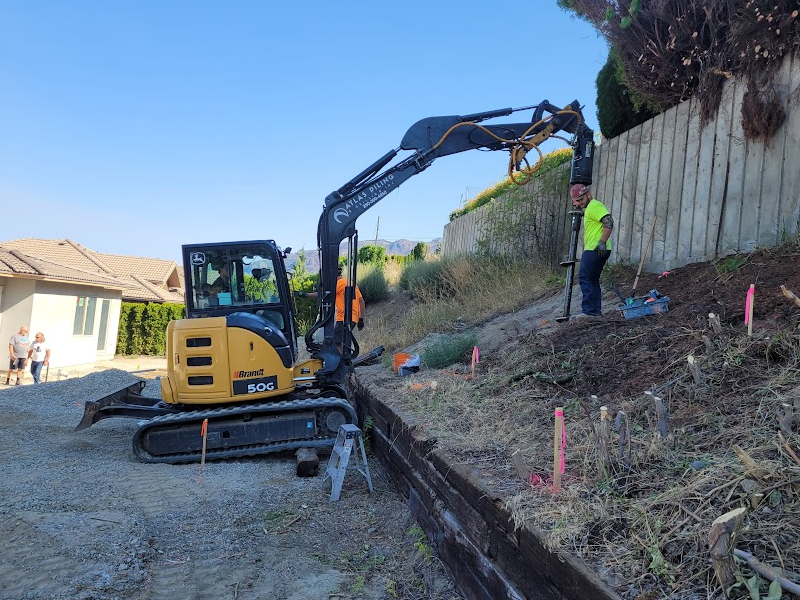
Foundation stability depends on precision. Engineers and builders rely on accurate testing standards to ensure structural loads are properly supported, and recent advancements in testing methods are changing the game. New insights into the load-bearing capabilities of helical screw piles are reshaping how projects are planned, designed, and executed.
Whether you’re working on residential, commercial, or industrial foundations, understanding these updated standards can help you make smarter decisions and avoid costly structural risks down the road.
Why Load-Bearing Capacity Matters More Than Ever
Helical screw piles are widely used for supporting heavy loads in challenging soil conditions. However, the actual performance of these piles depends on multiple factors—soil composition, pile size, torque measurements, and installation techniques. Traditional testing methods often left room for interpretation, but the latest standards bring a much-needed level of accuracy and consistency.
Modern guidelines focus on improving predictability in two critical areas: axial compression capacity (the downward force a pile can handle) and tensile capacity (the upward resistance against pullout). With stricter requirements, engineers now have clearer data to design foundations that remain stable even under extreme stress conditions.
Key Updates from Recent Testing Standards
The updated testing frameworks highlight several important changes that impact how helical screw piles are evaluated:
Improved Torque Correlation Techniques
- Engineers have traditionally relied on torque-to-capacity ratios to estimate load-bearing strength. New research fine-tunes these calculations by accounting for variations in soil density and installation speed. This leads to more reliable predictions and fewer installation errors.
Enhanced On-Site Load Testing Protocols
- Instead of relying solely on theoretical calculations, modern standards emphasize direct on-site load testing. This includes both compression and tension tests, ensuring the piles meet real-world performance demands rather than just lab-based expectations.
Standardized Data Recording
- Previous inconsistencies in reporting often caused project delays or design flaws. The new protocols require detailed documentation of pile installation torque, depth, and soil response, giving engineers a stronger foundation for decision-making.
Greater Focus on Safety Margins
- The revised standards also emphasize larger safety factors for high-risk structures like multi-story buildings, retaining walls, and bridges. This ensures helical screw piles are tested to withstand higher-than-expected loads before they’re approved for use.
Why These Changes Matter for Builders and Engineers
For construction professionals, these new standards provide more than just technical improvements—they reduce financial and structural risks. With better data, engineers can:
- Optimize designs without overbuilding or underestimating load requirements.
- Identify unsuitable soil conditions early, saving time and costs.
- Ensure regulatory compliance with evolving engineering standards.
- Enhance long-term structural stability, minimizing the chances of settlement or foundation failure.
These benefits are particularly critical for projects involving unpredictable soil conditions, waterfront properties, or areas prone to frost heave—situations where foundation reliability is non-negotiable.
Looking Ahead: The Future of Helical Screw Pile Testing
As technology advances, testing methods for helical screw piles will continue to evolve. Remote monitoring systems, AI-driven torque predictions, and real-time load testing sensors are expected to become standard in the coming years. These innovations aim to make foundation installations even more precise, efficient, and cost-effective.
By staying updated on the latest testing standards, builders and engineers can confidently design foundations that meet modern safety expectations while maintaining project efficiency.
The updated testing standards provide a stronger, science-backed framework for evaluating the performance of helical screw piles under real-world conditions. By adopting these improved methods, construction professionals can reduce risks, improve accuracy, and ensure that every project stands on a reliable foundation.
For More Information About Best Piling Services and Underpinning Services Bc Please Visit: ATLAS PILING.
