
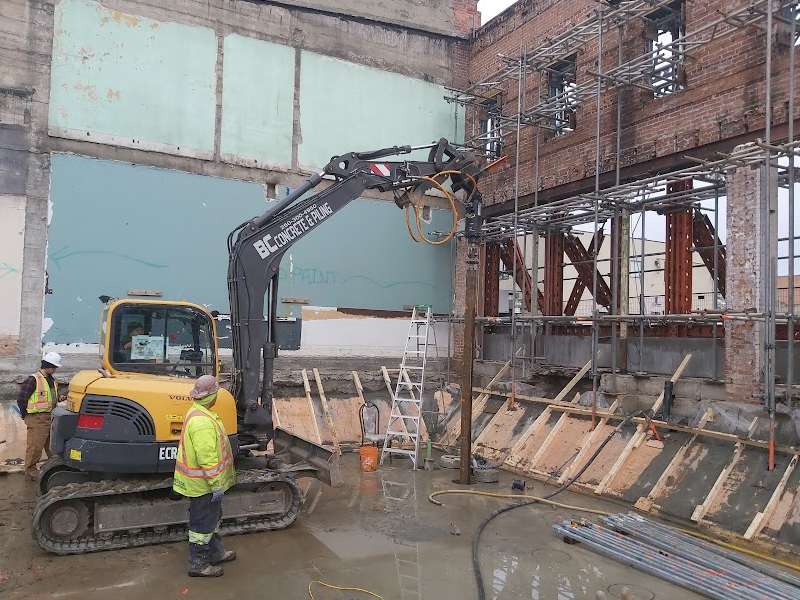
In today’s construction industry, sustainability is no longer a bonus feature—it’s a key requirement. As developers aim for certifications like LEED (Leadership in Energy and Environmental Design) and other green building standards, the focus has shifted toward foundation systems that minimize environmental disruption and optimize long-term performance. One solution increasingly preferred for both its efficiency and eco-friendly profile is helical piles.
Sustainability in construction starts from the ground up—literally. Foundations are among the most resource-intensive parts of any project, and traditional concrete foundations often come with heavy carbon footprints due to cement production, soil excavation, and waste. Helical piles, on the other hand, provide a cleaner, faster, and more sustainable foundation solution that aligns perfectly with the principles behind LEED and similar programs.
Reduced Environmental Impact
One of the key reasons helical piles contribute to sustainability credits is their minimal site disturbance. Unlike driven piles or poured concrete foundations, they require no excavation or large-scale soil displacement. This helps preserve the natural landscape, prevents soil erosion, and reduces the need for heavy machinery. In LEED’s framework, this can help earn points under “Sustainable Sites” and “Materials and Resources” by minimizing land degradation and conserving existing ecosystems.
Moreover, helical piles produce little to no spoil. Because they’re screwed directly into the ground instead of being hammered or dug in, there’s no excess soil to transport or dispose of—a significant reduction in construction waste. That alone makes them a compelling choice for eco-conscious builders looking to optimize efficiency without compromising the planet.
Recyclable and Reusable Materials
Most helical piles are made from galvanized steel, a material known for its strength and recyclability. At the end of a structure’s life cycle, these piles can be easily unscrewed and reused elsewhere, contributing to circular construction practices. This aligns with LEED’s emphasis on reusability and resource efficiency—two areas where traditional concrete foundations fall short.
Developers pursuing green certification can benefit from specifying foundations that have a documented end-of-life reuse plan, supporting waste reduction credits under LEED’s “Materials and Resources” category. The ability to repurpose helical piles makes them a clear win for builders targeting sustainable design points.
Energy Efficiency During Installation
Reducing energy consumption on job sites is another important sustainability goal. Traditional foundation work often involves diesel-powered equipment and energy-heavy curing processes for concrete. In contrast, helical piles can be installed using smaller, more energy-efficient equipment, and they require no curing time. The faster installation not only saves time but also significantly cuts down on emissions and energy use associated with heavy construction operations.
In LEED and similar systems, energy-efficient construction practices can contribute to points under “Energy and Atmosphere” or “Innovation in Design.” By incorporating helical piles, developers can demonstrate measurable improvements in reducing greenhouse gas emissions during the construction phase—something increasingly important in sustainability assessments.
A Foundation for the Future
The construction industry’s shift toward sustainability is driving innovation across every stage of development. By integrating helical piles into foundation design, developers not only streamline their projects but also contribute to measurable environmental goals. From reduced waste and lower emissions to improved site preservation and reusability, these foundations represent a modern approach to sustainable building that helps earn valuable certification credits—without compromising strength or performance.
In short, helical piles are not just a smarter engineering choice—they’re a crucial component of responsible, forward-thinking construction practices that support the growing demand for greener, more resilient communities.
For More Information About Expert Drilling Contractor and Best Drilling Service Please Visit: ATLAS PILING.
