
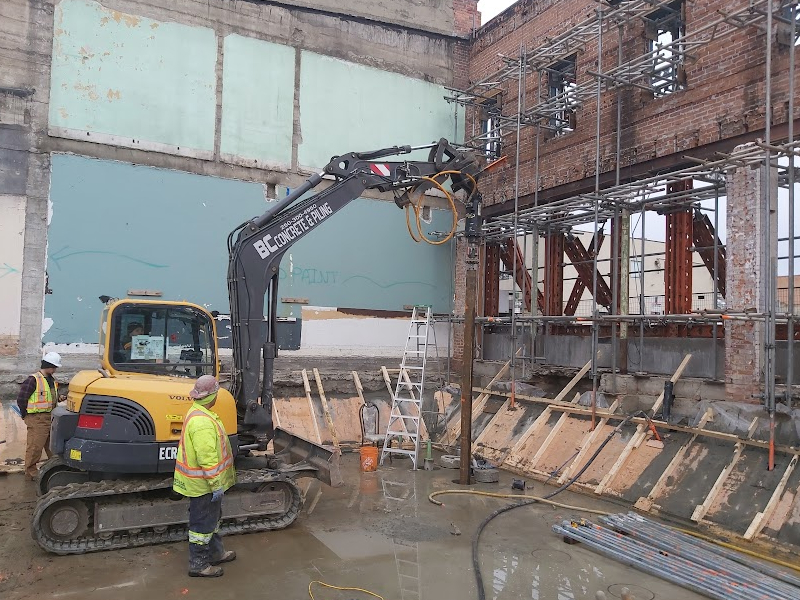
Across many construction sites, the performance of a foundation often depends on one critical factor—soil condition. Some soils can easily support traditional concrete footings, while others present challenges that make conventional foundations costly, time-consuming, or even unstable. In such cases, using a helical pile driver to install helical piles offers a more reliable and efficient solution.
Helical piles have gained attention for their versatility and ability to perform exceptionally well in specific soil conditions where concrete foundations struggle. Here’s a closer look at where these screw-in foundations shine the most.
Soft and Compressible Soils
Soft or loose soils, such as silty clay or peat, are notoriously difficult for concrete foundations. These soils compress easily under weight, causing uneven settlement and structural instability. Installing concrete in such conditions often requires deep excavation, extensive soil replacement, or additional reinforcement—all of which increase project costs and time.
A helical pile driver can overcome this challenge by advancing the pile deep into stable strata below the soft surface layers. Each helical blade acts like a screw, anchoring the pile securely into the stronger soil beneath. This minimizes settlement issues while providing immediate load-bearing capacity—something concrete foundations can’t offer without lengthy curing and preparation.
Expansive Clay Soils
Expansive clays pose another major problem for concrete foundations. These soils expand dramatically when wet and shrink when dry, creating upward and downward forces that crack and shift rigid concrete structures.
Helical piles, however, flexibly adapt to such changes. With a helical pile driver, the piles can be installed to a depth beyond the active clay zone, anchoring the structure to stable ground that remains unaffected by seasonal moisture changes. This prevents movement, maintaining the integrity of decks, additions, and light commercial buildings built over clay-rich areas.
Frost-Susceptible or Cold-Climate Soils
In regions where the ground freezes during winter, frost heave becomes a serious concern. The upward pressure caused by ice lenses forming in the soil can push concrete foundations upward, leading to cracks and misalignment.
Helical piles solve this problem by extending below the frost line. The helical pile driver installs them to depths where temperature fluctuations have no effect. Because the piles are steel and installed below frost-prone layers, they remain stable year-round, eliminating the heaving and settling issues common in concrete footings.
Wet or Waterlogged Ground
Building in areas with high water tables or poor drainage can be difficult for traditional concrete foundations. Pouring concrete in wet conditions can compromise its strength and consistency, leading to uneven curing and long-term durability issues.
Helical piles thrive in these environments. A helical pile driver installs them quickly, even in saturated soil, without the need for dewatering or waiting for dry conditions. Since they displace soil rather than remove it, installation creates minimal mess and environmental disturbance—perfect for lakeside properties, wetlands, or flood-prone regions.
Variable or Layered Soils
Many construction sites feature inconsistent layers of soil—sand over clay, silt over gravel, or a mix of fill and natural soil. These conditions make it difficult to design a uniform concrete foundation, as each layer responds differently to loads and moisture.
Helical piles provide flexibility and consistency across these varied layers. By using a helical pile driver, contractors can adjust torque and depth during installation, ensuring that each pile reaches a stable bearing stratum regardless of what lies above it. This adaptability makes helical piles particularly effective for retrofits, extensions, and sites with unpredictable ground conditions.
For More Information About Piling Services British Columbia and Residential Piling Services Bc Please Visit: ATLAS PILING.
