
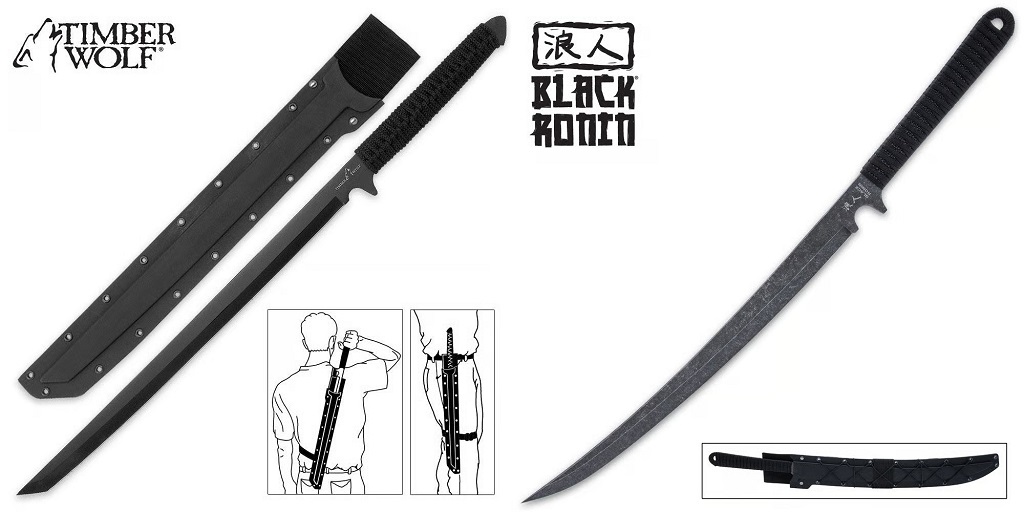
Ever heard of a daisho? It refers to a traditional pairing of two Japanese swords, most typically a wakizashi and katana.
They are often sold as pairs intended to be used in displays, especially to westerners that are infatuated with Japanoiserie.
That said, these swords are often sold with cleaning kits that are as decorous – and intended for decoration – as the swords themselves.
Not that they are inherently useless, but if you don’t know how to use them, then the point is moot.
This short guide will break down most of what you need to know about care and maintenance of traditional Japanese swords such as wakizashi and katana – or a tanto or odachi sword, if you have those.
The Problem with Traditional Japanese Cleaning Kits
Most traditional Japanese sword cleaning kits come with a small brass hammer, a bottle of choji oil, some rice paper, and an ukicho powder ball.
The brass hammer is used to remove the mekugi-ana from the nakago so that the blade can be removed from the tsuka.
The choji oil is used to protect the blade, the ukicho powder ball is used to absorb excess oil, and the rice paper is used to wipe down the blade.
The issue is that these kits are usually not very functional. There are better ways to care for a katana or wakizashi at home using improvised solutions.
DIY Japanese Sword Maintenance
In the absence of a traditional cleaning kit, you can use a small hammer and blunt nail of appropriate diameter to remove the mekugi from the tsuka.
Though choji oil is effective at protecting the blade, and the blade should be protected in a thin layer of oil at all times, you can use alternatives.
Some suitable alternatives to traditional choji oil are machine oil, gun oil, or just plain mineral oil (or you can make your own choji oil from a mixture of mineral oil and clove oil in a 99:1 ratio).
The blade must be cleaned and oiled after each use, and should be periodically oiled regardless of use, in order to prevent discoloration and corrosion.
Once you’ve applied oil to the blade, if necessary, you can use some talcum powder to absorb some of the excess oil, before using a clean microfiber rag to wipe away the excess, before you reassemble the sword.
Another good tip is to be conscientious of what you train with. Fruit and water bottles may be easy to cut, and relatively safe for the blade, but water will cause rust, and fruits and vegetables contain acids that can stain an unprotected blade in a matter of minutes.
If you can, stick with traditional cutting materials, like rolled tatami mats that are clean and dry. Otherwise, be judicious about cleaning your blade.
Where to Get a Daisho (Wakizashi and Katana)
Looking for a new, quality, battle-ready pair of traditional Japanese swords, like a wakizashi and katana? Get them online at True Swords. They carry a wide range of battle-ready patterns and plenty of traditional Japanese swords, too.
