
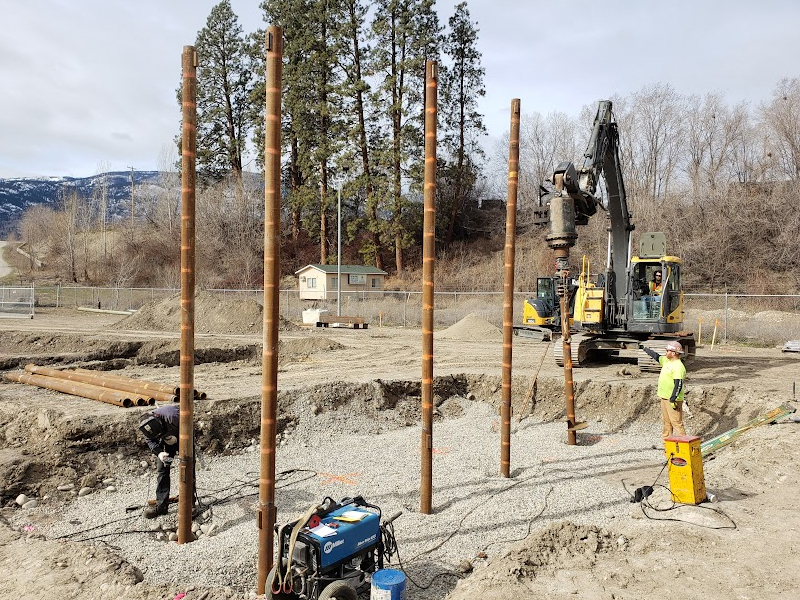
Industrial facilities and solar installations often demand foundations that can bear substantial weight without compromising structural integrity. Traditional concrete footings can be labor-intensive, expensive, and disruptive to install, particularly in areas with challenging soil conditions. Helical pile foundations offer an alternative that can handle heavy loads efficiently, making them increasingly popular for projects that require durability, speed, and minimal disturbance.
Handling Industrial Loads
One of the key advantages of a helical pile foundation is its ability to distribute weight effectively. The design of these foundations allows them to transfer the load from structures directly to deeper, more stable soil layers. This characteristic is particularly important for industrial equipment, which often concentrates heavy loads over small surface areas. By extending load-bearing support into deeper strata, helical pile foundations reduce the risk of uneven settling, ensuring the equipment remains level and operational over time.
Stability for Solar Installations
Solar panel arrays, whether on rooftops or ground-mounted, also benefit from the load-bearing capabilities of helical pile foundations. Although the weight of solar panels may not compare to heavy machinery, the need for stability over wide spans is critical. Fluctuating winds, snow accumulation, and environmental exposure can place considerable stress on standard foundations. Helical piles offer enhanced resistance to lateral and vertical movement, which helps maintain alignment and prevents costly maintenance or structural damage.
Quick and Efficient Installation
Installation efficiency is another reason project managers consider helical pile foundations for heavy-load applications. Unlike traditional poured concrete footings that require curing time and extensive site preparation, helical piles can be installed quickly and with minimal excavation. This reduces disruption to the surrounding site and allows industrial operations or solar installations to proceed faster. Additionally, the precise engineering involved ensures that each pile can be customized to meet specific load requirements, whether it’s a high-capacity motor, large-scale storage tank, or extensive solar array.
Durability Under Dynamic Loads
Durability is a further benefit. Industrial equipment often generates vibrations and dynamic forces that can weaken conventional foundations over time. Helical pile foundations are designed to withstand such conditions. The steel construction and screw-like design provide both flexibility and strength, absorbing and distributing dynamic loads without significant movement. For solar projects, this resilience translates to long-term reliability, even under heavy snow loads or shifting soil conditions, maintaining the efficiency of the energy system.
Low Maintenance Requirements
Maintenance considerations also favor helical piles for projects with substantial weight demands. Because the piles are driven deep into stable soil, routine inspections are usually sufficient to ensure continued performance. Unlike shallow footings that may require reinforcement or repair due to shifting or erosion, helical pile foundations maintain consistent performance, saving time and reducing long-term costs.
Meeting Safety and Code Requirements
Safety and compliance with building standards are critical when dealing with industrial loads or renewable energy infrastructure. Helical piles are often designed in accordance with local engineering codes and are suitable for diverse soil conditions, from dense clay to loose sand. This flexibility ensures that projects meet regulatory expectations without requiring major adjustments to the site plan.
By choosing helical pile foundations, project teams can confidently install heavy machinery or solar panels while minimizing risk and maximizing efficiency, creating a foundation that truly supports the scale and demands of the project.
For More Information About Drilling Contractor Okanagan Valley and Piling Services Bc Please Visit: ATLAS PILING.
