
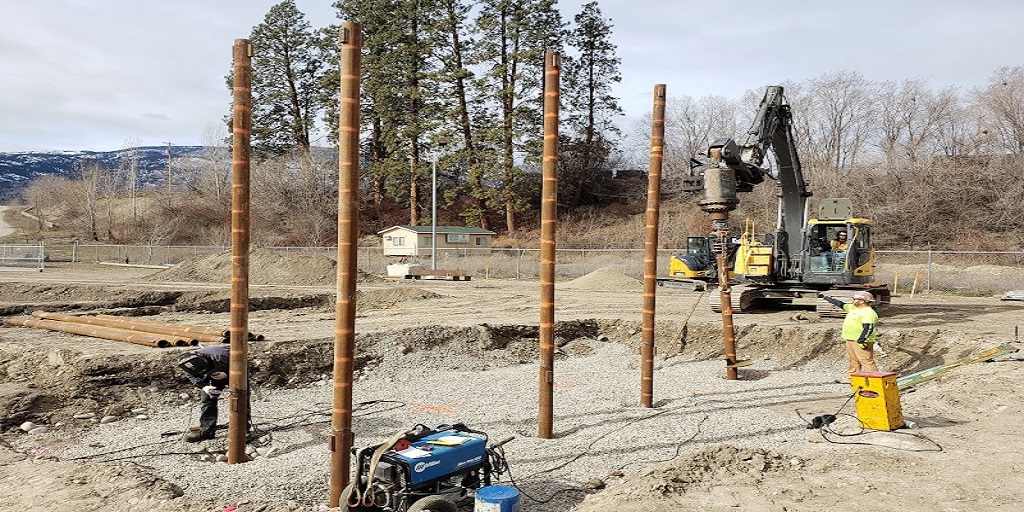
Helical piles are increasingly recognized as a versatile and efficient foundation solution across various construction applications, but a common question that arises is whether they can be utilized for bridge foundations. To understand the suitability of helical piles for such critical infrastructure projects, we need to explore their design, installation, and load-bearing capabilities.
Understanding Helical Piles
Helical piles, also known as helical piers or screw piles, consist of steel shafts with helix-shaped plates attached at intervals. These plates act like augers, allowing the piles to be easily installed into the ground. Unlike traditional driven piles, helical piles offer a more efficient installation process. They can be installed in tight spaces, in both rocky and soft soil conditions, and do not require heavy machinery, making them an ideal choice for a wide range of foundation needs.
The installation of helical piles is a straightforward process that minimizes disruption to the surrounding area. By simply screwing the piles into the ground, they achieve their bearing capacity quickly. This makes them particularly useful in locations where traditional excavation and concrete methods are impractical or too costly.
Load-Bearing Capacity
A key factor in the suitability of helical piles for bridge foundations is their load-bearing capacity. The design of helical piles allows them to transfer high axial loads efficiently, making them a viable alternative to other deep foundation systems. These piles are capable of handling significant vertical loads and lateral forces, making them well-suited for the dynamic forces typically encountered in bridge structures.
Helical piles’ ability to provide deep foundation solutions without the need for concrete caissons or pile caps means they can be used effectively in environments with limited space or challenging soil conditions. The load-carrying capacity of helical piles is determined by factors such as soil strength, the number of helices, and the size of the pile shaft. In many cases, they are used in conjunction with other foundation systems to achieve optimal results.
Benefits of Using Helical Piles for Bridge Foundations
Helical piles offer several benefits for bridge foundations, including:
- Cost-effective installation. The installation of helical piles is quicker and more cost-effective than traditional methods, which can lead to significant savings, particularly on large infrastructure projects like bridges.
- Reduced disruption. The minimal disturbance to the environment and surrounding structures makes helical piles an attractive option for bridge foundations in urban or environmentally sensitive areas.
- Versatility. Helical piles can be used in various soil conditions, from soft soils to dense clay and even bedrock, without compromising their integrity. This versatility is crucial for bridge foundations that may require deep foundations to avoid instability or settlement.
- Long-term durability. Helical piles are made from high-quality steel, which provides excellent corrosion resistance, ensuring the longevity of the foundation. This durability is especially important for bridge foundations that need to withstand the elements and heavy traffic loads over many years.
- Speed of installation. The quick installation of helical piles translates to reduced construction timelines. This can be particularly beneficial in regions with harsh weather conditions where delaying construction can lead to costly project overruns.
The use of helical piles for bridge foundations offers a robust solution that combines efficiency, cost-effectiveness, and environmental sustainability. As infrastructure projects continue to evolve, the adaptability and performance of helical piles make them an attractive option for bridge foundations.
Their ability to accommodate complex soil conditions, high loads, and challenging installation sites sets them apart from traditional deep foundation systems. Whether for new construction or retrofitting existing structures, helical piles represent a modern foundation solution that can meet the demands of today’s infrastructure projects.
