
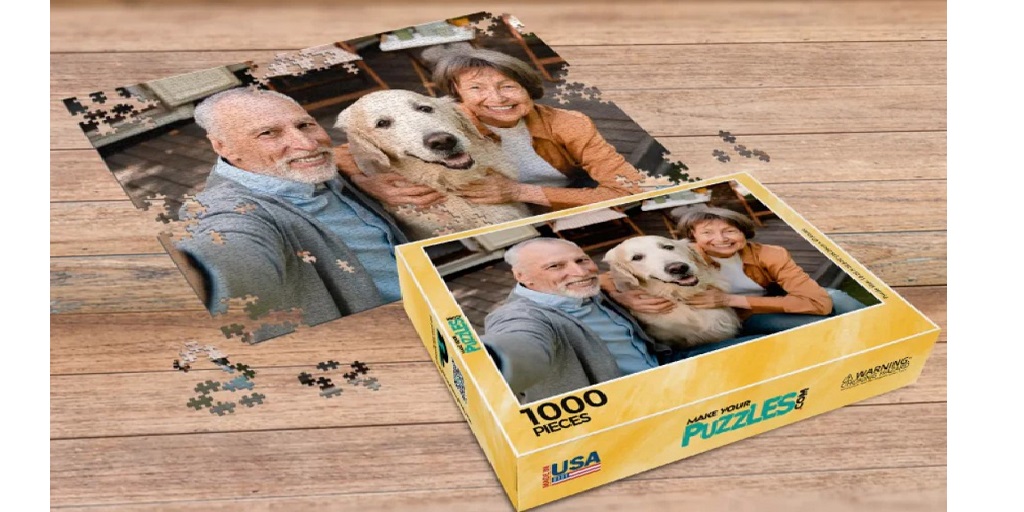
If you’re serious about competing in jigsaw puzzle contests and consider yourself a dissectologist, the right training images can sharpen your skills dramatically. Jigsaw puzzling at a competitive level isn’t just a relaxing hobby—it’s a mentally intense, strategic endeavor.
Choosing the best images for custom puzzles can help you target specific skills like color sorting, edge detection, shape recognition, and speed. So, what types of images should you use to create training puzzles that actually make you better? Here are some of the most challenging custom puzzles for a person who loves completing challenging jigsaw puzzles.
High-Contrast Abstract Art for Color Sorting
One of the best ways to boost your sorting skills is to use abstract art puzzles with bold, contrasting colors and defined lines. These images challenge your ability to identify and organize pieces by color quickly.
Think of modern, geometric designs with plenty of color zones—reds, blues, yellows, blacks—each sharply divided. These types of images make it easier to sort by color but harder to piece together due to lack of subject context, which builds your mental stamina and attention to detail.
Nature Landscapes with Repetitive Pieces
Landscapes like forests, oceans, and mountain ranges with repeating patterns are excellent for sharpening your ability to recognize subtle differences. For example, an image of a snowy mountain with large swathes of white and blue trains your eye to detect minute differences in shading and piece shape.
You could also choose a lush forest scene where leaves and branches blend into each other. These puzzles improve your patience, pattern recognition, and ability to work with texture-heavy sections, which are often the most time-consuming in competitions.
Collages with Multiple Small Elements
Custom puzzles featuring collages or densely packed images of smaller objects—such as vintage toys, buttons, candies, or comic book covers—are ideal for enhancing visual scanning speed.
These images typically have many micro details and colors, forcing your brain to scan and identify quickly. They’re also perfect for working on the skill of piece association—matching a single puzzle piece to its spot based on small features. This is a key skill in time-based contests where every second counts.
Puzzles with Clear Grids or Sections
Cityscapes or interiors with a grid-like layout, such as bookshelves, windows, or tiled floors, can teach you how to approach structured puzzle sections. These images train your spatial reasoning and help you understand how to group puzzle pieces not just by color, but by structural pattern.
This can give you a big advantage in competitions where organizing your approach is critical to speed.
Minimalist and Monochrome Designs
To really push your limits, try creating puzzles with minimalist or monochrome images—like an all-white piece of paper, a blue sky, or a blacked-out silhouette. These images have few visual cues and demand that you rely heavily on piece shape and edge fit.
While frustrating, they improve your tactile and shape analysis skills like nothing else. These types of puzzles are like weight training for your brain—tough but worth it.
Portraits and Faces for Detail Training
Human faces, especially close-up portraits, are a fantastic way to train for realistic image recognition. Skin tones, hair textures, and facial features require close attention to gradient transitions and complex shading. This is especially useful in contests that feature high-resolution art or photography-based puzzles.
Custom Puzzles of Favorite Contest Images
Many competitive puzzlers use past contest puzzles for practice. If you have access to past images from contests, you can create custom versions at home. Practicing with the exact types of puzzles used in real competitions can dramatically increase your speed, confidence, and accuracy under pressure.
Training with custom puzzles featuring a variety of challenging image types—abstract art, busy collages, nature scenes, minimalist designs, and realistic portraits—can elevate your jigsaw skills to competition-ready levels.
Each puzzle type hones a specific ability, helping you build the muscle memory and mental flexibility needed to perform well in high-pressure jigsaw contests.
