
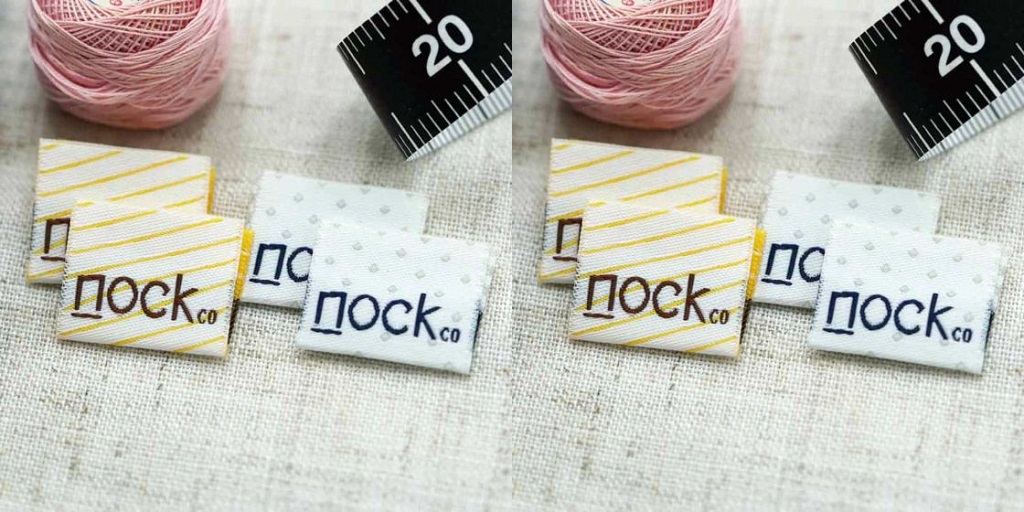
the hurdles that small fashion businesses often face, clothing labels tend to be overlooked until it’s time to place an order. Woven labels in particular carry the kind of quality and permanence that help garments stand out, but for startups, the price tag can be intimidating.
What many new designers discover is that woven clothing labels often require minimum order quantities (MOQs) that stretch beyond their first production runs. A brand may only need a few hundred pieces to start, but suppliers might set requirements in the thousands. That difference means tying up cash in labels long before the business has scaled. For a startup managing every cent of its budget, it’s not just a financial issue: it’s a question of survival.
Why Woven Clothing Labels Matter
Even in the earliest days of a brand, woven labels signal legitimacy. They give garments a sense of permanence and professionalism that printed or tagless options don’t always convey. A well-made woven label also:
- Withstands repeated washes without fading.
- Carries fine detail that communicates brand identity.
- Enhances consumer perception of quality.
The challenge, however, is accessing these benefits without overextending resources.
Cost Barriers for Small Quantities
The root of the problem lies in production setup. Woven labels require loom programming, color threading, and runs that make economic sense only at higher volumes. For established brands, large orders spread the cost thin. For small businesses, the same setup fees and per-unit costs result in disproportionately higher prices.
Other financial strains include:
- Ordering beyond actual need means sitting on unused labels.
- Funds locked into labels could otherwise go into marketing, samples, or fabric sourcing.
- Large bulk orders prevent startups from updating logos, text, or sizing systems early on.
For a brand still testing designs and gauging customer response, committing to thousands of identical labels is risky.
Creative Solutions That Work
The good news is that the fashion startup community is finding inventive ways to navigate this issue. A few strategies stand out:
1. Group Sourcing
Several small brands join forces to place a single large order with a supplier. Each brand provides its artwork, and the manufacturer batches production to meet the minimum. This cooperative approach lowers unit costs while still giving each business its unique label design.
2. Hybrid Label Options
Instead of committing to fully woven labels for every piece, some startups combine approaches. They may use woven logos for high-visibility products like jackets or bags, and printed or heat-transfer labels for simpler items. This hybrid model helps balance image and cost until the business grows into larger woven orders.
3. Multi-Run Agreements
A few suppliers are now offering staggered delivery, splitting a large production run into smaller shipments over time. This gives startups the benefit of lower per-unit pricing without the storage headaches.
Thinking Beyond the First Run
While navigating clothing labels may feel like a minor detail, they play a long-term role in brand identity. Choosing the right woven option early on sets the stage for consistency as a business scales. Startups that plan ahead, whether through group sourcing, hybrids, or simplified designs, are better positioned to grow without costly reprints.
Woven labels also create a physical connection between the brand and its audience. They are often the last thing a customer sees before slipping into a garment, a small but significant reminder of the brand they chose to support. That kind of impression matters even more when a business is young and building loyalty from the ground up.
For small clothing brands, clothing labels are more than a finishing touch: they’re a statement of credibility. The cost barrier of woven options shouldn’t discourage new designers. With smart strategies like group sourcing and hybrid use, startups can access the quality they need while keeping their budgets intact.
Those who are serious about presenting their garments at a professional level should explore solutions tailored to their scale. To see how woven labels can fit into a growing brand without unnecessary strain, visit Quality Woven Labels online for insight and options.
