
While the majority of electrical wire and cable with which you are familiar is probably made from copper, there are specialty electrical cables that are made from aluminum.
As you might expect, these have unique strengths and weaknesses which are generally application dependent. You can learn more about some of the common types of specialty cable here, along with why copper or aluminum wire is generally preferred for the application.
In Specialized Cable Like Tray Cable
Tray cable is a specialized type of electrical cable that is designed to be laid in cable trays as opposed to drawn through conduit.
Copper is generally preferred for drawing through conduit because it has higher strength and general durability than aluminum wire. Both are flexible, but aluminum will tolerate fewer stress cycles before it fatigues and snaps.
This makes copper the preferred alloy as an electrical conductor in conduits, notwithstanding the higher cost and weight.
By contrast, both of these metals can be used to make electrical conductors used in tray cable, which itself offers a variety of advantages over conduit.
Tray cable (and trays) is easier to lay, easier to access for inspection, maintenance and replacement, and the trays themselves are easier to install, among other benefits.
In Specialized Cable Like High-Tension Power Lines
High tension power lines, which are used for power transmission at high voltages over great distances, are another extremely specialized type of electrical cable.
Most high tension power lines are made with aluminum cable that is reinforced with a steel member.
The reasons for the use of aluminum are many. For one, aluminum exhibits fairly good resistance to corrosion; the high tension lines themselves are usually uninsulated, relying on air as the insulator. Copper would quickly corrode but aluminum wire in this application is quite long-lasting.
Aluminum also offers a higher conductivity to weight ratio than copper, and is considerably lighter. This makes it practical to use aluminum in these aerial installations, where much stronger infrastructure would be required to use copper.
Interestingly, the reasons enumerated here are some of the same reasons that aluminum is used for triplex and quadruplex wire for power service entry into homes and businesses.
In Specialized Cable like 4/0 Welding Cable
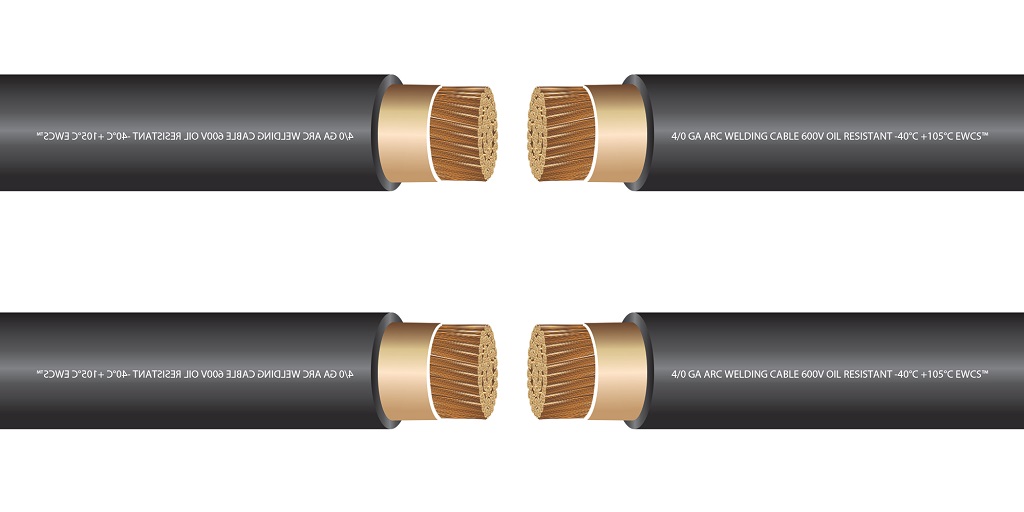
Now let’s take a closer look at 4/0 welding cable, which is generally made from copper.
A cable as thick as 4/0 welding cable is going to be heavy, stiff, and hard to move. However, they are made with many finely stranded copper conductors that render them easier to bend and use.
Copper is necessary here notwithstanding the high price because it can withstand the stresses of flexion much better than aluminum can, despite the fact that it also is more subject to corrosion.
As a result, welding cable (not just heavy-gauge welding cable) must be protected with very durable insulation that shields it from abrasion as well as chemical attack.
Aluminum might be lighter and more cost-effective, but it would not stand up to the rigors of in situ welding as well as copper welding cable would.
Where to Learn More About Copper and Aluminum Wire
Here because you want to learn more about specialty electrical wire and cable like 4/0 welding cable or solar panel cable? Want to see what sorts of options exist in copper and aluminum cable (in general)?
Visit EWCS Wire. They carry a wide range of specialty electrical wire and cable and offer excellent customer service as well. You can get in touch with them at Sales@EWCSWire.com or at 800-262-1598.
