
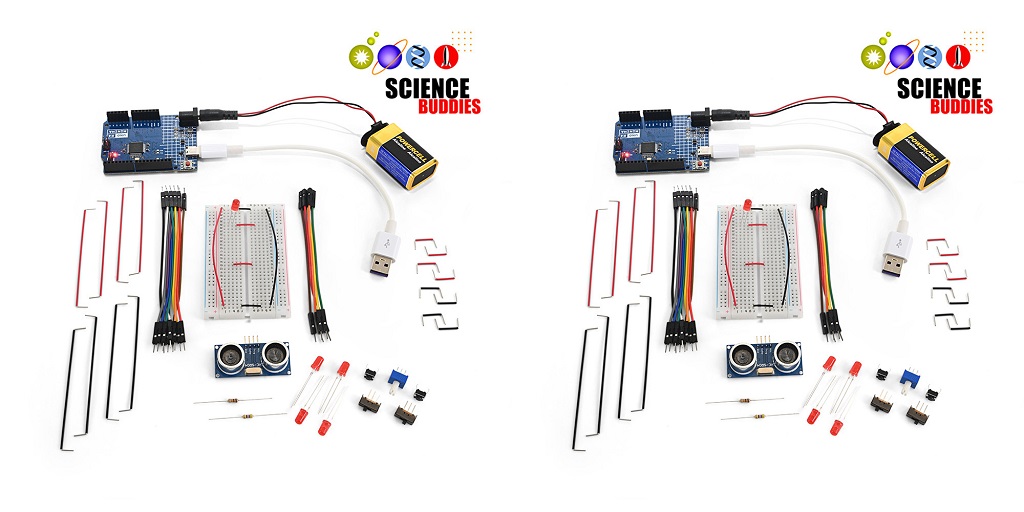
Electricity powers countless parts of daily life, from kitchen appliances to computers. Electronics kits can help you explore these concepts through experiments that make electrical principles easier to see. Building circuits, testing batteries, and operating small motors can turn abstract science ideas into practical activities.
What Is Electricity?
Electricity is a form of energy associated with electromagnetic force. Electrical energy allows many everyday devices to operate. Lights illuminate rooms, refrigerators keep food cold, and washing machines clean clothes using electrical power.
You can find electricity at work in many familiar places. Cars, televisions, computers, air conditioners, and kitchen appliances all depend on electrical energy. Learning how these systems use electricity gives you a foundation for exploring physics and engineering.
Simple experiments can introduce concepts such as current, voltage, conductivity, and circuits. You can use a battery, a wire, a switch, and a light bulb to create a basic circuit. Closing the switch allows current to flow through the circuit, illuminating the bulb.
This type of activity gives you a practical way to observe electrical behavior.
Electricity and Electronics Have Different Roles
Electricity and electronics both involve electrical currents, yet their functions differ. Electrical devices generally convert electrical energy into an action, such as light, heat, or motion.
A light bulb provides a familiar example. Electric current flows through its components, producing light. A motor uses electrical energy to create movement.
Electronic devices can process, control, or transmit information. These devices rely on components called semiconductors, with silicon being a common material. Smartphones, computers, and many digital devices use electronic circuits to perform specific tasks.
Learning the difference between electric and electronic systems can make familiar technology easier to understand.
Build a Foundation With Hands-On Experiments
You can explore electricity with activities involving batteries, bulbs, wires, switches, and circuits. Each component demonstrates a specific part of an electrical system.
Try creating a simple circuit and changing one component at a time. You might add another bulb, change the battery arrangement, or introduce a switch. Observing what happens can help you connect each change with the circuit’s behavior.
Static electricity provides another accessible area for experimentation. Rubbing certain materials together can create an electrical charge that attracts lightweight objects. These activities demonstrate how electrical charges behave without requiring complex equipment.
Solar energy experiments can also introduce renewable energy concepts. A small solar panel can demonstrate how light energy is converted into electrical energy.
Explore Motors, Generators, and Robotics
Motors provide an exciting connection between electricity and movement. A basic motor converts electrical energy into mechanical motion. Building a working model can show you how current interacts with magnetic fields to produce movement.
Generators work in the opposite direction. Mechanical motion can generate electrical energy through electromagnetic principles. Comparing motors and generators helps you recognize how electrical and mechanical energy interact.
Robotics projects can extend these ideas further. A small robot may use motors, batteries, switches, sensors, and electronic controls. Each component has a specific function within the system.
Make Science Part of Your Next Project
Electricity and electronics offer plenty of possibilities for experiments at home or in a classroom. You can investigate circuits, test conductivity, explore static charges, build motors, or experiment with solar energy.
For hands-on science activities and equipment, Home Science Tools provides resources on electricity and electronics designed for practical learning. Explore its educational kits, circuit supplies, motors, generators, and related materials to find a project that fits your next science experiment. For more information, please visit Home Science Tools.
For more information about Dissecting Microscope and Crystal Growing Kit Please visit: Home Science Tools.
