
In a world that often celebrates perfection and flawlessness, there’s something deeply liberating about embracing imperfection. Wabi-sabi, by contrast, is a Japanese philosophy that celebrates the beauty of impermanence, imperfection, and authenticity.
If you want a home that exudes warmth, simplicity, and tranquility, then leaning into wabi-sabi might just be the right choice for you. Here’s how to incorporate its principles into your home:
Understanding Wabi-Sabi
Wabi-sabi (侘び寂び) isn’t merely a decorating style: it’s a world view, an aesthetic philosophy – a way of life, if you will. It is a combination of two related concepts, wabi (侘) and sabi (寂); according to the Stanford Encyclopedia of Philosophy, wabi may be translated as “austere, subdued beauty” while sabi may be translated as “rustic patina”.
At its core, wabi-sabi urges us to appreciate the beauty in things that are imperfect, impermanent, and incomplete. There, one may find harmony in asymmetry, simplicity in complexity, and serenity in the natural world. In essence, wabi-sabi teaches us to embrace the beauty of things as they are, with all their flaws and quirks.
Embracing Imperfection in Design
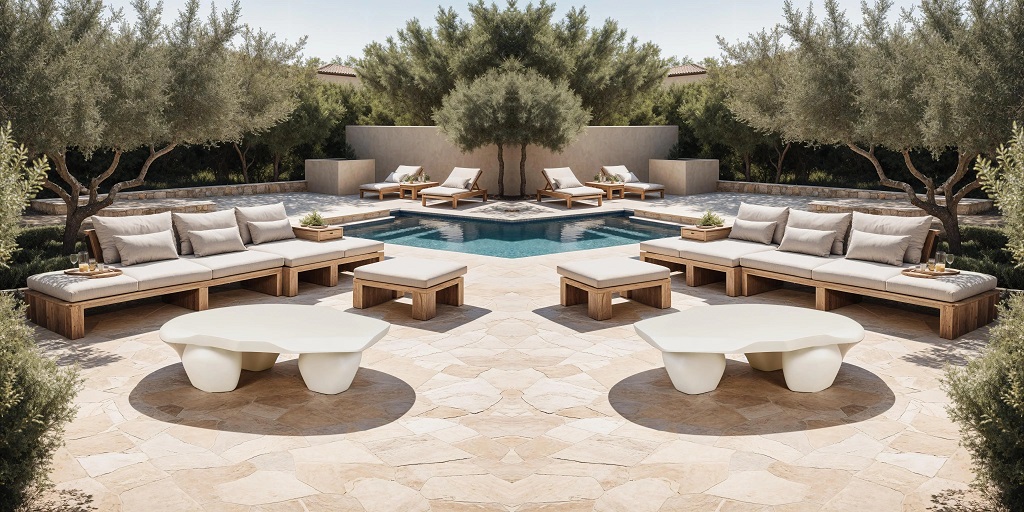
When it comes to incorporating wabi-sabi in your home, think less about perfection and more about showcasing authenticity, history, and character. Take, for example, a stone coffee table from House of Leon, specifically their Sofita Marble Coffee Table: designed for both indoor and outdoor spaces, this stone coffee table has a matte finish and a chipped, living edge that gives it a distinctly organic look. It invites attention in a subtle way, and is a beautiful addition to any living area.
Other ways to embrace imperfection when decorating your home in the wabi-sabi way include incorporating other natural materials like wood and clay, each with their own unique imperfections and textures. Instead of striving for flawless symmetry, opt for asymmetrical arrangements that evoke a sense of spontaneity and movement.
Celebrating Patina and Age
One of the hallmarks of wabi-sabi is the appreciation of patina – the natural aging and wear that imbues objects with character and history. Furniture and decorative items that look as though they’ve been tested by time are excellent additions to any home where wabi-sabi is a central theme.
Embrace the beauty of weathered surfaces, faded fabrics, and chipped paint. Instead of replacing worn-out furniture, consider refurbishing it or simply letting it age gracefully, adding to the narrative of your home.
The Concept of Ma
Bringing wabi-sabi into your home isn’t just about the furniture and decorative items that you fill it with. One of the central tenets of the wabi-sabi philosophy is the concept of “ma”, which refers to the space between objects.
Instead of filling every corner of your home with furniture and decorations, leave room for emptiness and breathing space. Allow natural light to filter in through unadorned windows, creating soft shadows that highlight the beauty of simplicity. Incorporate elements of nature into your home, such as a small indoor garden or a vase of freshly picked wildflowers, to evoke a sense of serenity and connection to the natural world.
Mindfulness and Presence
Finally, incorporating wabi-sabi into your home is ultimately about cultivating mindfulness, gratitude, and acceptance. It calls you to be present in the moment and appreciate the beauty that can be found in the everyday and mundane.
Take the time to slow down and appreciate the small moments of beauty that surround you – a crackling fireplace, a steaming cup of tea, or a quiet corner bathed in soft sunlight. Cultivate gratitude for the beauty that surrounds you, finding joy in the everyday moments that often go unnoticed.
In a world that often values perfection over authenticity, wabi-sabi offers a refreshing perspective on beauty and design. By incorporating the principles of wabi-sabi into your home, you can create a space that nurtures a sense of tranquility and appreciation for the simple things in life.
