
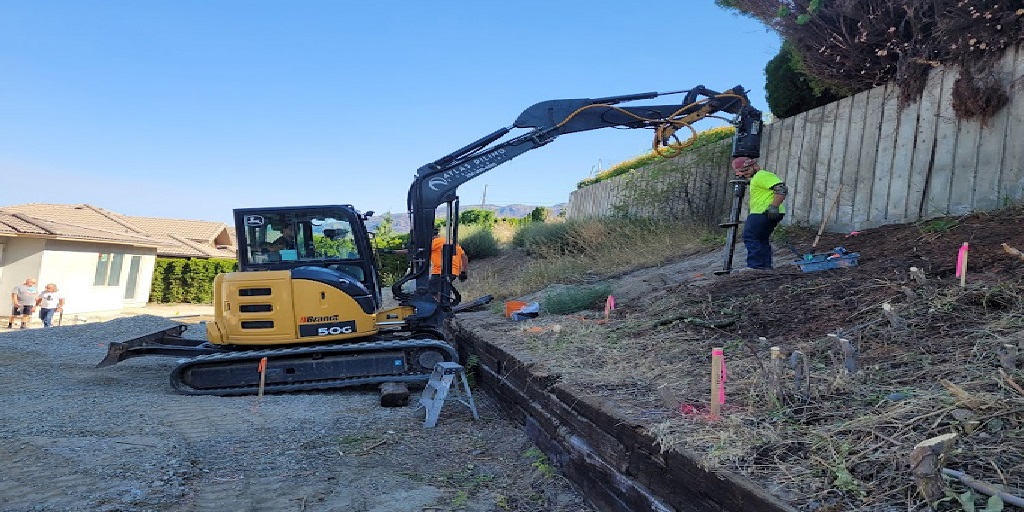
Helical pile foundations are a reliable and efficient solution for supporting structures in various soil conditions. They provide stability, reduce construction time, and minimize environmental impact compared to traditional foundation methods. However, the successful installation of helical piles depends heavily on using the right equipment. From preparing the site to ensuring precise pile alignment, specialized machinery and tools are necessary to achieve a secure and durable foundation.
1. Hydraulic Drive Heads
The hydraulic drive head attaches to an excavator or skid steer and provides the rotational force needed to advance the helical pile into the ground. Hydraulic drive heads come in various sizes and torque capacities to accommodate different pile sizes and soil conditions. Choosing the right drive head ensures that the pile reaches the appropriate depth and torque resistance, which is essential for maintaining the pile’s load-bearing capacity.
2. Excavators and Skid Steers
Excavators and skid steers equipped with a hydraulic drive head are commonly used to install helical piles. The size of the machine depends on the project’s scope and the type of piles being installed. For smaller residential projects, a skid steer may be sufficient, while larger commercial or industrial projects typically require a more powerful excavator. These machines provide the necessary mobility and control to precisely maneuver the drive head and apply consistent pressure during the installation process.
3. Torque Monitoring Equipment
A torque monitoring system measures the resistance encountered as the pile is screwed into the ground. This data helps the operator determine when the pile has achieved the desired bearing capacity. Many helical pile companies utilize advanced torque monitoring systems that provide real-time feedback, ensuring that the foundation meets engineering specifications and safety standards.
4. Pile Alignment Tools
Maintaining proper pile alignment during installation is critical to the structural integrity of the foundation. Laser levels, plumb bobs, and digital inclinometers are often used to ensure that the piles are installed vertically or at the specified angle. Proper alignment reduces the risk of structural shifts or uneven load distribution over time. Helical pile companies that invest in high-quality alignment tools can achieve greater accuracy and consistency in their installations.
5. Extension Shafts and Couplers
In some cases, helical piles need to be installed deeper to reach stable soil or bedrock. Extension shafts and couplers allow installers to extend the length of the pile and maintain the necessary torque as the pile penetrates deeper into the ground. These components ensure that the pile remains structurally sound and maintains its load-bearing capacity regardless of the depth.
6. Pile Caps and Brackets
Once the helical piles are installed, pile caps and brackets secure the foundation to the structure. Pile caps distribute the load evenly across the pile head, while brackets connect the pile to the foundation beams or structure. These components play a critical role in transferring loads effectively and maintaining long-term stability.
7. Testing and Verification Tools
After installation, load testing is often performed to verify that the helical piles meet the required load-bearing capacity. Static and dynamic load tests ensure that the foundation will perform as expected under real-world conditions. Helical pile companies that invest in reliable testing equipment can provide accurate results and guarantee the integrity of the installed foundation.
The success of a helical pile foundation hinges on using the right equipment and adhering to best practices during installation. Hydraulic drive heads, torque monitoring systems, and alignment tools work together to ensure that piles are installed to the correct depth and bearing capacity. By using advanced equipment and maintaining a focus on quality, helical pile companies can deliver strong and lasting foundations for a wide range of applications.
