
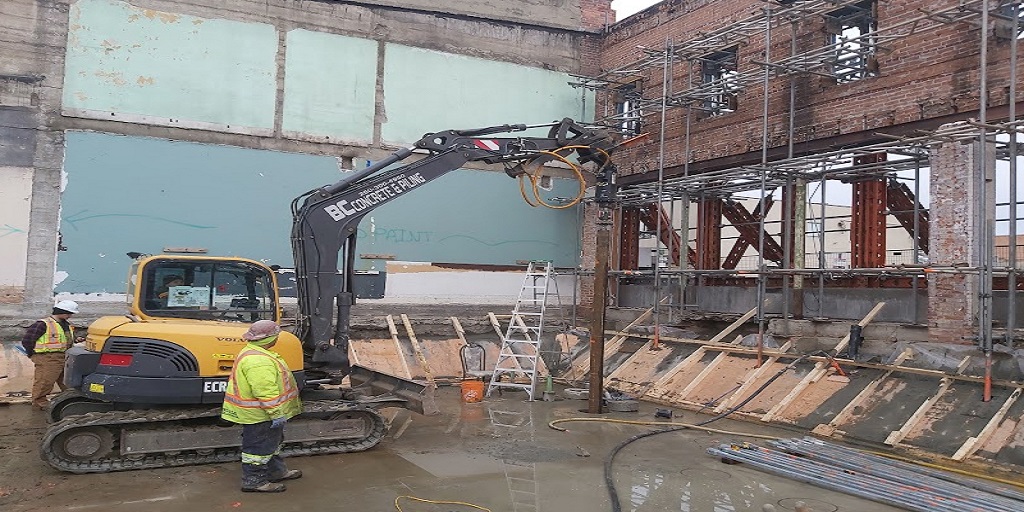
As humanity advances toward the goal of establishing long-term settlements beyond Earth, the challenge of building stable infrastructure on extraterrestrial surfaces becomes a pressing issue. With the Moon and Mars presenting harsh environments, including extreme temperatures, reduced gravity, and unpredictable soil conditions, construction methods must be both adaptable and resilient. One potential solution that could revolutionize off-world construction is helical pile installation.
Helical piles are widely used on Earth for applications where traditional foundations struggle, such as in areas with loose or weak soil. The advantages of helical piles include quick installation, minimal site disturbance, and high load-bearing capacity. Their effectiveness in challenging environments makes them a compelling option for extraterrestrial construction.
Challenges of Building on the Moon and Mars
To understand why helical pile installation might be a viable solution, it is important to consider the conditions of lunar and Martian surfaces:
- Regolith composition. Both the Moon and Mars have a thick layer of regolith (loose, fragmented rock and dust) covering their surfaces. This material lacks cohesion, making traditional foundation techniques less effective.
- Reduced gravity. The Moon’s gravity is about 1/6th of Earth’s, while Mars has roughly 1/3rd of Earth’s gravity. This affects how structures bear weight and how soil responds to pressure.
- Extreme temperatures. The Moon experiences temperature fluctuations from -173°C at night to 127°C during the day. Mars is colder, with temperatures averaging around -60°C. Materials used in construction must withstand these extremes.
- Remote installation. Any construction method must be feasible for robotic or automated installation, as human labor will be limited in the early stages of colonization.
How Helical Piles Could Work Off-World
Given these challenges, helical pile installation offers several benefits for extraterrestrial construction:
- Adaptability to various soil conditions. The self-threading design of helical piles enables them to anchor into loose regolith effectively. Unlike conventional deep foundations, they do not rely on concrete, which would be difficult to produce off-world.
- Minimal equipment and energy requirements. Installing helical piles requires relatively simple machinery, which can be adapted for robotic deployment. This reduces the logistical burden of transporting heavy construction equipment to space.
- Enhanced structural stability. By securing structures deep into the regolith, helical piles can provide resistance against shifting soils and seismic activities, which may be caused by moonquakes or Martian dust storms.
- Reusability and sustainability. Unlike poured foundations, helical piles can be removed and reused, an essential feature for sustainable space infrastructure.
The Future of Helical Piles in Space Construction
The application of helical piles in space construction is still a theoretical concept, but ongoing advancements in space exploration and geotechnical engineering suggest that they could become a key component of extraterrestrial infrastructure. Researchers are already exploring ways to modify existing Earth-based construction methods for use in space, and helical piles could play a critical role in establishing permanent bases on the Moon and Mars.
With upcoming lunar missions like NASA’s Artemis program and future plans for Mars colonization, the need for reliable foundation solutions is greater than ever. As technology evolves, helical pile installation could provide a practical and efficient method for ensuring structural stability in some of the most extreme environments known to humanity.
The concept of using helical piles for off-world construction is an exciting possibility that could help overcome some of the biggest challenges in extraterrestrial settlement. Their ease of installation, adaptability, and strength make them a strong candidate for securing infrastructure on the Moon and Mars.
