
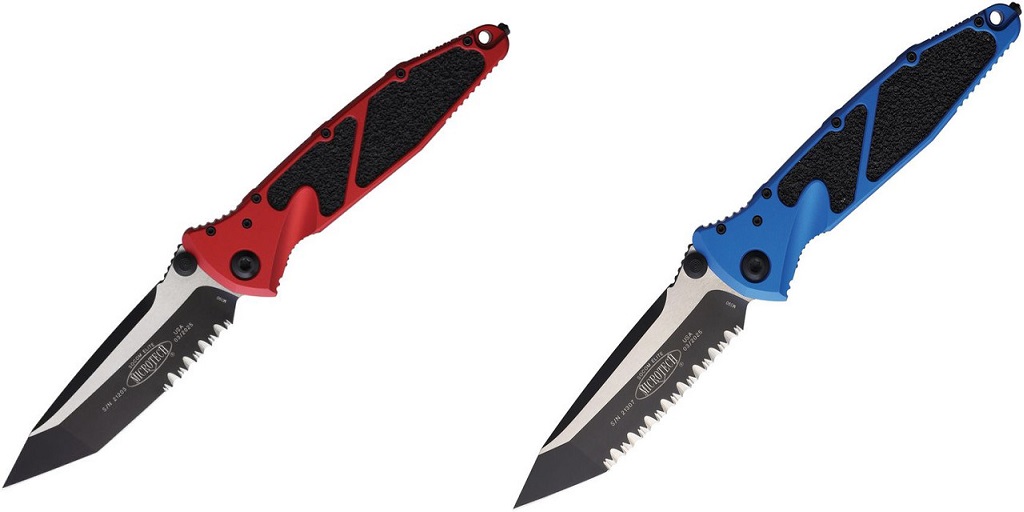
Looking for a new folding utility knife but want to know more about the steel that constitutes it before you buy?
Here are some of the more common grades of steel used in popular EDC and utility knives, along with what they offer.
440C
This is one of the more affordable knife steels that is commonly used in utility and folding knives, with fairly low concentrations of carbon and chromium. As a result, despite the fact that it is very easy to sharpen and offers good stain and corrosion resistance, it is fairly soft and does not hold an edge that well.
AUS-8
AUS-8 is soft and easy to sharpen and can take a razor sharp edge – but it won’t hold it. Softer than 440C, AUS-8 offers similar corrosion resistance and like it, is fairly affordable, making it common on folding knives. Its cousin AUS-10, offers slightly better edge retention at a slightly higher price.
8Cr13MoV
One of the most common folding knife steels of all time, 8Cr13MoV is has a relatively high carbon concentration bolstered with a smidge of molybdenum and vanadium. It can take a very sharp edge and hold it fairly well, and thanks to those latter two elements is pretty tough and wear resistant, too. Corrosion resistance is middling; you can get the knife to rust but you have to try.
14C28N
This is a Sandvik steel with a pretty solid concentration of both carbon and chromium with a smidge of nitrogen. This means a few things; one, it is a very hard steel. It can take an exceptionally sharp edge and it will hold it really well. Also, the inclusion of nitrogen improves corrosion resistance – it is likely the most corrosion-resistant alloy mentioned here.
420HC
This is a cheap steel that is usually considered low-end. It is soft, can take a sharp edge but won’t hold it, and is not as tough as other harder, carbon-rich steels. It’s fairly corrosion resistant, though. If you do get a knife with 420HC, expect average performance unless it’s a Buck; their heat treatment is good.
1095
An alloy with about a .9% concentration of carbon, it can be made very hard and wear-resistant, which means two things; it can not only take and hold a razor edge, it can also be a bit brittle. When tempered properly, it can be fairly easy to resharpen, and it’s also a very affordable steel, but not low grade. The one serious mark against it is that it rusts very easily.
D2
Very hard and very tough, D2 is a tool steel that can take and hold a very sharp edge. It can make for an excellent knife, as long as you recognize that it has a propensity to rust, just not quite as bad as 1095.
CPM-S30V
The highest-quality alloy on this list, this is a Crucible Particle Metallurgies steel that has a high carbon concentration and an even distribution of fine carbides. As a result, it takes and holds an edge, is very tough, and is highly corrosion resistant. Two things to be aware of: it’s expensive and it’s not easy to sharpen.
Find Your New Folding Utility Knife
Get started shopping today; your next folding utility knife is out there, and it’s waiting for you to discover it at White Mountain Knives.
