
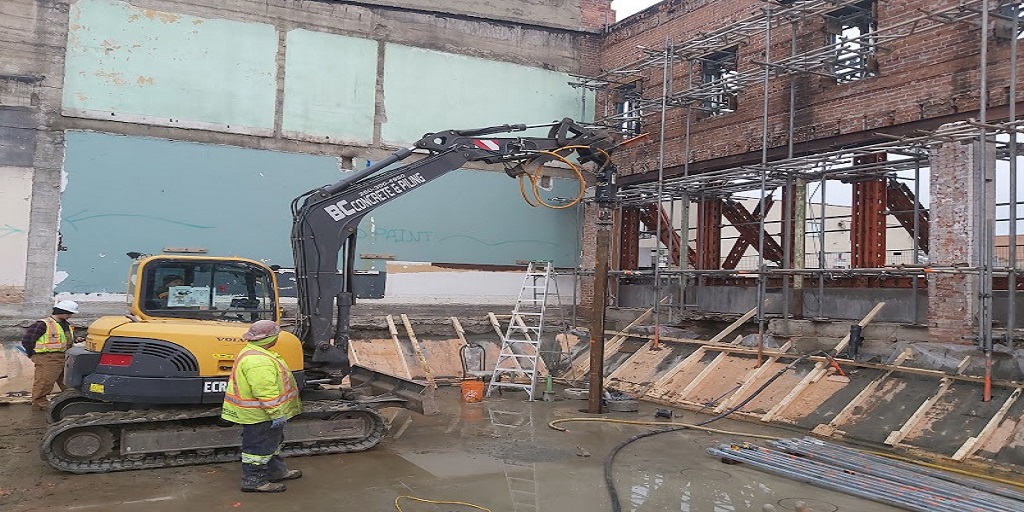
Frost heave is one of the most frustrating and costly problems in cold climates. When soil freezes, moisture expands and pushes against anything in its path—including foundations. Over time, this movement can crack concrete, tilt decks, shift garages, or destabilize entire structures. While traditional foundation methods like poured concrete or driven piles have long been used, they often don’t provide lasting protection against this natural force. A smarter solution exists: the helical pile.
The Real Issue with Frost Heave
The problem begins beneath the surface. As temperatures drop, groundwater in the soil freezes and forms ice lenses. These lenses expand and exert upward pressure, lifting whatever sits above them. In areas with freeze-thaw cycles, this isn’t a one-time event. Each season adds more stress, creating misaligned doors, cracked walls, or sloping floors.
Traditional foundations aren’t immune. Even thick concrete slabs can be forced upward. Once movement begins, the foundation’s stability is compromised, and repairs become both expensive and disruptive. The challenge isn’t just building strong—it’s building in a way that resists the forces of frost over decades.
Why a Helical Pile Handles Frost Differently
Unlike concrete or shallow foundation systems, a helical pile is designed to bypass frost-susceptible soil altogether. These piles are screwed deep into stable strata beneath the frost line. Instead of sitting where the soil shifts, they anchor into layers unaffected by freeze-thaw cycles. This depth creates a reliable base that frost heave simply can’t move.
The helical design also plays a role. As the pile is twisted into the ground, its helical plates lock into stable soil, distributing loads evenly and resisting both upward and downward pressure. The result is a foundation that doesn’t just survive frost heave—it neutralizes its effects.
Performance vs. Traditional Foundations
Concrete footings rely on mass to stay put. The assumption is that enough weight will counteract soil movement. But frost doesn’t just push lightly—it exerts powerful upward forces that can crack even reinforced slabs. Repairing those cracks often means costly excavation and replacement.
A helical pile, on the other hand, isn’t relying on weight alone. Its engineered installation method and depth provide stability from the start. Even if frost shifts the upper soil layers, the structure supported by helical piles remains level. Homeowners and builders see fewer callbacks, fewer structural issues, and much longer lifespans for decks, additions, garages, and even full-scale buildings.
Year-Round Installation Advantage
Another factor that sets helical piles apart is flexibility. Traditional foundations often require waiting for warmer, drier conditions to pour concrete. That delay can throw off construction schedules. Helical piles, however, can be installed in virtually any season. Even in the middle of winter, they can be driven below the frost line, ensuring projects move forward without costly delays.
Long-Term Cost Savings
At first glance, concrete might seem cheaper. But when you consider the full picture—repairs, adjustments, and potential replacement—the balance shifts. A helical pile installation often reduces lifetime costs. With little to no maintenance required and performance designed to outlast freeze-thaw cycles, the return on investment is significant.
Homeowners appreciate the peace of mind, while builders value fewer warranty claims and a stronger reputation for quality work. Over time, this reliability makes helical piles the smarter economic choice, not just the stronger engineering solution.
For anyone planning a new build, an addition, or even stabilizing an existing structure, considering a helical pile foundation could mean decades of worry-free performance. Frost may be powerful, but with the right foundation choice, it doesn’t stand a chance.
