
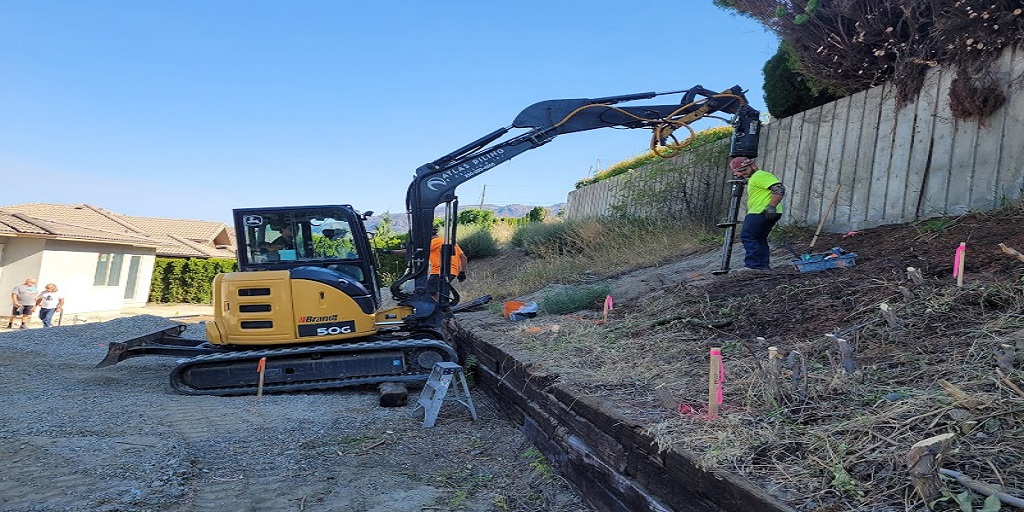
In regions with seismic activity, selecting the right foundation system isn’t just a structural decision—it’s a safety imperative. Whether you’re building a home, cabin, commercial facility, or remote structure in an earthquake-prone zone, it’s critical to consider how the ground will behave during seismic events and what your foundation can do to resist it.
Traditional concrete foundations, while strong in many applications, can become compromised when the earth beneath them shifts or liquefies. That’s where helical pile solutions have begun to stand out as a preferred option for seismic resilience—offering flexibility, load adaptability, and long-term stability.
What Makes Helical Piles Earthquake-Resistant?
Unlike poured concrete, helical piles are installed without relying on the upper soil layers for strength. This feature becomes especially beneficial in seismic zones where shallow soils can liquefy during earthquakes. With their deep embedment and high-tension resistance, helical piles maintain their load-bearing capacity even when the surface soil fails.
Moreover, their ability to move slightly without cracking—thanks to the steel’s elasticity—means they can flex with seismic movement instead of resisting it rigidly, which often leads to structural damage in more brittle foundation types.
Rapid Deployment in Sensitive Areas
In earthquake-prone zones, it’s not just the type of foundation that matters—it’s how quickly and cleanly it can be installed. Helical piles can be deployed rapidly, with minimal disruption to the environment and no need for large-scale excavation or curing periods.
This fast installation process is particularly advantageous in sensitive or difficult-to-access terrain, including forested, mountainous, or waterfront areas common in regions near fault lines. In the event of a post-earthquake rebuild, the speed and ease of installing helical pile solutions can significantly shorten timelines and reduce overall construction costs.
Minimal Soil Displacement and Ground Disturbance
Another advantage of helical piles is how little they disturb the soil during installation. The piles screw into the earth rather than displacing or removing large amounts of soil, which helps maintain overall ground integrity—an important consideration in areas where ground shifts can have cascading effects on surrounding structures.
This is a key reason why helical pile solutions are often preferred for retrofitting existing buildings in active seismic zones. Their low-impact installation means structures don’t need to be demolished or heavily altered. Instead, piles can be installed around or beneath existing foundations, adding much-needed reinforcement without a full rebuild.
Long-Term Monitoring and Maintenance
After installation, helical piles offer the ability to monitor torque and performance over time, allowing engineers and builders to assess how well the foundation is responding to environmental changes—including seismic events. If adjustments are ever needed, the modular nature of the system allows for easier modifications or reinforcement compared to conventional concrete bases.
This adaptability adds another layer of confidence for structures built in dynamic environments, where the only constant is change.
When safety, adaptability, and performance all matter, helical pile solutions check all the boxes. Their ability to bypass unstable soil layers, resist seismic movement, and provide long-lasting support make them a smart investment for structures in active earthquake zones.
Whether for new construction or structural reinforcement, more builders, engineers, and property owners are turning to helical piles as a proactive measure against seismic risk. In areas where stability is not a luxury but a necessity, choosing the right foundation can make all the difference.
