
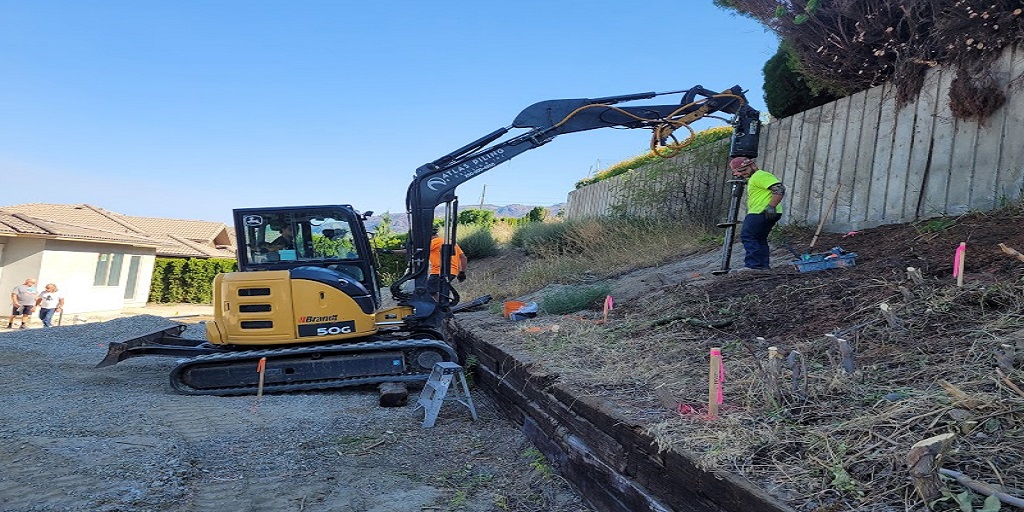
Airport infrastructure is undergoing a transformation, with innovative technologies reshaping how runways are built and maintained. Among these advancements, helical pile foundations have emerged as a revolutionary solution, offering significant advantages over traditional deep foundation methods. Their ability to provide superior stability, rapid installation, and long-term durability makes them an ideal choice for airport runway construction and expansion projects.
Why Runway Foundations Matter
The foundation of an airport runway plays a crucial role in ensuring the safety and efficiency of air travel. These structures must withstand extreme loads, including the constant impact of landing aircraft, heavy taxiing movements, and varying environmental conditions. Any failure or degradation in a runway foundation can lead to costly repairs, operational disruptions, and potential safety concerns.
The Advantages of Helical Pile Foundations in Airport Runways
Traditional deep foundation methods, such as driven or cast-in-place piles, often come with challenges such as long installation times, excessive vibrations, and environmental concerns. This is where helical pile foundations offer a game-changing alternative.
Rapid Installation with Minimal Disruption
One of the biggest challenges in airport construction is minimizing downtime. Since airports operate continuously, any delay in runway maintenance or expansion can significantly impact flight schedules and logistics. Helical pile foundations offer a faster installation process compared to conventional methods. These piles can be installed with lightweight equipment, require no curing time, and cause minimal ground disturbance, allowing runways to remain operational during construction.
Superior Load-Bearing Capacity
Runway foundations must support substantial dynamic loads, including the weight of aircraft during landing and takeoff. Helical pile foundations are designed to achieve high load-bearing capacities through their deep anchoring into stable soil layers. Their screw-like design ensures enhanced soil engagement, providing greater stability and resistance to lateral forces.
Adaptability to Challenging Soil Conditions
Many airports are located in regions with complex soil conditions, such as loose sands, clay, or permafrost. Traditional foundation methods may require extensive soil preparation, increasing costs and project timelines. Helical pile foundations, however, can be installed in a wide range of soil types without the need for excavation or extensive site modifications. Their versatility makes them a preferred choice for airport runway projects in diverse geographic locations.
Eco-Friendly and Sustainable Solution
Environmental considerations are becoming increasingly important in construction projects, including airport infrastructure. Traditional piling methods often generate noise pollution, vibrations, and soil displacement, which can have negative ecological impacts. Helical pile foundations offer a low-impact alternative, producing minimal noise and reducing the need for extensive excavation. Additionally, these piles are often made from recyclable steel, further supporting sustainable construction practices.
Cost-Effectiveness and Long-Term Durability
The initial investment in helical pile foundations is often lower than traditional deep foundation systems due to reduced labor, shorter installation time, and minimal site preparation. Furthermore, their corrosion-resistant materials and superior structural integrity ensure long-term durability, minimizing maintenance costs over the lifespan of the runway.
The Future of Runway Foundations
As air travel demand continues to rise, airport operators and construction firms are seeking innovative solutions to enhance runway performance while maintaining cost efficiency. Helical pile foundations are proving to be an optimal choice, meeting the evolving needs of modern airport infrastructure. Their ability to support high loads, adapt to various soil conditions, and facilitate faster construction makes them a key player in the future of aviation development.
With technological advancements driving the construction industry forward, helical pile foundations will likely play an even greater role in future airport expansion projects. Their proven reliability, cost-effectiveness, and minimal environmental impact make them a standout choice for ensuring the long-term safety and functionality of airport runways.
