
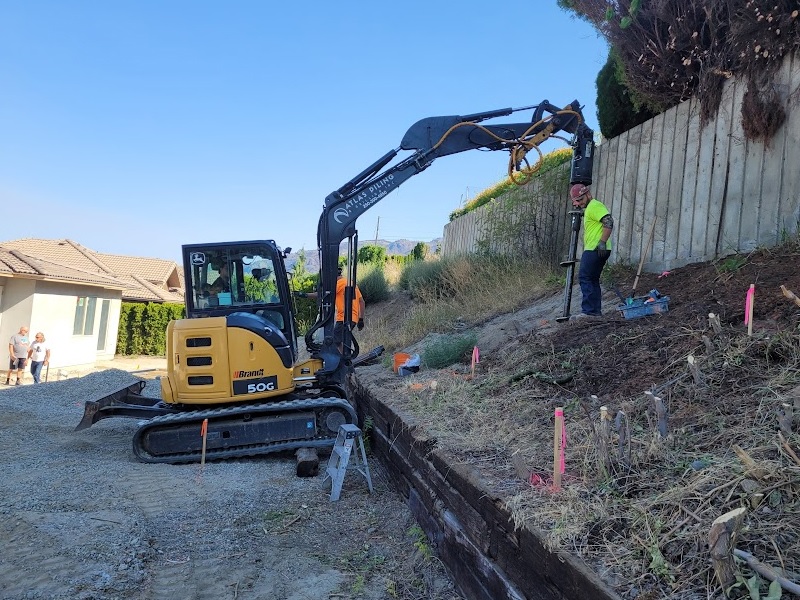
One of the most valuable qualities of a helical pile foundation is the precision it offers during installation. Unlike many traditional foundation systems where structural capacity is assumed until confirmed by testing or observation, helical piles offer real-time feedback that engineers and contractors can trust.
This is largely thanks to the torque correlation method—a technique that allows installers to accurately predict load-bearing capacity based on the torque required to advance the pile into the ground. It’s not guesswork. It’s measurable, repeatable, and rooted in geotechnical science.
Torque Is More Than Just a Number
Every soil type resists penetration differently. Clay, silt, sand, or mixed fill—all react uniquely to the advancing helix of a pile. As a helical pile foundation is screwed into the earth, the resistance it encounters is directly related to how much weight that pile can ultimately support.
This resistance is measured in installation torque. The greater the torque, the denser and more supportive the soil. In real-time, installers monitor torque readings as each pile is installed. These readings, in turn, give engineers the data needed to confirm whether each pile is achieving the designed capacity.
It’s a process that replaces assumptions with quantifiable results. No destructive testing required. No post-installation uncertainty. Just data you can build on—literally.
Why It Matters for Structural Integrity
The ability to correlate torque with bearing capacity is a major reason why helical pile foundation is trusted for a wide range of applications, including commercial buildings, infrastructure, and even energy sector installations. It ensures that every pile is installed not just to depth, but to performance.
This is especially important in variable soil conditions where depth alone is not an indicator of capacity. In such environments, a traditional pile might reach its intended depth but fail to deliver the necessary load support due to weak or saturated soils. With helical piles, depth is only part of the equation—the torque tells the real story.
When torque values reach or exceed the engineer’s required threshold, the installer knows the pile is ready to bear its design load. If torque readings are too low, additional length or different pile configurations can be added immediately. It’s a responsive system built on real-world performance metrics.
Helping Projects Stay on Time and on Budget
One of the most overlooked benefits of torque-based verification is how much time it saves. There’s no need to pause work for secondary load testing or inspection delays. The feedback is immediate and, when combined with proper installation logs and oversight, serves as a performance certification in itself.
This level of predictability helps keep projects on schedule and within budget, especially in areas where geotechnical conditions are unpredictable. Engineers and project managers gain confidence knowing each helical pile foundation element has met its performance standard before construction moves forward.
Improved Documentation and Quality Assurance
Another advantage of torque monitoring is documentation. Each pile’s torque data is recorded, providing a clear paper trail that verifies installation quality. This is useful not only for internal records but also for building inspections, warranty claims, and future maintenance planning.
These torque logs serve as a technical fingerprint of the foundation system, offering assurance that every pile was installed in accordance with design requirements.
In a field where precision and accountability matter, torque isn’t just a number—it’s a foundation for smarter building decisions.
