
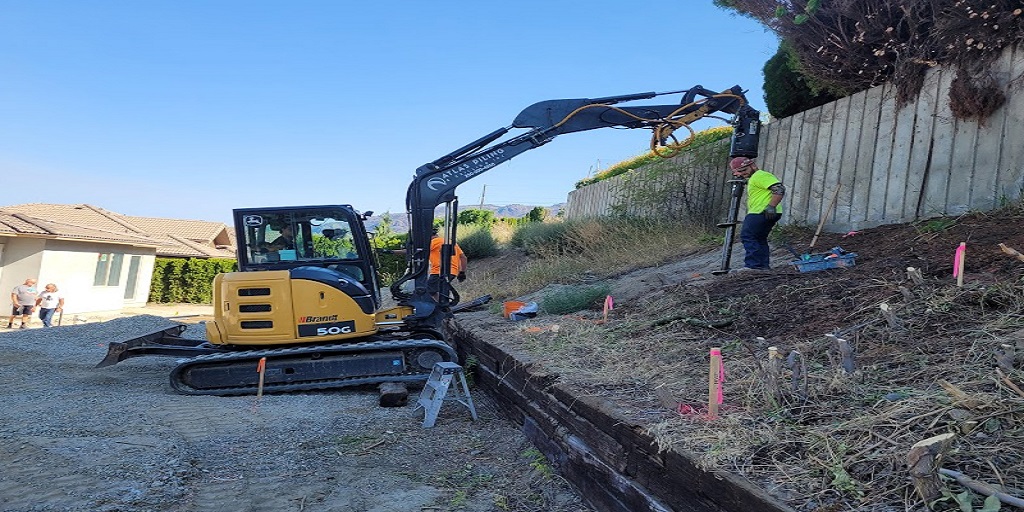
When planning for foundation support in areas exposed to high winds, frost heave, or seismic activity, it’s critical to choose a solution that can handle not just compression loads but also uplift. Helical piles have gained popularity in modern construction for their impressive performance in both respects—but how exactly do they resist uplift, and what should engineers, contractors, and property owners understand about their capacity?
Uplift Resistance: The Underestimated Force
Most people associate foundation failure with settling or downward pressure. But upward forces—whether from frost pushing upward on the soil, hydrostatic pressure, or wind-induced forces on tall structures—can be just as destructive. This is where the design of helical piles becomes a major advantage.
Helical piles resist uplift through both their mechanical design and the soil’s interaction with their helices. These piles are screwed deep into the ground, anchoring themselves with circular steel plates (or helices) that effectively grip the soil and resist pull-out. The deeper the pile and the more helices used, the more resistance is generated against uplift.
It’s Not Just Depth—It’s Design
The ability of helical piles to resist uplift isn’t just about how deep they go. It’s about how they’re designed and installed.
- Helix Size and Spacing. Larger helices offer more surface area to push against the soil, increasing uplift resistance. When multiple helices are used and properly spaced, they distribute forces more evenly and prevent pile rotation or displacement.
- Shaft Diameter and Strength. A thicker shaft offers better structural integrity and higher resistance under tension. This is particularly important in areas where uplift loads are cyclic or variable, such as in seismic zones or flood-prone regions.
- Soil Conditions. Uplift resistance is heavily influenced by the soil’s characteristics. Dense, cohesive soils provide more grip, while loose or sandy soils may require deeper installation or wider helices to achieve the same performance.
Real-World Applications That Rely on Uplift Resistance
Many structures benefit directly from the uplift resistance of helical piles. For example:
- Telecommunication towers, utility poles, and wind turbines often face high wind loads and must remain stable despite fluctuating forces.
- Solar panel arrays and pipeline supports are frequently subjected to frost heave and thermal expansion, both of which create uplift scenarios.
- Retaining walls, especially those built on sloped terrain, may also experience soil movement that generates upward and lateral pressure.
In these cases, the superior uplift performance of helical piles becomes not just beneficial—but essential.
Installation Torque = Load Capacity
One of the most useful aspects of helical piles is that their uplift capacity can be estimated in real time during installation. As the pile is screwed into the ground, resistance torque is measured. Higher torque indicates stronger soil engagement and, in turn, higher capacity—both in compression and uplift. This means the installation team can verify performance before the concrete is ever poured or the structure is built.
This real-time feedback is one of the reasons engineers trust helical piles for mission-critical applications. The torque-to-capacity relationship gives a clear picture of whether the system will meet uplift requirements without waiting for lab tests or post-installation adjustments.
If your structure is vulnerable to uplift forces—whether from wind, frost, water, or seismic movement—helical piles provide a smart, science-backed foundation solution. With the right design, proper torque installation, and attention to soil conditions, these piles can deliver unparalleled resistance to upward movement.
