
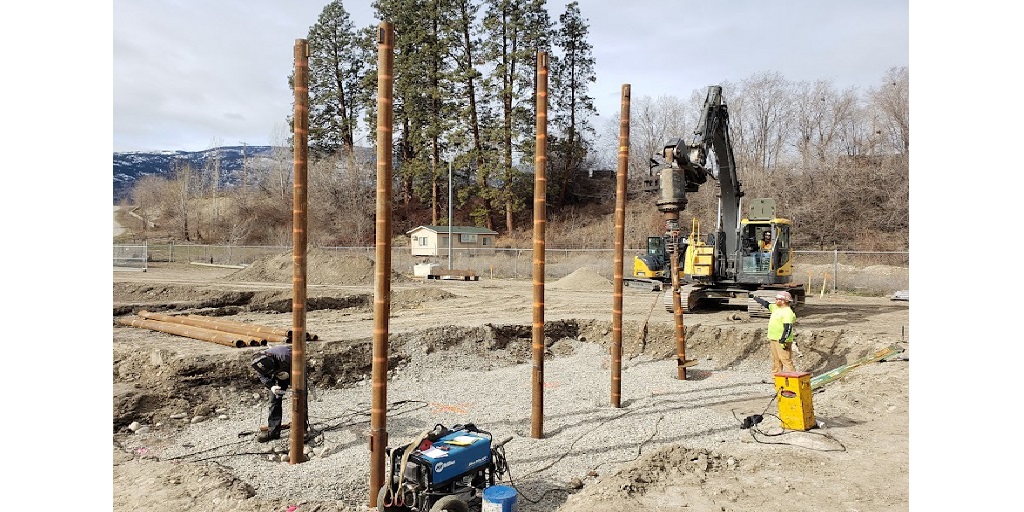
Modern construction isn’t just about building—it’s about building smarter, faster, and with greater resilience. Whether it’s a backyard deck, a sprawling solar farm, a lakeside boardwalk, or a modular home foundation, the ground you build on plays a critical role in determining the success of the project.
One foundational solution has become especially popular across all of these applications: helical piles for decks and other lightweight-to-medium structures offer a dependable, fast, and environmentally efficient alternative to traditional methods.
Deck Installations That Last Through the Seasons
Backyard decks are more than just aesthetic additions—they’re functional spaces that endure seasonal shifts, frost heave, and shifting soils. Homeowners and builders alike are turning to helical piles for decks because they provide superior resistance to ground movement while minimizing excavation and mess.
Unlike poured concrete footings, which are weather-dependent and slow to install, helical piles can go in quickly, even in winter conditions. This allows deck projects to stay on schedule and reduces the risk of future settling or cracking. Their precision also helps meet zoning and building code requirements with ease, even in tight spaces or on sloped lots.
Supporting the Renewable Energy Push
The renewable energy sector is booming, and solar farms are a major part of that growth. However, the remote and often uneven terrains where solar arrays are installed can pose significant foundation challenges.
Helical piles are increasingly used for anchoring solar panel arrays because they provide stable, long-lasting support with minimal ground disturbance. Their ability to be installed in a variety of soil types, including rocky or sandy terrain, makes them especially useful for large-scale solar farms.
And when conditions change or panel layouts need to be reconfigured, the piles can be adjusted or even removed with far less effort than traditional concrete bases. This flexibility is critical in a fast-evolving energy landscape.
Boardwalks and Waterfront Construction
Building near water brings an entirely different set of structural and environmental challenges. Tidal movement, wet soils, and ecological sensitivity can make traditional excavation both risky and disruptive.
That’s why helical foundations are often the first choice for boardwalks, docks, and waterfront walkways. They can be installed with small machinery—sometimes even handheld equipment—which means less impact on surrounding vegetation and habitats. The precision and speed of installation also reduce the window of environmental disruption.
These foundations are also corrosion-resistant when properly coated or galvanized, making them ideal for long-term performance in moist or marine environments.
A Perfect Match for Modular Construction
Modular homes and pre-fab structures are designed to go up fast—but speed at the ground level is often slowed by foundation delays. Helical systems provide a ready-made solution by offering rapid deployment with real-time load verification. This makes them ideal for supporting modular units, whether they’re used for permanent housing, remote job sites, or temporary shelters.
A key benefit here is that helical piles require minimal curing time—none, in fact. Once the piles are installed and torque-verified, the structure can be placed immediately. That can shave days or even weeks off a construction timeline.
As construction continues to demand more efficiency and adaptability, it’s no surprise that this foundation method is showing up on job sites of all kinds—from solar fields to waterfront boardwalks to modular villages. The ground beneath may change, but the need for stable, smart foundations remains constant.
