
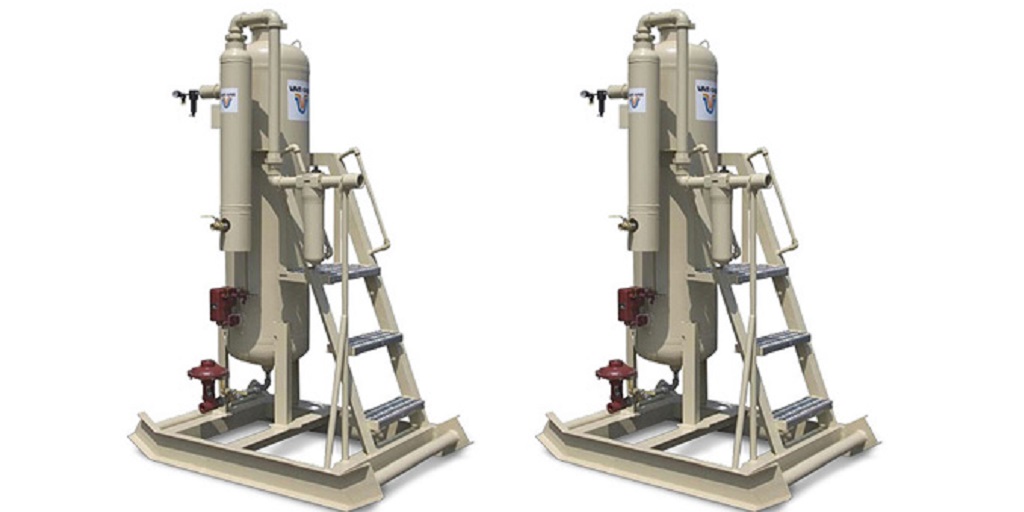
Some gas dehydration systems require power, constant monitoring, and complex mechanisms to function. Not PLD natural gas dehydration units. These beauties keep it simple. Here’s how they work:
- Gas Entry: Wet gas enters the bottom of the vessel and immediately slows down. No rush here. The gas changes direction, forcing heavier water droplets to settle instead of moving further into the system.
- Moisture Separation: As the gas meanders through, gravity takes care of separating larger moisture droplets, which collect in a designated claim area. No fancy tech—just physics doing its job.
- Desiccant Interaction: The now-lighter gas continues upward through a bed of deliquescent desiccant tablets. These aren’t just there for decoration—they actively absorb moisture, slowly dissolving in the process.
- Drainage: The water and dissolved desiccant solution (brine) settle at the bottom of the unit and get drained periodically. No need for complex reboiling or regeneration.
- Dry Gas Output: By the time the gas exits, it’s free from liquid water and significantly drier, making hydrate formation a non-issue. Dry gas, no drama.
Why PLD Units Are a Smart Choice
Gas dehydration doesn’t have to be complicated or expensive. PLD natural gas dehydration units prove that efficiency doesn’t require an instruction manual the size of a novel. Here’s why they stand out:
- No Power Required: Who needs electricity when deliquescent desiccants do all the work? These units function without external power, making them ideal for remote locations.
- No Moving Parts: More moving parts mean more things to break. PLD units keep it simple—no pumps, no fans, no headaches.
- Zero Emissions: Unlike some dehydration methods that release emissions, PLD units operate cleanly. No VOC or BETX Emissions.
- Versatility: Changes in flow rate, pressure, or temperature? PLD units handle them like pros without losing drying efficiency.
- Hydrate Prevention: Hydrates clogging up pipelines can be a nightmare. PLD units remove moisture before it becomes a problem.
Where PLD Natural Gas Dehydration Units Shine
These units don’t just sit in one place collecting dust. They work across multiple applications, including:
- Natural gas dehydration at wellheads
- Drying fuel gas
- Inhibiting hydrate formation
- Protecting meters, regulators, and other instruments
- Removing moisture from biogas
They’re particularly useful in the biogas sector, where moisture removal is crucial to maintaining gas quality for fuel, power generation, or liquefaction. No one wants water interfering with expensive equipment.
PLD vs. TEG Natural Gas Dehydration Units
Not all dehydration systems are created equal. While TEG (Triethylene Glycol) dehydration units are a popular choice, they come with their own set of complications. Here’s how they compare to PLD units:
How They Work
- TEG Natural Gas Dehydration Units: Use triethylene glycol (TEG) to absorb water from gas. The wet gas passes through a contact tower, where the glycol absorbs moisture. To keep the process going, the water-saturated glycol gets heated in a reboiler, separating the absorbed water before recirculating the glycol.
- PLD Natural Gas Dehydration Units: Use deliquescent desiccant tablets that absorb moisture and dissolve into a brine. The wet gas flows through the desiccant bed, emerges dry, and the dissolved solution is drained periodically. Simple and effective.
Energy Requirements
- TEG Units: Require external power for pumps, heat exchangers, and reboilers. More equipment, more power consumption.
- PLD Units: Zero power needed. No pumps, no heat exchangers, no power-hungry processes.
Maintenance and Cost
- TEG Units: Need frequent maintenance to manage glycol regeneration and prevent issues like foaming or contamination. Higher operational costs.
- PLD Units: No complicated regeneration. Just drain and replace desiccant tablets as needed. Lower maintenance and cost-effective.
For operators looking to keep things simple and efficient, PLD natural gas dehydration units offer an easy-to-manage alternative without the extra hassle.
Where to Find Reliable PLD Units
If gas dehydration is on the to-do list, there’s no need to overcomplicate things. Air & Vacuum Process Inc. offers Single-Tower Deliquescent Pipeline Dryers that get the job done without power, emissions, or frequent breakdowns. It’s time to let simplicity and efficiency handle the moisture problem.
