
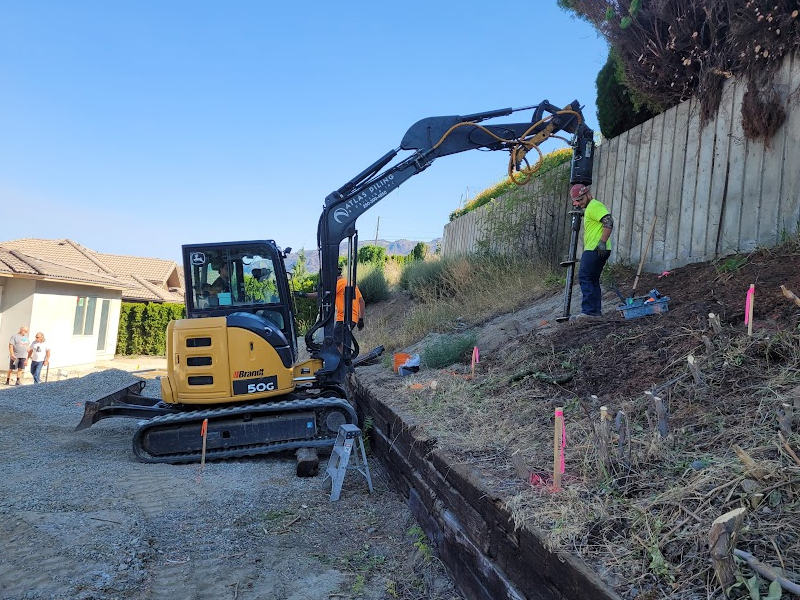
When it comes to foundational support in British Columbia, BC helical piles offer an efficient and reliable solution. Determining the load capacity of these helical piles is crucial for ensuring the stability and longevity of any construction project.
Helical piles are a popular choice for foundation solutions in various construction projects across the province. These screw-shaped piles are driven deep into the ground, providing robust support for structures in diverse soil conditions. To utilize them effectively, it’s essential to understand how to determine their load capacity.
Key Factors Affecting Helical Pile Load Capacity
Various factors influence this capacity, and several methods are used to accurately determine it. Here are the key aspects to consider:
- Soil conditions. The type of soil significantly impacts the load capacity of helical piles. Different soils have varying strengths and friction characteristics. Conducting a thorough soil analysis is the first step in determining the appropriate helical pile design.
- Pile design and size. The design and dimensions of the helical pile, including the number and diameter of helices, directly influence its load-bearing capacity. Larger diameters and more helices generally increase the pile’s ability to bear loads.
- Installation torque. The torque applied during installation is a crucial indicator of the pile’s load capacity. Higher installation torque typically correlates with greater load-bearing potential. Monitoring this parameter helps in predicting the pile’s performance.
- Pile depth. The depth to which a helical pile is driven affects its load capacity. Deeper piles often provide better support as they reach more stable soil layers. Engineers must carefully calculate the optimal depth for each specific project.
Methods for Determining Helical Pile Load Capacity
Determining the load capacity of helical piles involves employing various methods that collectively ensure structural stability and reliability. These methods span from empirical approaches rooted in historical data to precise testing and theoretical calculations:
- Empirical methods. These methods rely on historical data and previous case studies to estimate load capacity. While empirical methods provide a useful starting point, they should be supplemented with site-specific testing for accurate results.
- Load testing. Conducting load tests is one of the most reliable ways to determine the actual load capacity of helical piles. There are two primary types of load tests:
- Static load testing. This involves applying a gradual load to the pile and measuring its displacement. The data collected helps in understanding how the pile behaves under different load conditions.
- Dynamic load testing. This method uses a sudden impact load to evaluate the pile’s capacity. It is quicker and can be useful in certain scenarios, but it may not provide as comprehensive data as static testing.
- Theoretical calculations. Engineers use advanced mathematical models and software to predict helical pile load capacity. These calculations consider factors such as soil mechanics, pile geometry, and installation conditions. While theoretical calculations are valuable, they should be validated with empirical data and load testing.
Determining how much weight helical piles can support is complex and involves several factors and methods. Soil conditions and installation techniques are key to ensuring a stable foundation. Engineers use empirical methods, load testing, and theoretical calculations to accurately assess and optimize helical pile performance for construction projects.
Understanding these principles is crucial for anyone involved in planning and executing projects that need strong, dependable foundations. By accurately determining load capacity, BC helical piles can reliably support structures throughout the province.
For more information about Underpinning Services Bc and Commercial Drilling Service Bc please visit:-ATLAS PILING
