
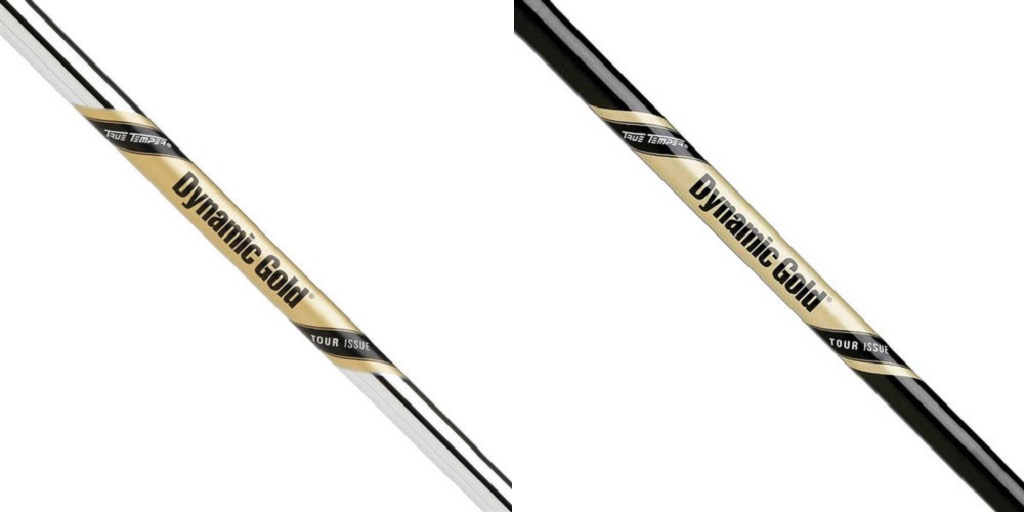
Whereas the world of wood and driver shafts has been totally eclipsed by advanced composite materials like graphite, there’s still some variety in the corner where iron shafts are made.
While there are some modern graphite iron shafts, and these indisputably offer some serious advantages to some golfers, there are still steel iron shafts made.
Which is for you will depend on a few different conditions, but before we can get to that, we need to cover some of the relative virtues of each.
Graphite Iron Shafts
Graphite iron shafts are a modern invention. Until relatively recently, all shafts for irons were made of steel – but that will be covered in a moment.
Nonetheless, graphite iron shafts are one option, and they are made from carbon fiber composites bound with resin. As a general rule, they are lighter in weight than their steel counterparts.
Because carbon fiber is such a versatile material, the flexibility and torque ratings of graphite shafts for irons can be custom tailored to the desired specifications. As a general rule, however, graphite iron shafts are lighter and more flexible than their steel counterparts.
As a result, it is easier to shape shots with graphite shafts for irons. On top of that, graphite shafts can be made with a lower kick point that produces a higher ball flight, which in some instances is desirable.
The unique nature of graphite shafts for irons also means that they can reduce unwanted shock and vibrations, incurring less discomfort to golfers and reducing fatigue during long days on the course.
Ultimately, however, the performance of a graphite iron shaft is a product of its specifications, inclusive of but not limited to stiffness rating, torque, kick point, and of course, length and weight. It is not that graphite shafts for irons are better than steel shafts, just that they are different and offer different things.
Steel Iron Shafts
Steel iron shafts are either made out of high-carbon steel that is not corrosion resistant, or out of stainless steel. The main difference between these two grades of alloys is that one (stainless, obviously) is better at resisting corrosion than the other.
As a general rule, beyond that, steel iron shafts are heavier and stiffer than comparable graphite iron shafts. They are more rigid, more stable, and since they are almost always more stiff, offer better precision, control, and accuracy, especially for players that have faster swings or more abrupt tempos.
Because of their stiffness, some golfers also find that steel iron shafts are preferable because they provide better feedback through the swing.
Two other undeniable advantages of steel shafts for irons are affordability and durability. As a general rule, steel iron shafts are considerably more affordable than graphite shafts, and they are also much more durable as well. When not properly cared for, graphite shafts can delaminate and splinter, whereas steel shafts need minimal maintenance and are not affected by these issues.
Which Is for You?
Both steel and graphite shafts for irons still have a place in golf, but to determine which is for you, you should work with a professional golf club fitter. Get in touch with the professionals at Dallas Golf Company and work with their fitters to find the right iron shafts for you.
