
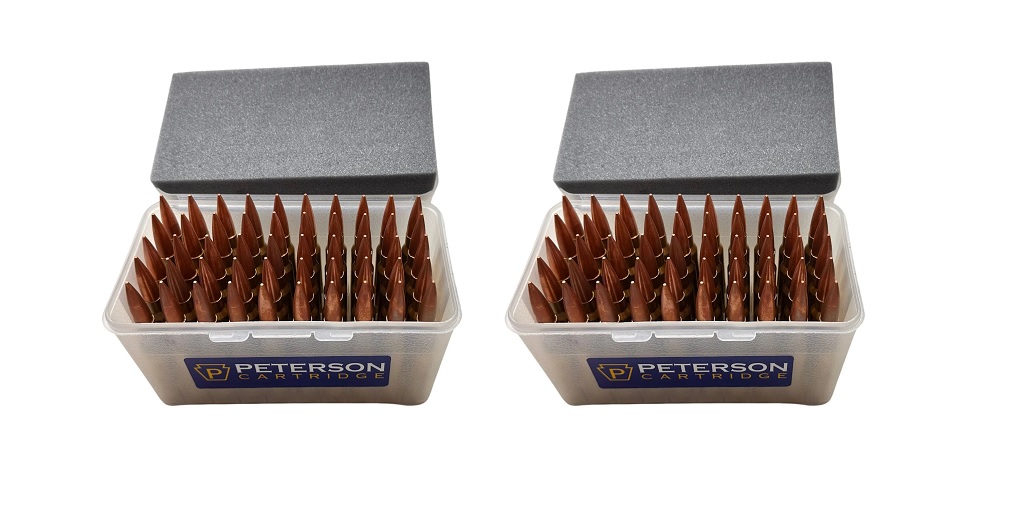
The .408 Cheyenne Tactical, more commonly referred to as .408 CheyTacⓇ or .408 CT (and officially recognized by the C.I.P. as 10.36x77mm) is a specialized, rimless, bottlenecked cartridge specifically designed by CheyTacⓇ for official use in sniper rifles.
It is a hard-hitting, flat-shooting, fast, accurate cartridge loaded with solid copper bullets CNC-machined to impossibly tight specifications.
It is also a very hot round that produces blazing chamber pressures higher than 60,000 PSI and muzzle velocities faster than 3,000 FPS (depending on bullet weight).
You can buy it (though ammo is pretty expensive) or you can load it yourself. But if you do load it, make sure you observe the following.
Start with Virgin Brass
For a cartridge that produces this much chamber pressure and from which you expect such long-range performance, it behooves you to start with new brass rather than reloading.
At the very least, if you do want to get into loading or reloading, start with virgin brass, get your feet wet and decide later whether or not you want to reload your once-fired .408 CT brass.
The thing is, with fired brass, there are all sorts of things you need to do to be safe; check the cartridge length, inspect for cartridge bulging, cracking, and separation, and inspect case neck thickness – just to start.
Failure to inspect fired brass can result in catastrophic failure of the cartridge upon ignition, which can destroy your rifle and even have fatal consequences.
Be Consistent with Powder Charge
Another thing about reloading precision ammo like this is that you need to be consistent, to the grain, with your charges.
Really, this is true in every instance of loading, but with a precision cartridge fired from a rifle that promises quarter-inch MOA, a half grain one way or the other at 1000 yards can have pretty magnified implications for accuracy.
Consistency is one of the keys to accuracy and it is critically important to be consistent here.
Listen to What Your Rifle Tells You
Even though it can be tempting to push cartridges like these to the limits to get higher muzzle velocities and flatter trajectories, you don’t want to go too far.
Here’s one thing to note: if your bolt handle sticks or doesn’t want to release after firing, your loads are a bit hot and you’re stressing the action. Go back to the drawing board with that one.
For Reloaders…
Now, if you do decide to reload once-fired .408 CT brass, make sure you follow reloading instructions, with respect to bullet weight, powder charge, and case preparation (including trimming and resizing) to the letter. Failing to do so is not just a matter of inconsistent performance, but can severely compromise your safety.
Check Case Neck Thickness
You will also want to double check case neck thickness before reloading .408 CT ammo. The cases start with a neck thickness of .015” and can erode to .010” or less after as little as a single round. The problem is you’re supposed to have a minimum neck thickness of .012” to safely reload the round – so be absolutely sure you’re working with brass that’s in good enough condition to reload before you even attempt as much.
Where to Buy .408 CT Ammo
Not here for loading or reloading notes? It’s easier and safer just to buy your .408 CT from a manufacturer anyway.
If you’re looking for either .375 or .408 CheyTacⓇ, get it online at B&B Firearms. They sell CheyTacⓇ ammo as well as rifles like the M200 Intervention. Get more information on their website or contact them at CS@BnBFirearms.com.
