
Aluminum is a versatile and widely used metal in various industries due to its lightweight, corrosion resistance, and excellent thermal conductivity. One of the key processes involved in working with aluminum is machining, which involves shaping and cutting the metal to create precise components.
But aluminum has different qualities that make it distinct from other metals, making its machining process unique to itself. For one, if you want to achieve the best results in aluminum machining, it is crucial to use the right tools. End mills specifically designed for this purpose.
End mills are cutting tools used in milling machines to remove material from a workpiece. They come in various shapes, sizes, and materials, each designed for specific applications. In the case of aluminum machining, end mills with certain characteristics are particularly effective. Using the best end mills for aluminum is essential for achieving high-quality results.
But what makes an end mill most suitable for aluminum? Let’s look at the following factors.
Material Composition
One of the key factors to consider when selecting the best end mills for aluminum is the material composition. Carbide end mills are widely regarded as the top choice for machining aluminum due to their exceptional hardness and heat resistance.
Carbide is a composite material made of tungsten carbide particles held together by a binder, usually cobalt. This combination provides the necessary strength and durability to withstand the high-speed cutting and heat generated during aluminum machining.
Geometry
Another important aspect to consider is the geometry of the end mill. For aluminum machining, end mills with a high helix angle and a sharp cutting edge are preferred. A high helix angle helps to evacuate chips efficiently, preventing chip buildup and reducing the risk of tool breakage.
Additionally, a sharp cutting edge ensures clean and precise cuts, minimizing the need for secondary operations.
Flute Number and Design
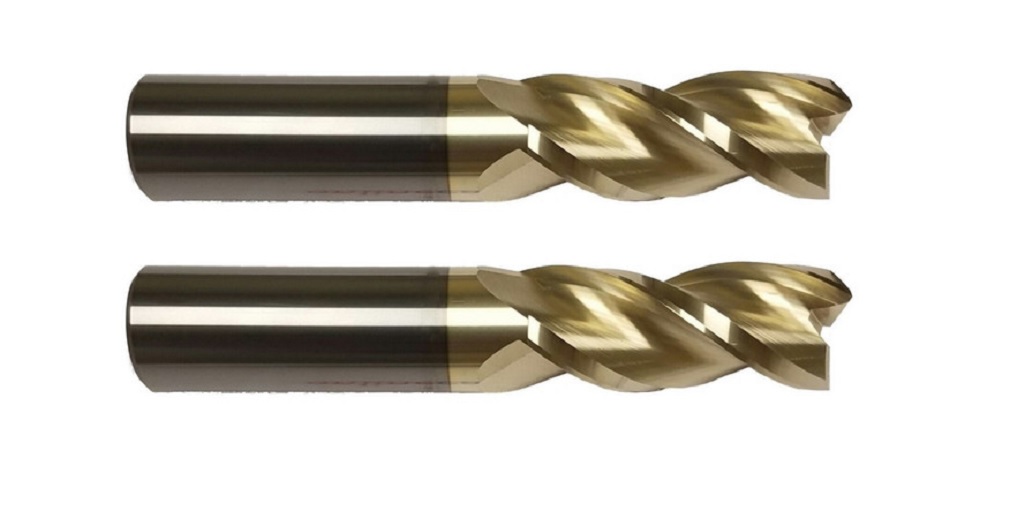
The flute design of the end mill also plays a significant role in aluminum machining. End mills with a lower number of flutes, such as three flute end mills, are commonly used for aluminum. The decreased number of flutes allows for less contact points with the workpiece, giving space to allow for chipo clearance. This results in smoother cuts and improved surface finish.
Coating
The coating applied to the end mill can enhance its performance in aluminum machining. Aluminum-specific coatings, such as TiCN (Titanium Carbonitride) or TiAlN (Titanium Aluminum Nitride), provide additional lubricity and heat resistance, reducing friction and extending tool life.
ZRN (Zirconium nitride) is also a good coating for the best end mills for aluminum, as they are ideal for machining aluminum at high speeds. These coatings also help prevent aluminum from sticking to the cutting edges, reducing the need for frequent tool cleaning.
Cutting Parameters
You might have the right tool, but It is crucial to consider the cutting parameters for aluminum machining. High spindle speeds and feed rates are generally recommended for efficient aluminum removal.
However, it is essential to balance the cutting parameters to avoid excessive heat and friction, which can lead to workpiece deformation or tool wear. Proper coolant or lubrication is vital to dissipate heat and improve chip evacuation.
Machining Aluminum is Easy with the Right Tools
Machining aluminum requires the use of the best end mills specifically designed for the material. Carbide end mills from reputable manufacturers produce these tools that can achieve precise and high-quality results in aluminum machining, but a good machinist should know what differentiates the best end mills from the rest when it comes to aluminum.
