
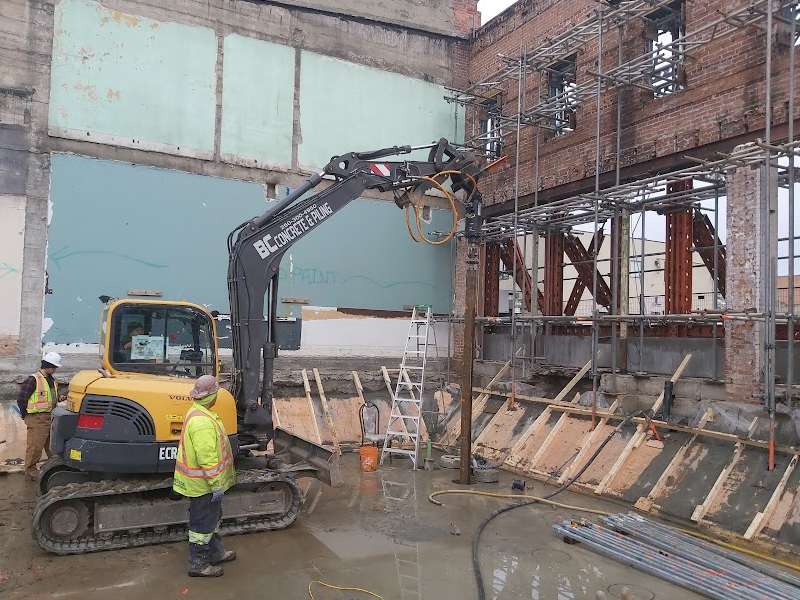
Predicting the settlement behaviour of a helical pile foundation is a crucial step in ensuring the long-term stability and performance of any structure built on challenging soil conditions. Even though helical systems are known for their efficiency and reliability, their performance still depends heavily on accurate design, proper installation, and a solid understanding of soil-structure interaction.
Why Settlement Prediction Matters
Settlement refers to the downward movement of a structure caused by the compression of soil beneath it. While some settlement is natural, excessive or uneven settlement can compromise the safety and function of a building or infrastructure project. For a helical pile foundation, predicting settlement isn’t just about avoiding failure—it’s about ensuring that the foundation behaves as expected under the applied loads over time.
Engineers use settlement prediction models to evaluate how much a foundation will move once loaded. These predictions help in optimizing design parameters such as pile diameter, helix spacing, and embedment depth. This process is particularly important in areas with soft clays, organic soils, or variable ground conditions where load transfer and displacement mechanisms are more complex.
Factors Influencing Settlement in Helical Pile Foundations
The settlement performance of a helical pile foundation depends on a range of factors, both geotechnical and structural. Key considerations include:
- Soil Type and Strength. Cohesive soils, such as clay, compress more over time compared to granular soils like sand. The soil’s undrained shear strength and consolidation properties play a major role in determining how much the pile will settle under load.
- Load Type and Duration. Static loads (like the weight of a building) and cyclic loads (from wind, traffic, or machinery) affect settlement differently. Long-term loading may lead to gradual consolidation, while cyclic loads can cause additional displacement through soil fatigue.
- Pile Geometry. The size, number, and spacing of helices influence how load is distributed along the shaft and through the bearing plates. Optimizing these parameters helps reduce stress concentrations and minimize differential settlement.
- Installation Torque. The torque achieved during installation correlates strongly with the pile’s ultimate bearing capacity. Insufficient torque may result in lower end-bearing resistance, which can increase the risk of settlement under working loads.
Methods for Estimating Settlement
Predicting settlement for a helical pile foundation involves both empirical and analytical approaches. Engineers often use torque-to-capacity correlations, load test data, and finite element modeling to simulate soil-pile interaction.
- Load Testing. Full-scale or small-scale load tests remain one of the most reliable methods to determine settlement behaviour. These tests provide real-world data on how a pile responds to increasing loads, which can then be used to calibrate design models.
- Empirical Correlations. Based on observed data from previous projects, empirical equations can estimate settlement under specific soil and load conditions. These are particularly useful during preliminary design stages.
- Numerical Analysis. Advanced modeling tools allow engineers to visualize load transfer mechanisms and predict potential settlement zones. This is especially helpful in large or complex projects where foundation performance must be tightly controlled.
Accurate settlement prediction is not just a theoretical exercise—it’s a cornerstone of reliable foundation design. By combining field data, soil testing, and analytical modeling, engineers can develop realistic expectations for how a helical pile foundation will behave over time. This proactive approach not only enhances structural safety but also supports cost efficiency and long-term durability, ensuring that foundations remain stable and dependable for decades to come.
For More information About Expert Pile Drilling Contractors and Commercial Piling Services Bc Please Visit: ATLAS PILING.
