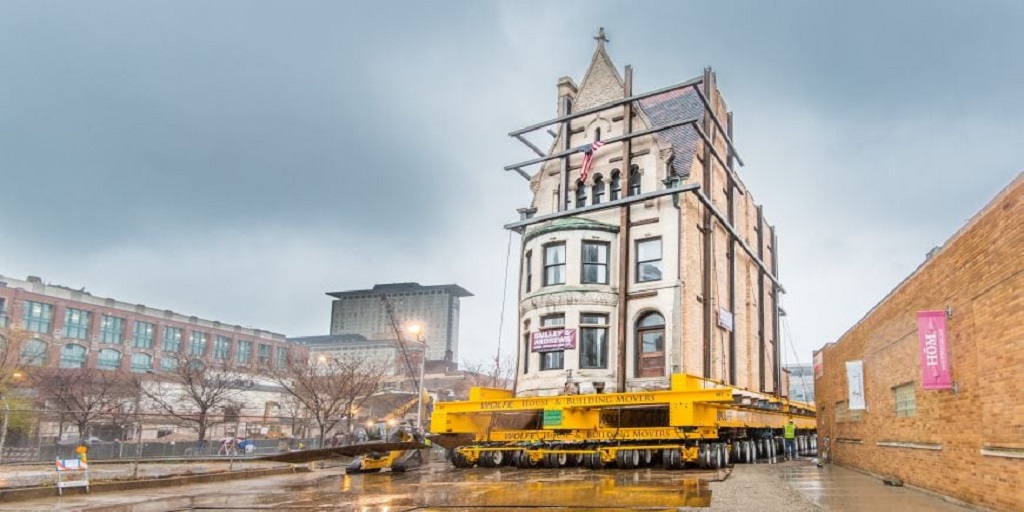
The work of historic building movers has become increasingly important as American cities continue to balance growth with preservation. Across the country, remarkable buildings that once defined city skylines and neighborhoods have disappeared, leaving behind photographs, memories, and lingering questions about what could have been saved. While progress often requires change, the loss of significant architecture reminds us that preserving history should remain part of every community’s long-term vision.
Pennsylvania Station in New York City
One of the most widely recognized examples is the original Pennsylvania Station in New York City. Completed in the early twentieth century, the station welcomed travelers through soaring halls, grand columns, and an impressive design inspired by classical European architecture. It was far more than a transportation hub. For many visitors, it represented an unforgettable first impression of New York. When the building was demolished during the 1960s to make way for a new development above the rail lines, public reaction was immediate.
Many people felt that a masterpiece had been sacrificed in the name of modernization. The controversy surrounding its destruction helped inspire stronger historic preservation efforts throughout the United States and demonstrated that architectural heritage cannot easily be replaced once it is gone.
The Old Cincinnati Library
Another painful loss occurred in Cincinnati with the demolition of the Old Cincinnati Library. Unlike modern libraries that often emphasize simplicity, this building was filled with elaborate architectural details that made reading feel like an experience rather than a routine activity. Towering cast-iron book stacks, decorative interiors, natural light, and elegant public spaces transformed the library into one of the city’s most beloved landmarks.
Although it served generations of residents, changing priorities eventually led to its replacement by a newer facility. Today, the original library survives only through historic photographs, which continue to capture the imagination of architecture enthusiasts around the world.
Detroit City Hall
Detroit also experienced change with the demolition of its original City Hall. Built during the late nineteenth century, the impressive structure reflected the confidence and ambition of a rapidly growing industrial city. Its Renaissance-inspired design, detailed stonework, and commanding clock tower made it a centerpiece of downtown Detroit for decades. Yet as redevelopment plans gained momentum, the building was considered outdated rather than historic.
Demolition followed, and even the iconic clock tower, which remained standing briefly after much of the structure had disappeared, was eventually removed. The decision reflected an era when replacing older buildings with newer construction was often viewed as progress without fully considering the cultural value being lost.
Historic Building Movers Can Help Preserve Architectural Legacy
These examples share a common lesson. Once a historic building is demolished, it can never truly be recreated. Replicas may imitate the appearance, but they cannot replace the craftsmanship, materials, and stories embedded within the original walls. Historic buildings connect communities to earlier generations, offering tangible reminders of local achievements, architectural innovation, and shared identity.
But there are alternatives to demolition when older buildings stand in the path of redevelopment. Advances in engineering have made it possible to relocate many structures rather than destroy them. Skilled specialists can carefully support, lift, transport, and reposition buildings while protecting much of their original character. Successful relocations across the United States, such as the Hamilton Grange National Memorial move by Wolfe House Movers have shown that even large masonry and timber structures can be moved when preservation becomes a priority. While every project requires careful planning and consultation with preservation officials, relocation offers communities another option before choosing permanent destruction.
Protecting America’s architectural legacy also depends on public involvement. Local residents can advocate for landmark designations, support preservation organizations, attend planning meetings, and encourage developers to incorporate historic buildings into new projects whenever possible. Adaptive reuse has become an increasingly successful approach, allowing former schools, factories, churches, libraries, and government buildings to find new life as apartments, offices, hotels, museums, or community spaces without erasing their history.
Cities will continue to grow and change, and preserving historic landmarks requires cooperation between property owners, preservation agencies, local governments, engineers, and historic building movers. Saving these structures ensures that future generations inherit not only modern skylines but also the remarkable buildings that tell the story of America’s past.
For More Information About Building Moving Companies Near Me and Historic Building Preservation Please Visit: Wolfe House & Building Movers.