
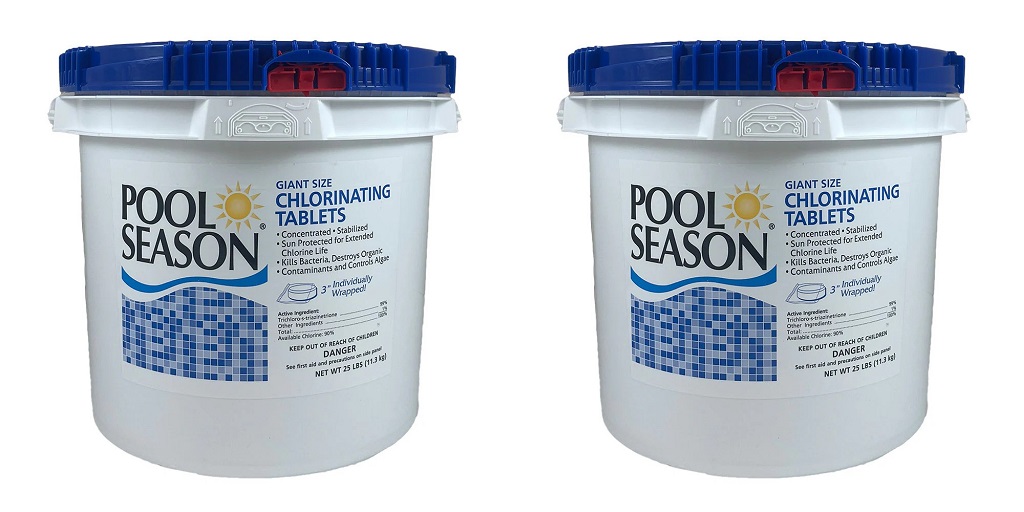
Part of pool ownership and maintenance is knowing how to clean it properly. And this means knowing how to properly use pool cleaning chemicals.
Maintaining a clean and healthy pool requires careful attention to water chemistry and proper use of cleaning chemicals. This means adding chemicals in the correct sequence to ensure optimal effectiveness.
Here’s how to correctly use pool cleaning chemicals so the next time you visit a pool equipment store, you know which chemicals save time and avoid unnecessary expenses on your part.
Test Your Pool Water
Before adding any chemicals, test the water to measure key levels. Check for the following factors:
- pH Pool Levels: The ideal range is 7.4 to 7.6.
- Total Alkalinity: Should be between 100 and 150 parts per million (ppm).
- Free Available Chlorine: Optimal levels are 1 to 3 ppm, with 3 ppm being ideal.
- Cyanuric Acid (CYA): Aim for 30-50 ppm, or 80 ppm for saltwater pools.
- Calcium Hardness: Target 175-225 ppm for vinyl or fiberglass pools, and 200-275 ppm for concrete or plaster pools.
Accurate testing helps identify the adjustments needed, ensuring balanced water chemistry.
Gather Necessary Chemicals and Equipment
Having the right chemicals and protective gear on hand streamlines the process. Essential items include:
- Alkalinity Increaser
- pH Increaser (soda ash) or pH Decreaser (muriatic acid)
- Sanitizers such as Chlorine pucks, granules, or other chlorine products
- Cyanuric Acid (CYA or chlorine stabilizer)
- Pool Shock
- Calcium Hardness Increaser
- Protective gear, like gloves and goggles, is crucial for safe handling.
Follow the Correct Order for Adding Chemicals
Adding chemicals in the right sequence is essential to achieve balanced water chemistry. Here’s the recommended order:
Adjust Total Alkalinity First
Alkalinity acts as a buffer to stabilize pH levels. To increase alkalinity, use an alkalinity booster or baking soda. If you want to decrease it, use pH decreaser or muriatic acid.
Correct pH Levels
After alkalinity is adjusted, focus on pH. Proper pH levels improve the effectiveness of sanitizers. To lower pH, add a pH decreaser or muriatic acid. To raise pH, you can use soda ash or a pH booster.
Sanitize with Chlorine or Other Products
Chlorine is a critical sanitizer that keeps your pool free from harmful microorganisms. If you are using chlorine pucks or granules, note that it may take hours for levels to stabilize.
Adjust Cyanuric Acid (CYA)
CYA helps protect chlorine from sunlight, prolonging its effectiveness. If stabilized chlorine has been added, your CYA levels may already be sufficient.
Regulate Calcium Hardness
Proper calcium levels prevent long-term damage like equipment erosion. Consider the following levels depending on your pool type. If you have vinyl or fiberglass, adjust the calcium level to 175-225 ppm.
For concrete or plaster pools, it’s best to have 200-275 ppm. While not immediately critical, calcium adjustments are important over time.
Allow Chemicals to Circulate
After adding each chemical, wait at least 30 minutes for circulation and dissipation. Keep your pool pump and filter running to distribute the chemicals evenly. You need to retest the water before proceeding to the next chemical.
Once all chemicals are added, let the pool circulate for 1 to 2 hours and conduct a final water test to confirm balanced levels.
Use Pool Shock as Needed
Pool shock eliminates contaminants and restores clarity. To maximize effectiveness, ensure other chemical levels, especially pH, are balanced before shocking. Always follow the manufacturer’s instructions for dosage and timing.
Pool Maintenance is Vital for Pool Safety and Fun
Practicing regular testing and maintenance prevents major imbalances in your swimming pool. Visit a pool equipment store to find the best equipment and chemicals, and avoid mixing chemicals directly; add them separately to water.
If you need more guidance, it’s best to ask the advice of pool care experts and follow these steps for safety. You’ll maintain a clean, safe, and enjoyable pool for your family and guests.
